Biggest sale yet: 30% off canvas, 25% off framed and posters, 15% off everything else, at checkout through Nov 30.
Russian, 1860-1900
17 artworks
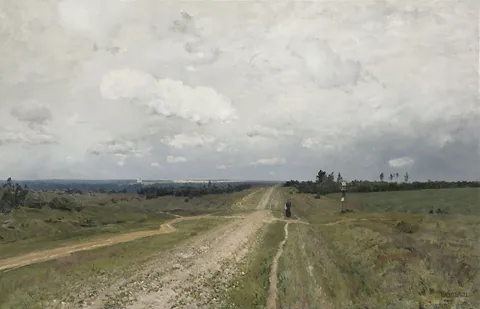
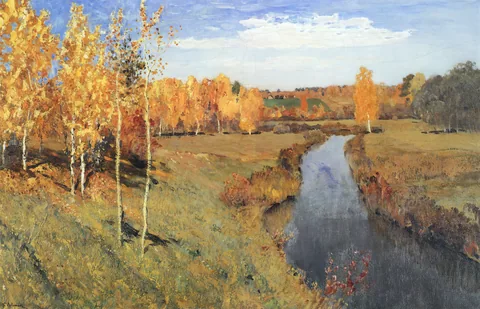
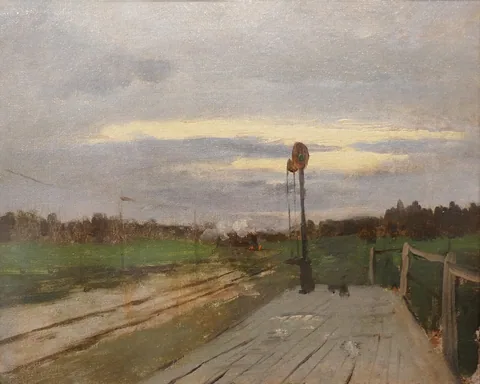
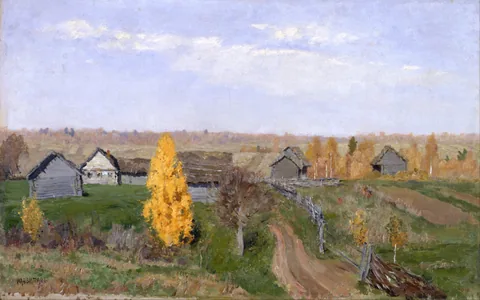
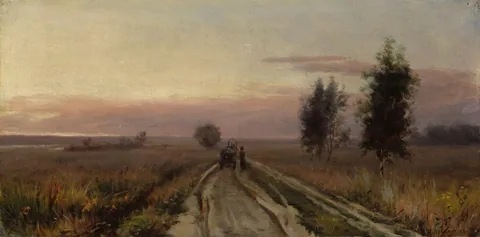
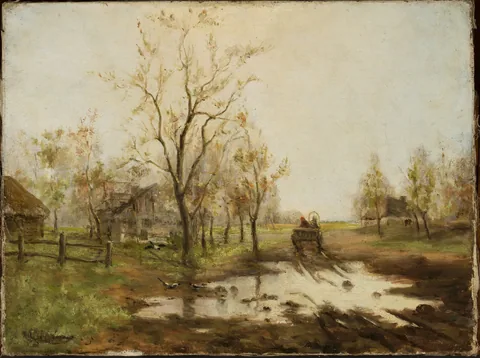
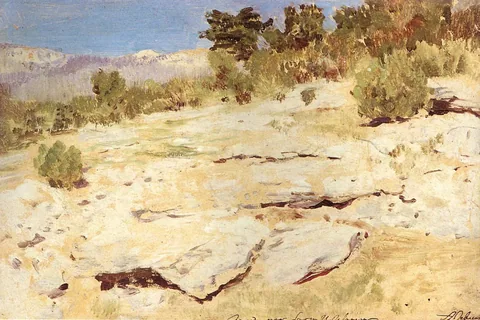
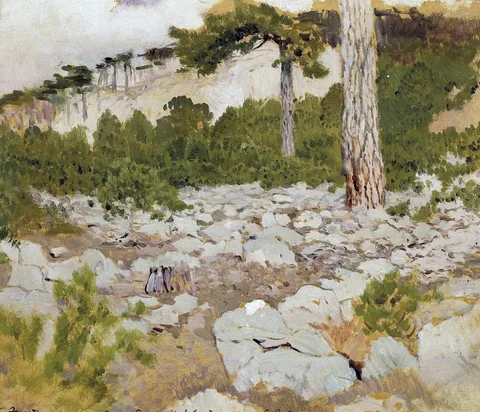
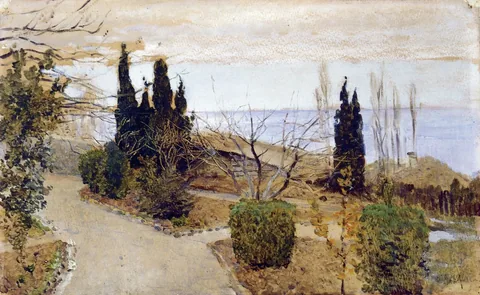
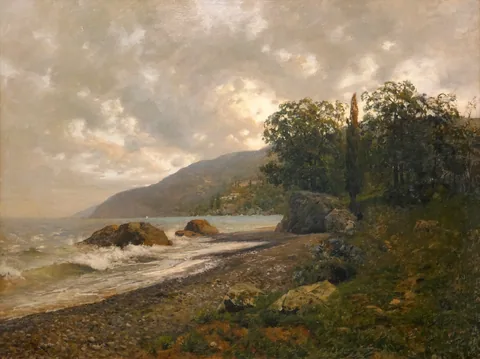
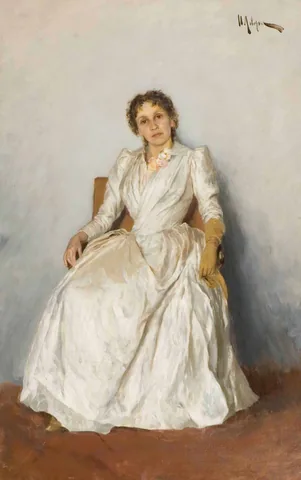
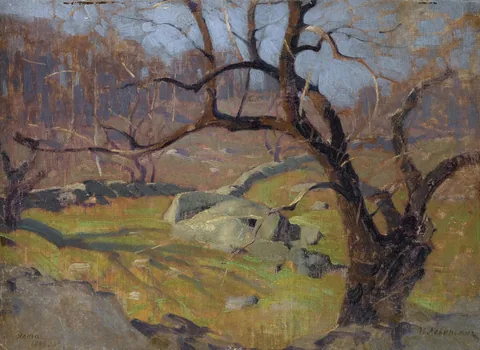
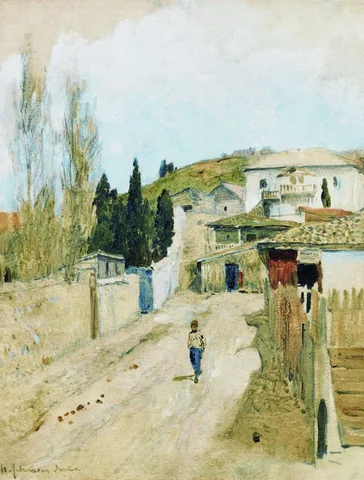
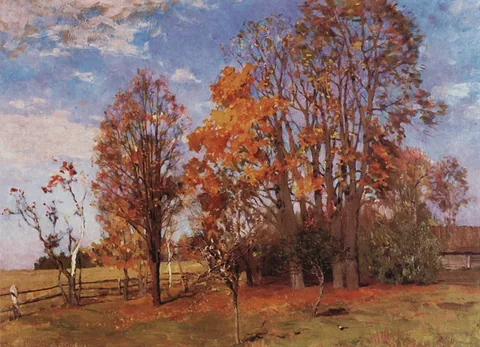
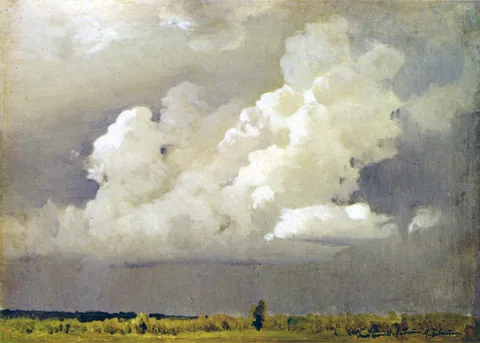
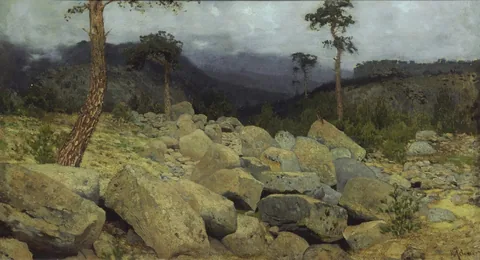
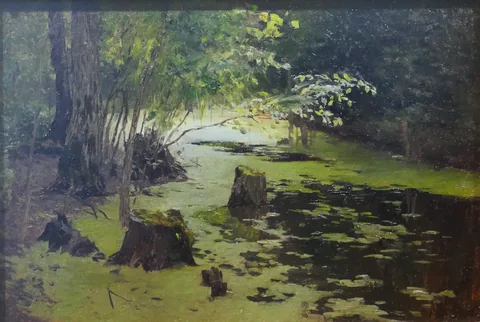
Isaac Levitan painted the quiet of the Russian countryside: birch groves, riverbanks and empty roads under wide skies, almost never with a person in them. He is credited with advancing the mood landscape, where the look of a place carries a state of mind. He grew up in Moscow in a poor but educated Jewish family, studied at the Moscow School of Painting under Alexei Savrasov and Vasily Polenov, and was forced out of the city when Jews were expelled in 1879 and again in 1892. Pavel Tretyakov bought his paintings from 1880 on. He was close to Anton Chekhov, though they fell out for almost three years over a story Levitan took as mockery of his love affair.
Vladimirka is the dirt highway east of Moscow along which prisoners were marched to Siberia. Levitan came upon it in 1892 on the way back from a hunt, sketched it and painted it in Moscow that year; when it did not sell, he gave it to the Tretyakov Gallery. Golden Autumn, painted in 1895 on an estate in Tver province, is his brightest picture, birches in orange and yellow above a dark blue river. Tretyakov paid 700 rubles for it, and Levitan reportedly called it crude. His muted pictures suit a plain dark wood frame; Golden Autumn can carry gold.
Sources: Wikipedia: Isaac Levitan; Wikipedia: Vladimirka (painting); Wikipedia: Golden Autumn (Levitan)
