
Guide
What public domain art is, and why it belongs to everyone
What public domain means for paintings in the US, when old art becomes free to print, why a photo of a painting adds no new copyright, and what isn’t free.
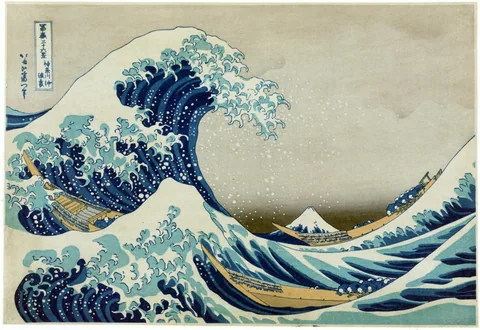
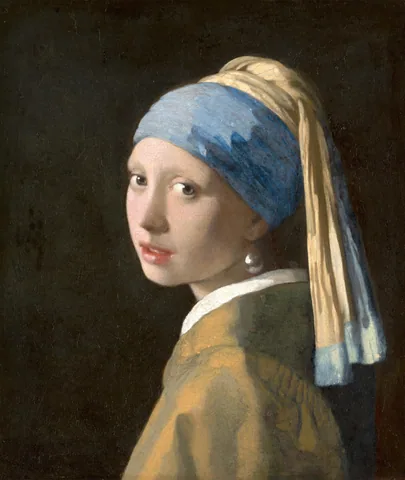
Every painting in our shop is one that nobody owns the rights to anymore. That is what public domain means: creative works to which no exclusive intellectual property rights apply, so anyone can use them without asking permission. The Starry Night, the Great Wave, the Girl with a Pearl Earring: you can print them, frame them, put them on a mug or paint your own copy, and so can everyone else. Here is how a painting gets there, what the photographs of it have to do with it, and what is not public domain, explained in plain words. It is a general explanation, not legal advice.
How a painting becomes public domain in the US
Copyright doesn’t last forever. In the United States it lasts a fixed number of years, and when it runs out the work passes to the public. Each term runs to the end of a calendar year, so every January 1 another year of work becomes free. For old art, two rules do most of the work.
- Published works: anything published before 1931 is now in the public domain, whoever made it and whenever they died.
- Unpublished works: the copyright lasts for the life of the artist plus 70 years, so the work of artists who died before 1956 is now public domain.
For a painting, “published” has a technical legal meaning, and many old paintings were never published in that sense, so the second rule is often the one that applies. Between them, everything by the old masters, the Impressionists and the Japanese printmakers of the Edo period has long been free. Works from the 1930s on get more complicated, with rules that depend on when they were published and whether the copyright was renewed.
| Artist | Died | Free under life plus 70 |
|---|---|---|
| Johannes Vermeer | 1675 | Since 1746 |
| Rembrandt van Rijn | 1669 | Since 1740 |
| Katsushika Hokusai | 1849 | Since 1920 |
| Vincent van Gogh | 1890 | Since 1961 |
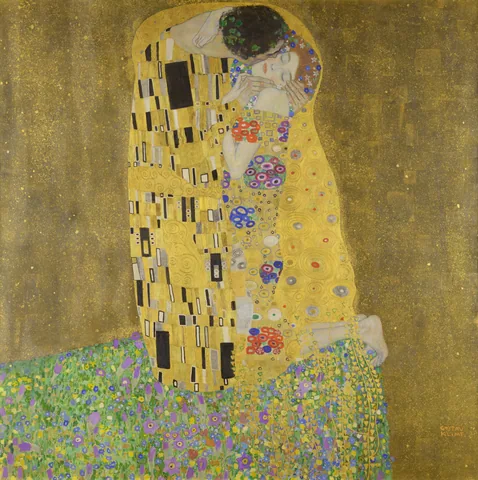
| Gustav Klimt | 1918 | Since 1989 |
| Claude Monet | 1926 | Since 1997 |
| Mary Cassatt | 1926 | Since 1997 |
| Wassily Kandinsky | 1944 | Since 2015 |
| Piet Mondrian | 1944 | Since 2015 |
| Hasui Kawase | 1957 | Not yet |
The two rules can give different answers for one artist. The Japanese printmaker Kawase Hasui died in 1957, so life plus 70 has not freed his work yet; but woodblock prints were published as editions, and his Ushibori of 1930 is public domain in the US because it was published before 1931. Other countries count differently again, so a work can be free in one country and still protected in another.
What about the photograph of the painting?
You can’t print a painting without a photograph of it, and someone took that photograph. So who owns the photo? In the US, the leading answer comes from a 1999 case, Bridgeman Art Library v. Corel, in the federal court in Manhattan. The court ruled that exact photographic copies of public-domain artworks are not protected by copyright, because copyright requires originality, and a faithful copy of a flat painting adds none, however much skill and effort it took. A district court decision binds no other court, but courts have widely followed it.
Many museums now go further and release their photographs of public-domain works themselves. The Cleveland Museum of Art launched its Open Access program in January 2019, putting images of more than half the artworks in its collection under Creative Commons Zero, a public-domain dedication, for any use. The images we use from the National Gallery of Art in Washington carry the same CC0 dedication, and the National Gallery of Denmark marks its images of public-domain works with the Public Domain Mark.
Where our images come from
Of the 8,821 works on sale today, most come from a few open sources:
- 3,683 from Wikimedia Commons, the open media archive
- 2,526 from the National Gallery of Art in Washington
- 1,428 from the Cleveland Museum of Art
- 1,028 from the National Gallery of Denmark (SMK)
Every listing names where its image came from, and where the original hangs. For the old maps, the source is the U.S. Geological Survey: maps made by the US government are public domain too.
What isn’t public domain
- Recent art. Most art made from the 1930s on is still under copyright in the US, and so are unpublished works by artists who died in 1956 or later.
- Some modern photographs. Our 156 space telescope pictures, such as the Cosmic Cliffs in Carina, are shared by the European Space Agency under a Creative Commons Attribution license, which allows printing as long as the agencies and astronomers are credited. Each of those listings carries the credit.
- A museum’s name and logo. The painting may be free, but the museum’s name is not ours to use as branding, so we only ever say where an original is held.
- New creative work. A new design that uses a public-domain painting can have its own copyright in what is new about it.
Why it belongs to everyone
The public domain is the deal at the heart of copyright: artists and their heirs get control for a long time, and then the work joins the common culture for good. It is why a museum can give its photographs away, why a student can copy a Vermeer to learn, why a designer can put the Great Wave on a scarf, and why a print of Hokusai, Monet or Van Gogh can cost what the printing costs, with no license fee on top. When you buy one of our prints you are paying for paper, ink, a frame and the care that goes into them, not for the painting. The painting already belongs to you, as it does to everyone.
What public domain means in our help pages has the short version, and how it’s made explains what we do with the files.
Questions people ask
Is it legal to sell prints of public domain art?
In the US, yes: once a work is public domain, anyone may reproduce and sell it. Check the terms of the image you start from, and other countries’ rules if you sell abroad.
Is Van Gogh public domain?
Yes. He died in 1890, and his paintings have been public domain for many decades.
Are museum photos of paintings copyrighted?
In the US, exact photos of flat public-domain artworks generally are not, after Bridgeman v. Corel. Many museums release theirs under CC0 anyway.
When does a new year of art become public domain?
Every January 1, when another year of copyright terms runs out.
Is this legal advice?
No. It is a general explanation of US rules. For a specific use, check the source’s terms or ask a lawyer.
Public domain favorites
Blue Ribbon classics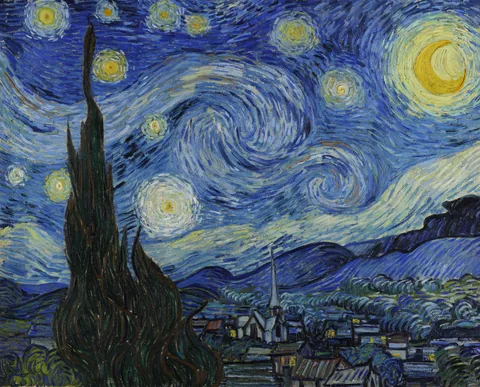
Sources
More from the Journal
 Guide · 8 min
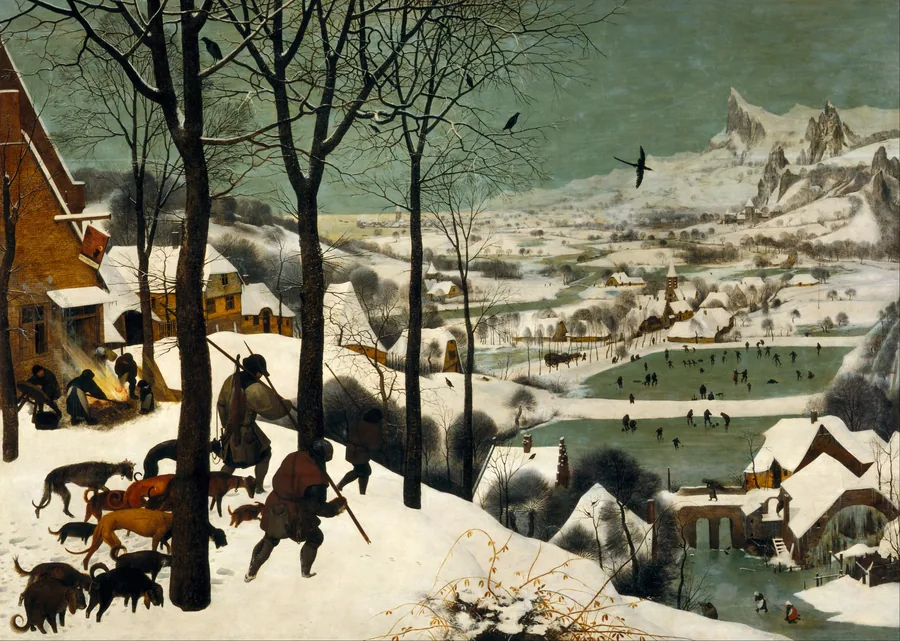
Winter and Christmas art prints worth hanging
Snow scenes that can stay up until March, Nativity paintings for December, the sizes and frames that suit them, and when to order for Christmas.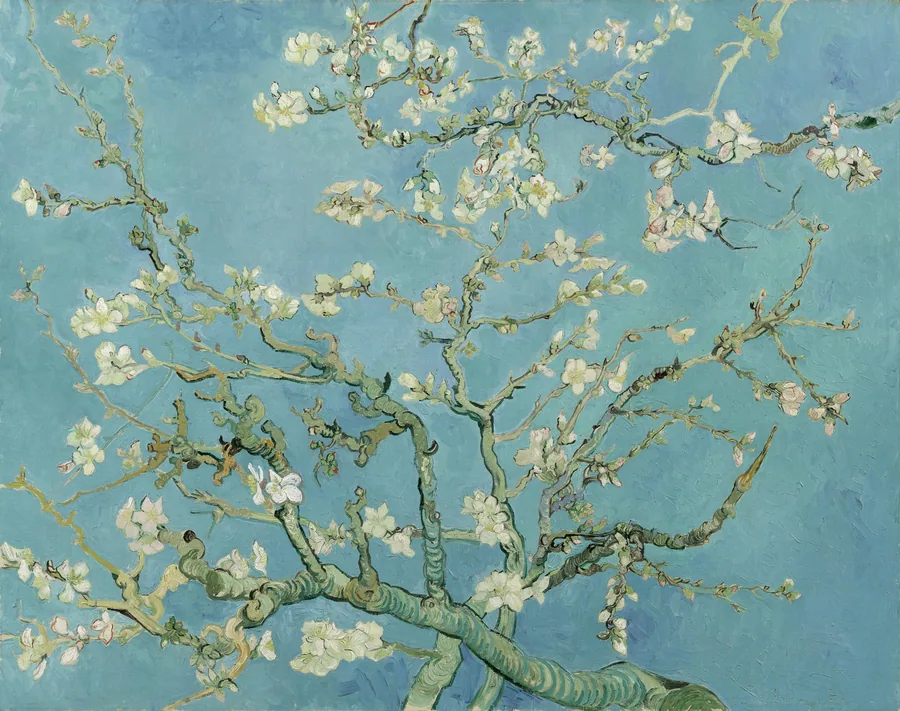 Guide · 7 min
Art as a gift: how to choose a print they’ll keep
Choose for their walls, not yours: safe sizes and frames, ideas by occasion, the gift note in the box, and how early to order for the holidays. Guide · 7 min
Art gifts for mom and dad: ideas by what they love
Art gift ideas for parents, by what they love: gardens, the sea, books, travel, home. Safe sizes, a personal line of words, and when to order for Christmas. Guide · 6 min