Biggest sale yet: 30% off canvas, 25% off framed and posters, 15% off everything else, at checkout through Nov 30.
Czech, 1860-1939
14 artworks
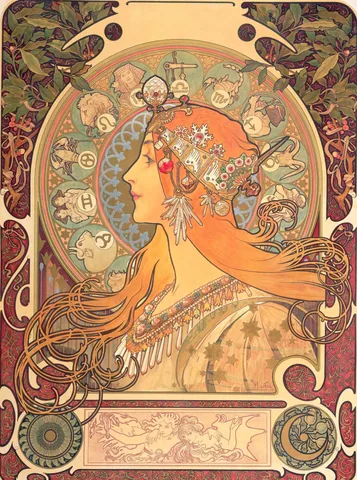
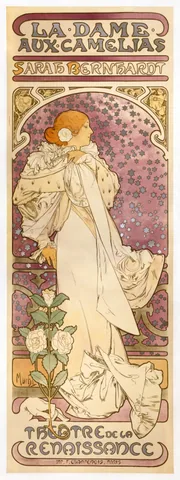
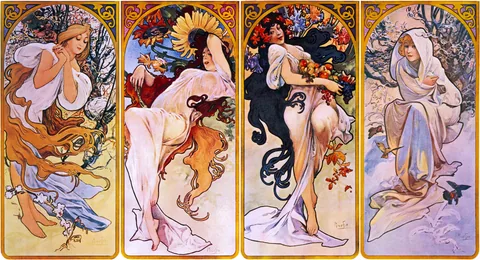
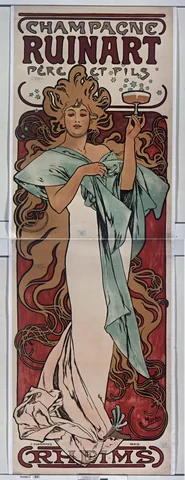
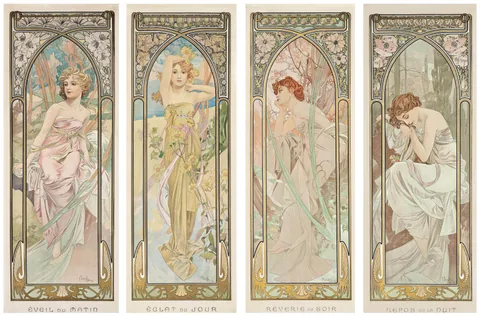
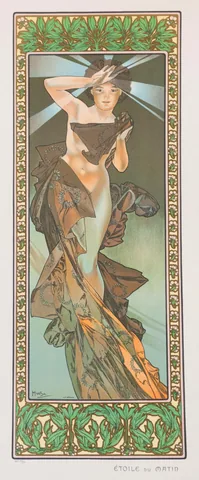
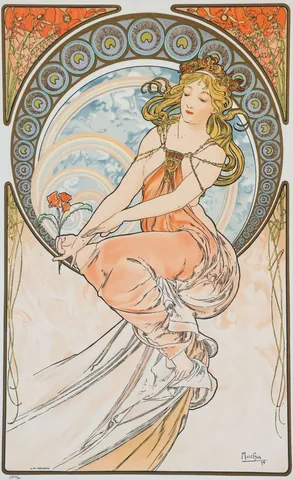
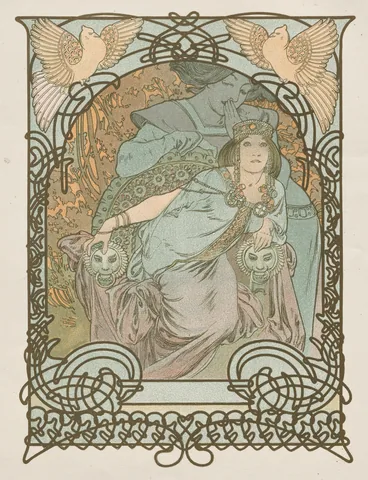
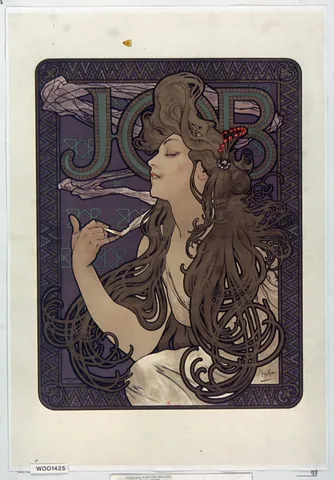
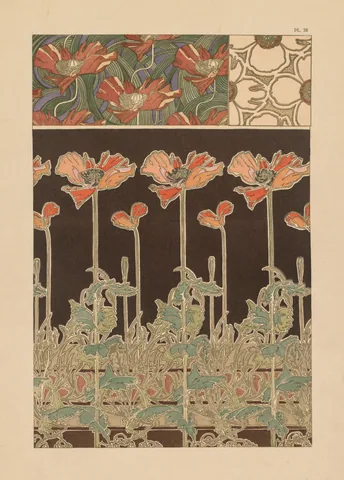
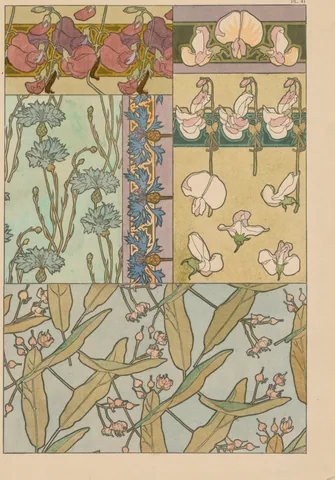
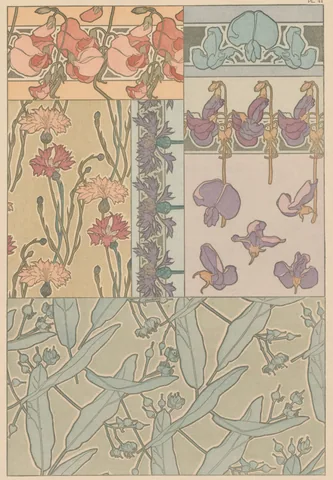
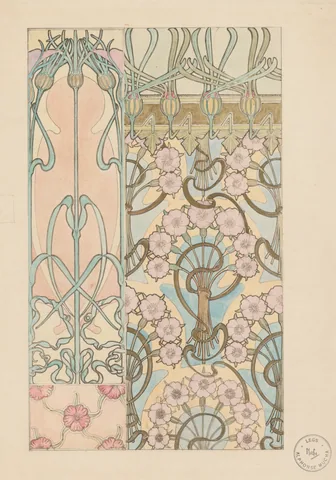
Alphonse Mucha became famous almost overnight. On 26 December 1894 Sarah Bernhardt's printer needed a new poster for her play Gismonda by New Year's Day; Mucha designed it, it went up on the streets of Paris on 1 January 1895, and his career was made. More Bernhardt posters followed, along with advertising and a run of decorative panels without text, printed for the publisher Champenois: The Seasons in 1896, The Arts in 1898, The Times of Day in 1899, The Moon and the Stars in 1902. Look for the signature elements: a long-haired woman framed by a circle or arch, flowing lines, flowers and soft, flat color. From 1912 to 1926 he worked on the Slav Epic, twenty huge canvases on the history of the Slavic peoples, which he considered his most important work.
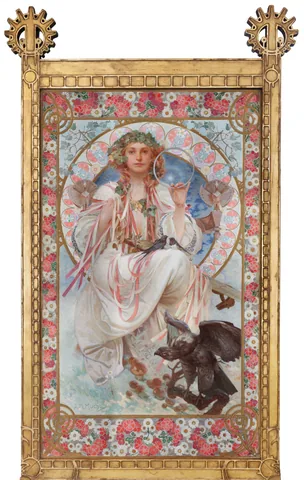
The shop has the Bernhardt poster La Dame aux Camélias, The Four Seasons and Zodiac, the design of a woman's head ringed by the signs of the zodiac, made as a calendar for the review La Plume. His portrait of Josephine Crane Bradley as Slavia became the model for Slavia on the Czechoslovak 100-koruna banknote. Mucha's tall panels pair well in sets, in thin gold or black frames.
Sources: Wikipedia: Alphonse Mucha
