Biggest sale yet: 30% off canvas, 25% off framed and posters, 15% off everything else, at checkout through Nov 30.
Spanish, 1617-1682
4 artworks
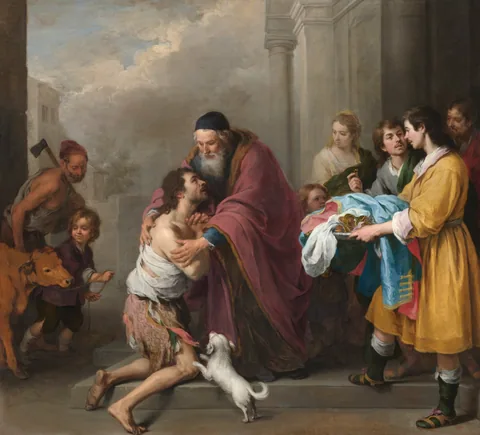
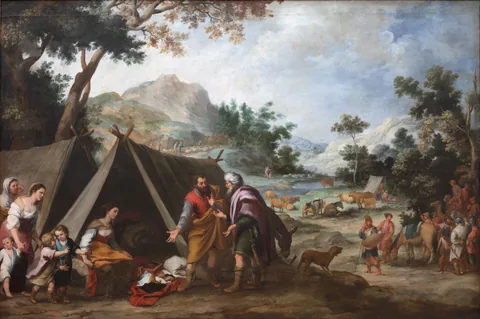
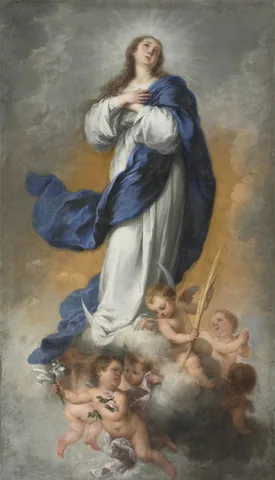
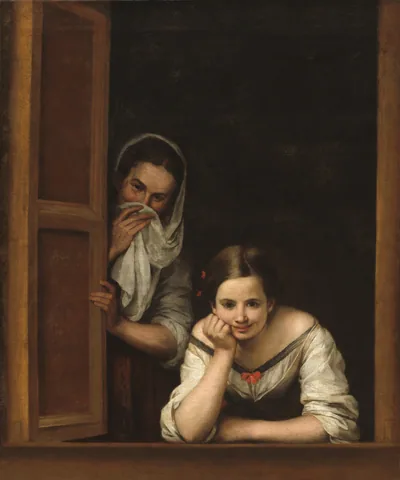
Bartolomé Esteban Murillo was the painter of Seville, and before the 19th century his work was more widely known than that of any other Spanish artist. Orphaned at about ten, he lived with his sister and her husband, a barber, and trained with his uncle Juan del Castillo. He became the city's favorite painter of the Virgin and Child and of the Immaculate Conception, and he also painted the streets around him: flower girls, beggars and ragged children, among the most lifelike genre scenes of his time. In 1660 he helped found an academy of art in Seville. Gainsborough and Greuze were among the painters he influenced. He fell from a scaffold while painting in Cádiz and died a few months later in Seville.
Look for softness: warm light, gentle faces and edges that melt into shadow. The Immaculate Conception, from about 1680, is one of the late versions of his most famous subject. Two Women at a Window is one of his everyday scenes, two young women leaning out with a smile, and The Return of the Prodigal Son tells the parable on a grand scale. His warm color suits a gold frame.
Sources: Wikipedia: Bartolomé Esteban Murillo
