Biggest sale yet: 30% off canvas, 25% off framed and posters, 15% off everything else, at checkout through Nov 30.
Japanese, 1798-1861
22 artworks
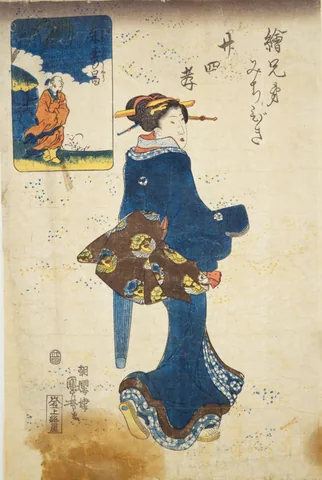
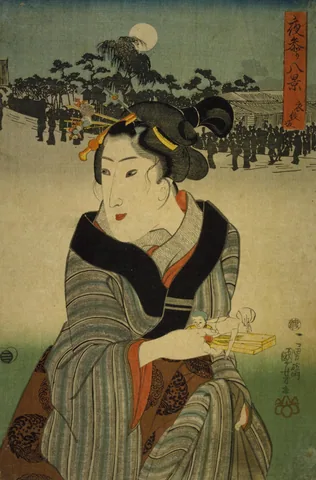
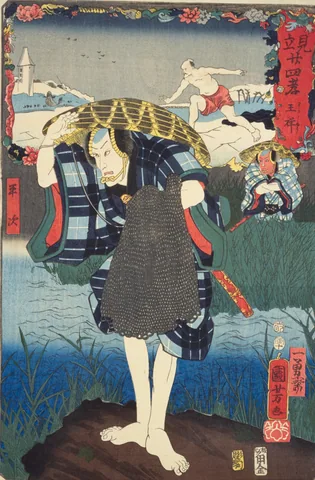
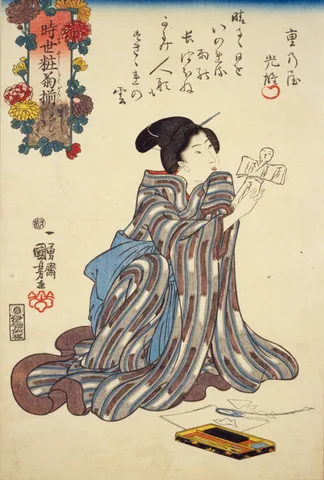
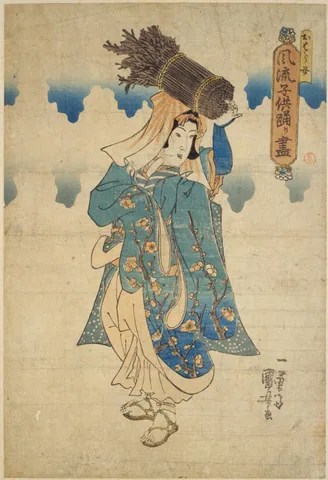
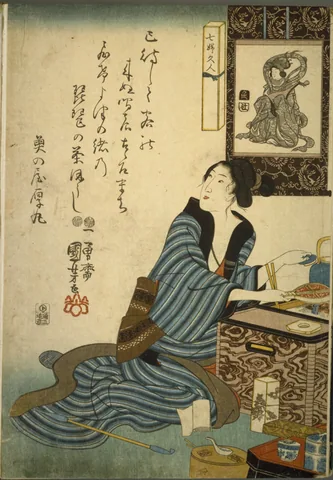
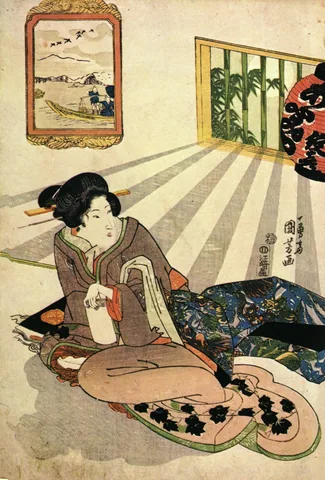
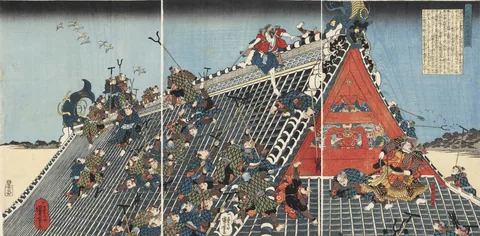
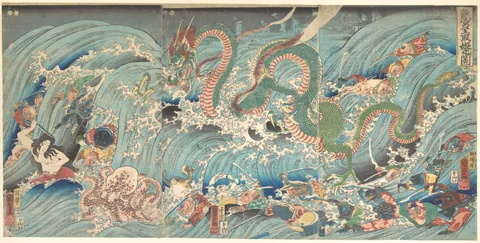
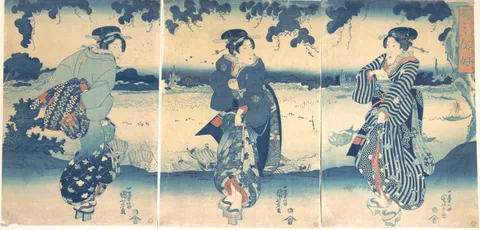
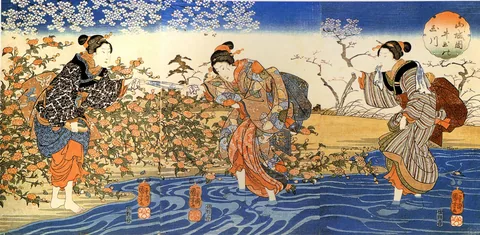
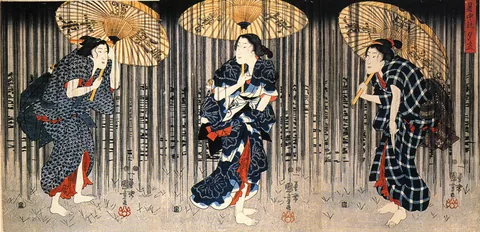
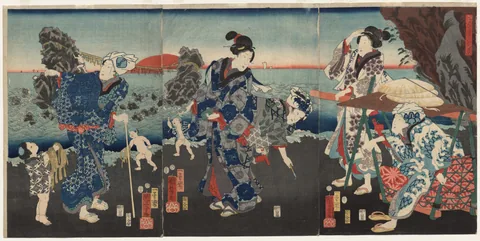
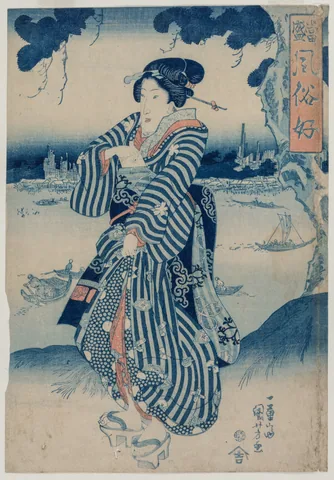
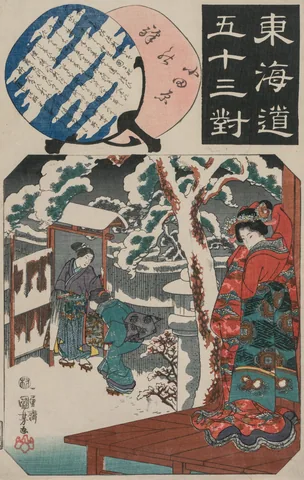
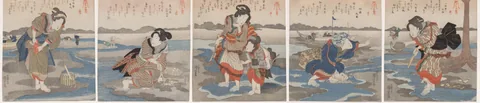
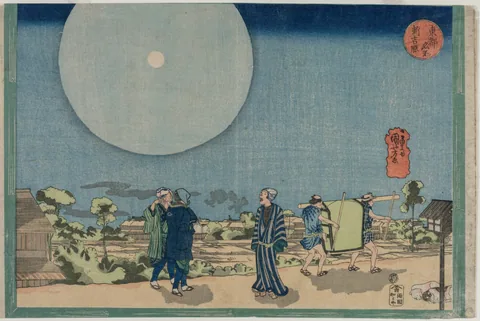
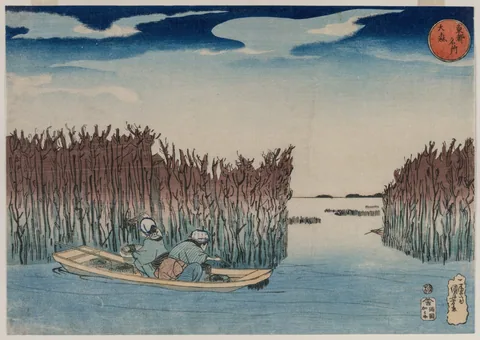
Utagawa Kuniyoshi made the woodblock print loud. One of the chief pupils of Utagawa Toyokuni, whose studio he joined in 1811, he broke through in 1827 with a commission for prints of the heroes of the Suikoden, a Chinese tale of outlaws, which became hugely popular in Edo. Warriors, ghosts and monsters followed, often spread across three sheets. When the Tenpō reforms of 1841 to 1843 banned prints of actors and courtesans, he turned to cats, a lifelong love, casting them in kabuki scenes and sly satires of the shogunate. He also borrowed Western shading and perspective, and his most important pupil, Yoshitoshi, is now regarded as the last master of the Japanese woodblock print.
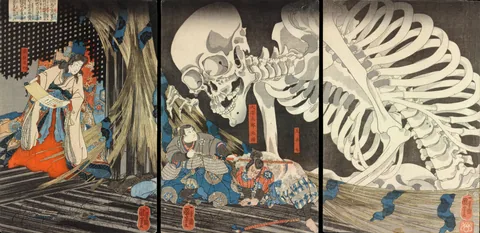
Takiyasha the Witch and the Skeleton Spectre, from about 1844, is the one most people know: across three sheets the princess Takiyasha recites a spell from a handscroll, and a giant skeleton rears out of a black void and crashes through the palace blinds at the warrior Ōya no Mitsukuni. For something quieter, there are Modern Chrysanthemum Varieties and Women Compared with the Seven Gods of Good Luck. The triptych is wide: hang it on its own, in a slim black frame, where it has room.
Sources: Wikipedia: Utagawa Kuniyoshi; Wikipedia: Takiyasha the Witch and the Skeleton Spectre
