
Guide
Botanical prints: how to choose and group them
Four centuries of botanical art, from the Gottorf Codex to Haeckel, how to tell the styles apart, and how to group flower prints into pairs, rows and grids.
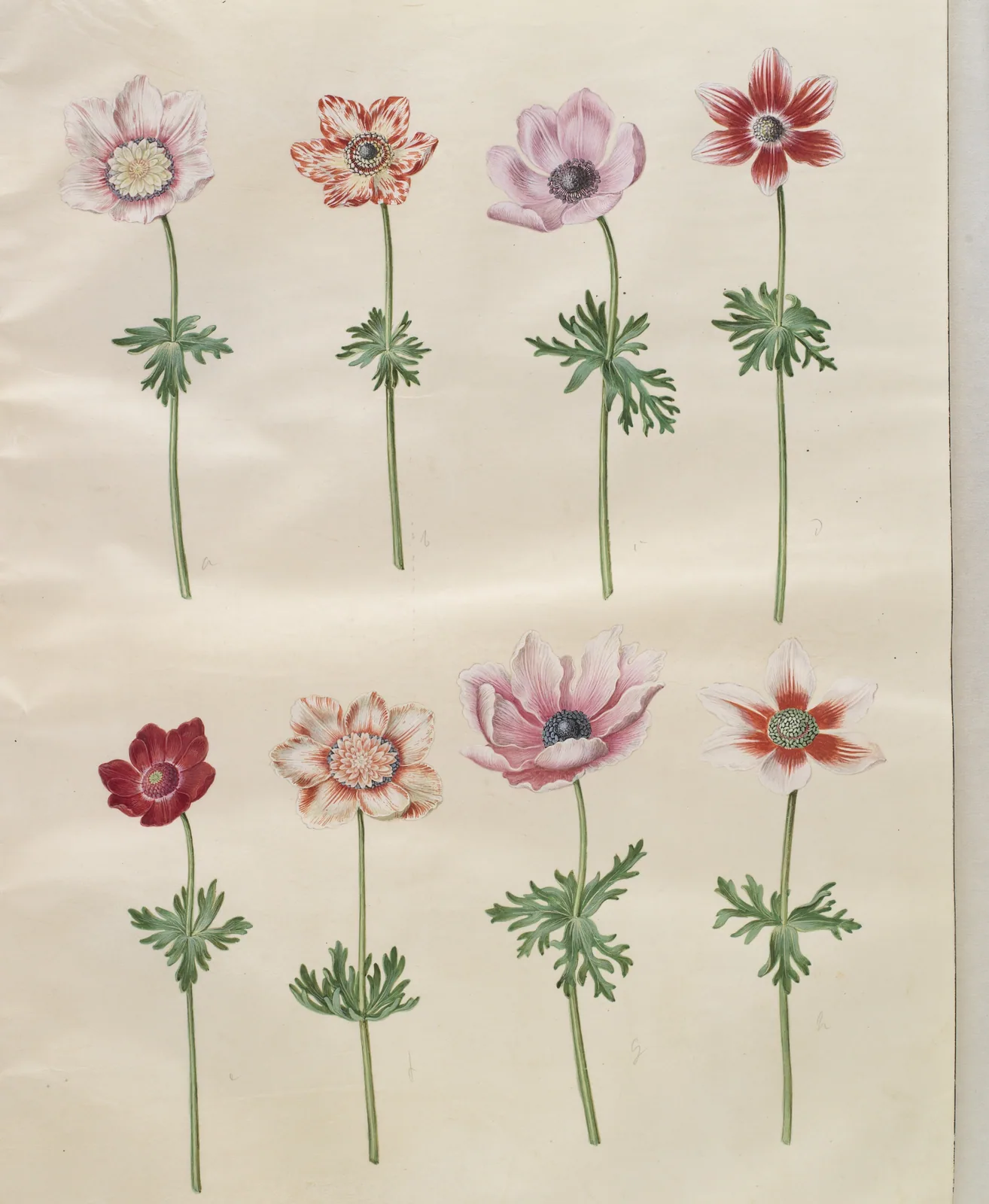
A botanical print is a picture made to show a plant exactly: its flower, its leaves, often its seed and root, drawn from life so that someone who had never seen it could know it. That purpose is what makes them so easy to live with. They are calm, precise and full of color, and they suit almost any room. We have 1,260 botanical and natural history works on sale. Here is how to tell the main styles apart and how to hang them so a group looks collected rather than scattered.
Four centuries of botanical art
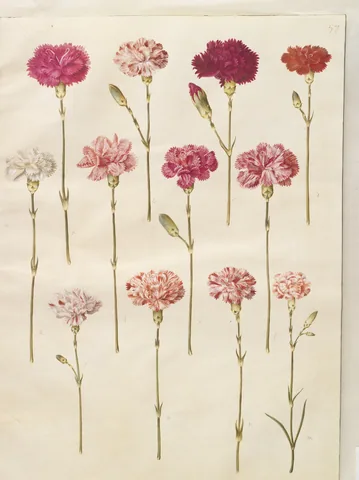
The Gottorf Codex, 1649 to 1659. Duke Frederick III of Holstein-Gottorp commissioned the Hamburg painter Hans Simon Holtzbecker to paint the plants of his gardens at Gottorf Castle: four volumes, 365 illustrated pages and 1,180 plants, in gouache on parchment. Work stopped when the duke died in 1659, and the codex now belongs to the National Gallery of Denmark, which photographed it. We have 226 of its sheets, from anemones to French marigolds and carnations: bright, dense and very decorative.
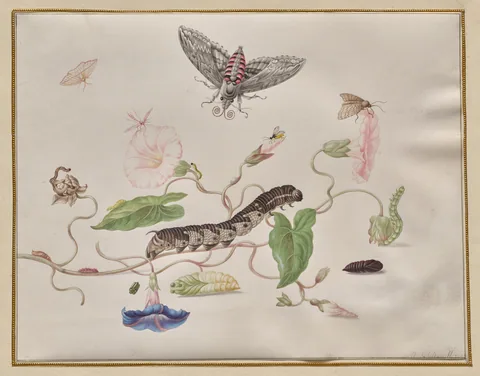
Maria Sibylla Merian (1647 to 1717). Merian painted insects with the plants they live on. She traveled to Suriname in 1699 to study tropical insects and published her great book on them in 1705, and she was the first to show that each stage of a caterpillar’s change into a butterfly depends on a few particular plants. Her Convolvulus and Metamorphosis of the Convolvulus Hawk Moth, a watercolor on vellum, shows morning glory with its caterpillars and the hawk moth.
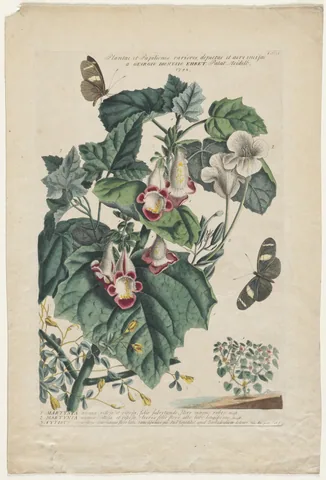
Georg Dionysius Ehret (1708 to 1770). Ehret began by illustrating for the botanist Carl Linnaeus, moved to England, and drew the striking plants of the Chelsea Physic Garden. For Plantae et papiliones rariores (1748 to 1759) he engraved and hand-colored the plates himself, pairing plants with butterflies, as in Martynia. His peaches and plums on a slab is a botanical still life.
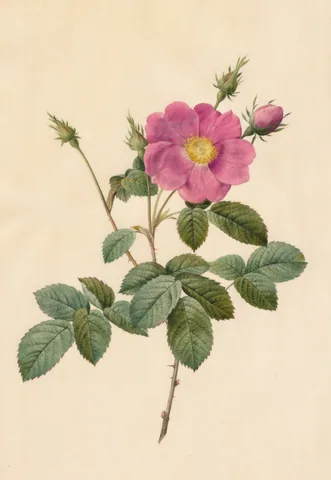
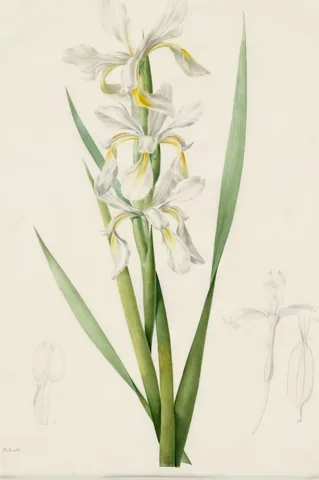
Pierre-Joseph Redouté (1759 to 1840). The “Raphael of flowers”, painter to Marie Antoinette and the Empress Joséphine, whose roses and lilies are the softest and most familiar botanical art of all. Cottage style with Redouté’s flowers is about him.
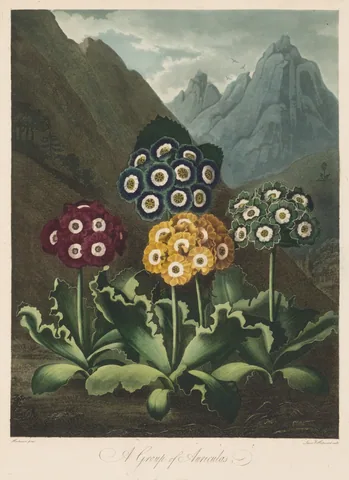
Robert John Thornton’s Temple of Flora, 1803. Printed in aquatint, stipple and etching and finished by hand with watercolor, as in A Group of Auriculas: richer and darker in tone than the book plates around them.
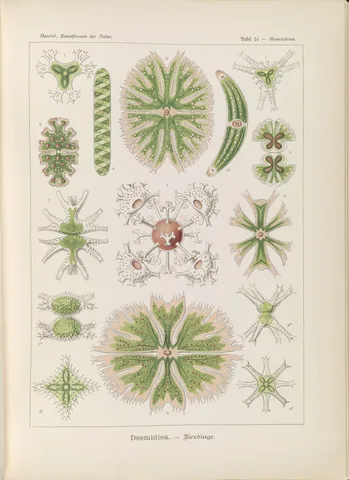
Ernst Haeckel’s Kunstformen der Natur, 1899 to 1904. A hundred plates of living forms, including microscopic ones such as desmids and disc radiolarians, that influenced the Art Nouveau designers. They are botanical art’s modern branch: symmetrical, patterned and perfect for a contemporary room.
And before all of them, Albrecht Dürer’s Great Piece of Turf of 1503, a clump of meadow grass and weeds painted as if it mattered as much as a saint.
How to read a botanical plate
Part of the pleasure of a botanical print is that it was made to be studied. Most carry the plant’s Latin name, the one in the title, Anemone coronaria, Tagetes patula, Iris ochroleuca, and many add small studies beside the main picture: a seed, a cut flower, a bulb, the stages of an insect. Redouté’s iris has detail sketches next to the flowers, and Merian shows the caterpillars and the moth together with the plant they feed on. Choosing a plant that means something, a flower from a wedding bouquet, the tree outside the window, a garden favorite, turns a decorative print into a personal one.
Color across a group
A group of botanicals hangs together best when one color runs through it. Pick the pinks of Holtzbecker’s anemones and carnations for a bedroom, the reds and yellows of his marigolds for a kitchen, or the greens of leaves and stems for a calm, leafy wall. A single bright flower in a group of quiet ones becomes the focal point, so place it in the middle of the row or at the center of the grid.
Choose by style, not just by flower
- Soft and romantic: Redouté. Cottage rooms, bedrooms, bathrooms.
- Bright and decorative: Holtzbecker’s codex. Kitchens, breakfast rooms, a grid in a hallway.
- Scientific and fine: Ehret and Merian, with their butterflies and moths. Studies, offices, a child’s room.
- Graphic and modern: Haeckel. A minimalist living room, a white wall, a black frame.
How to group botanical prints
Botanical prints were made in series, which is why they group better than almost any other kind of art. A few rules keep a group looking deliberate:
- One source per group. Plates from the same book share a size, a paper, a style and a hand. Three sheets from the Gottorf Codex make a set of three, 15% less than three single prints.
- One size, one frame, one mat. Even prints from different centuries look like a set at the same size in matching frames; a 16-inch print like the anemones is 13 × 16 in framed in white, $114.
- Grids for formal rooms, rows for long walls. A grid of four or six over a sofa or a sideboard; a row of three or five down a hallway or over a bed.
- Even gaps. 2 to 3 inches between frames, the same everywhere. Gallery wall layouts draws a grid of six botanicals to scale.
Frames, mats and paper
Botanical prints love space around them. A wide mat in white or cream makes a small plate look precious; a slim frame, white, natural oak or black, keeps the line clean. Gold suits Thornton and the Dutch flower painters, not the book plates. Most of these were made on paper or vellum, so they look truest as a framed print on smooth cotton paper; the textured Cold Press paper suits the watercolors.
Questions people ask
What is a botanical print?
A picture made to show a plant accurately, usually for a book or a collection, such as Redouté’s roses or the Gottorf Codex.
How many botanical prints should I hang together?
Three in a row, or a grid of four or six, all the same size, in matching frames.
Can I mix botanical prints from different artists?
Yes, if the size, the frame and the mat match. Mixing styles works best when one color runs through the group.
Are these the original plates?
No. They are fine-art prints made from museum photographs of the originals, and each listing names the museum and the medium.
The whole collection is in Botanical and Flowers and Natural History Plates.
Botanical prints to start with
Botanical and Flowers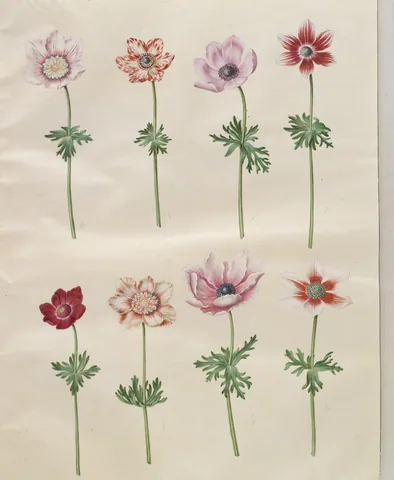
Sources
More from the Journal
 Guide · 8 min
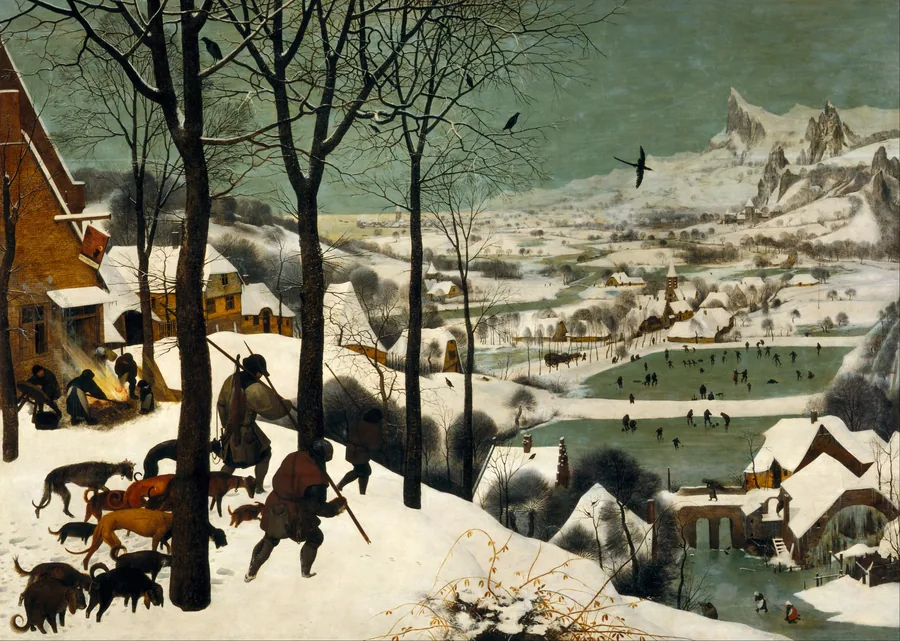
Winter and Christmas art prints worth hanging
Snow scenes that can stay up until March, Nativity paintings for December, the sizes and frames that suit them, and when to order for Christmas.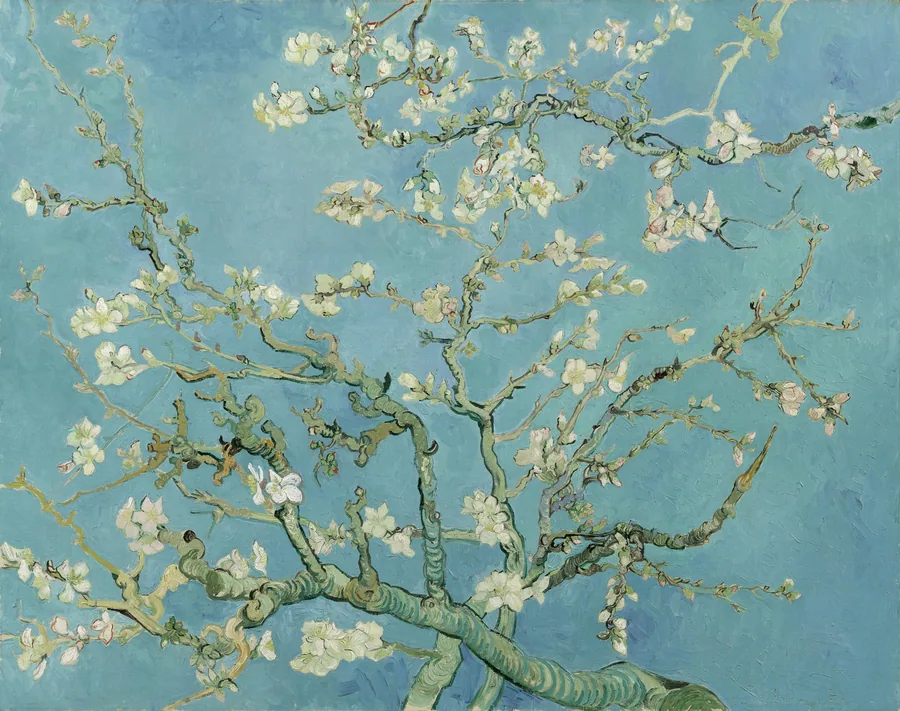 Guide · 7 min
Art as a gift: how to choose a print they’ll keep
Choose for their walls, not yours: safe sizes and frames, ideas by occasion, the gift note in the box, and how early to order for the holidays.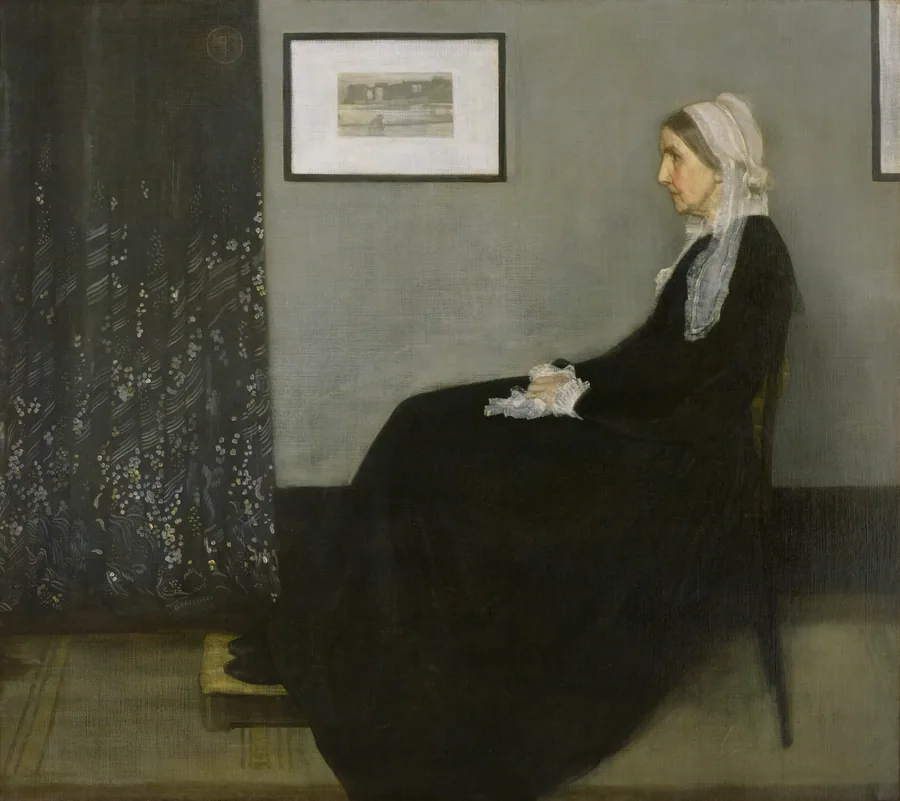 Guide · 7 min
Art gifts for mom and dad: ideas by what they love
Art gift ideas for parents, by what they love: gardens, the sea, books, travel, home. Safe sizes, a personal line of words, and when to order for Christmas. Guide · 6 min