
Guide
Cottage style with Redouté’s flowers
Redouté’s roses and lilies for a cottage-style home: which to choose, watercolor or engraving, how to hang them in pairs and rows, and the frames that suit.
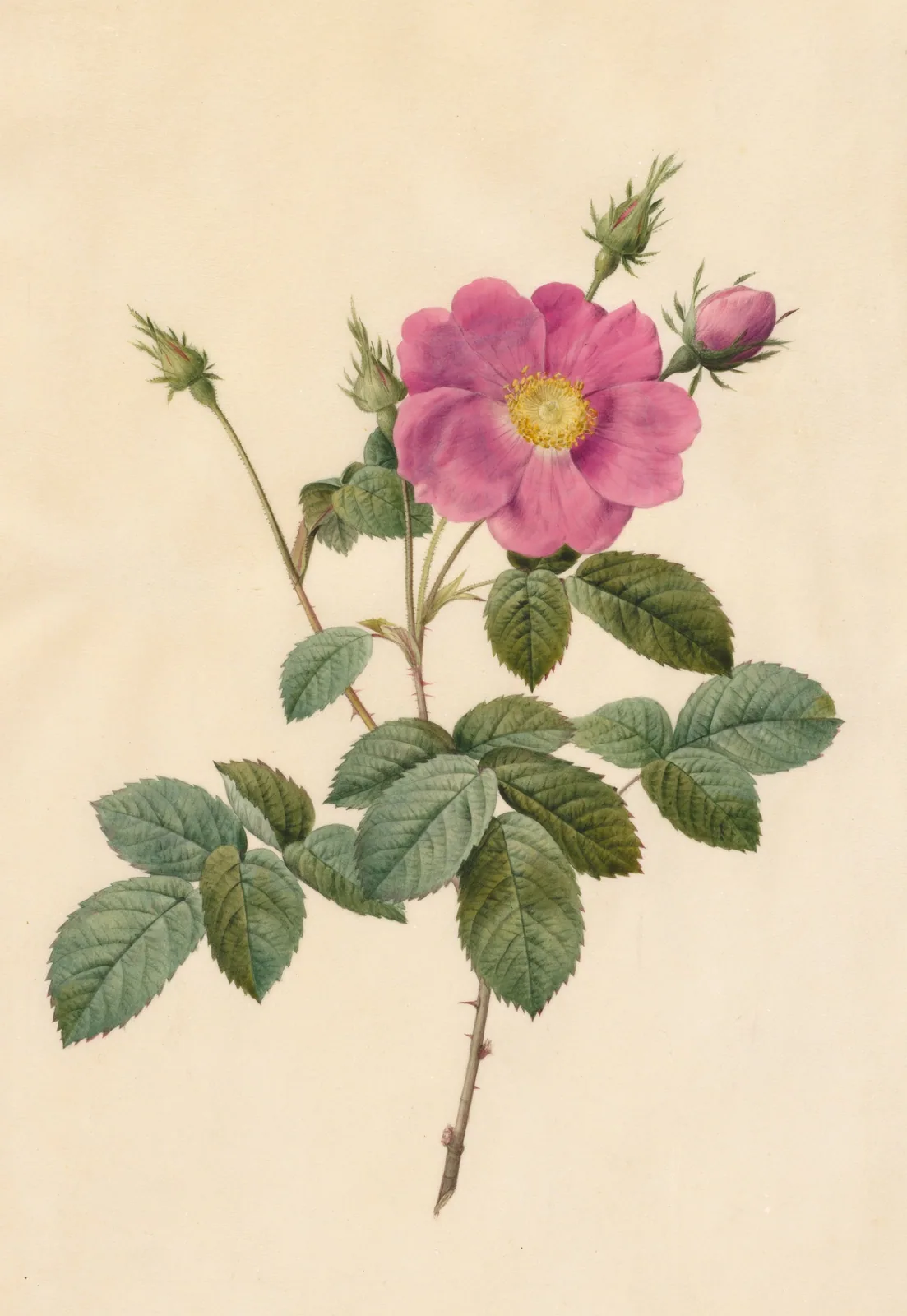
Cottage style is the home version of a cottage garden: vintage and antique furniture, natural materials, soft textiles, floral patterns, handmade things and a muted palette. The cottage garden itself, English in origin, is always associated with roses, with lilies and peonies among the old perennials around them. Put those two together and you arrive at the painter the style might have been invented for.
Pierre-Joseph Redouté (1759 to 1840) was called the Raphael of flowers. He was an official artist to Marie Antoinette, and then, from 1798, to the Empress Joséphine, painting the plants in her garden at Malmaison. His two great books are Les Liliacées, eight volumes of lilies and their relatives published from 1802 to 1816, and Les Roses, three volumes published from 1817 to 1824. Each flower sits alone on a pale ground, drawn with great care and colored softly. That is exactly what a cottage wall wants.
Watercolor or engraving: what you are looking at
Redouté’s flowers survive in two forms, and our catalog has both. The first is his own watercolors, painted on vellum or paper; the National Gallery of Art in Washington has his original paintings of irises, narcissus and tradescantia for Les Liliacées. The second is the published plates: many of his flowers were issued as large color stipple engravings, then finished by hand. Each listing says which one we print from. Of the Redouté pieces in this guide, 8 are watercolors and 4 are engravings. The watercolors are a little softer; the engravings have a fine dotted texture up close and the crisp look of a book plate. Both look right in a cottage room.
The roses
Start here. Redouté’s roses are the classic cottage picture, and they look best in groups. The Cabbage Rose, the Pasture Rose and the Brier Bush or Dog Rose are watercolors in the Cleveland Museum of Art, all the same tall shape, so they line up as a pair or a row: 11 × 16 in, $109 each, framed in white with a cream mat. Together they make a set of three, 15% less than three single prints.
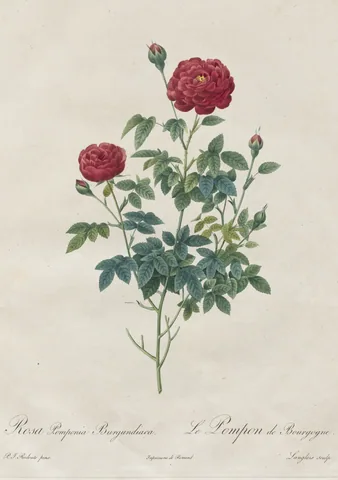
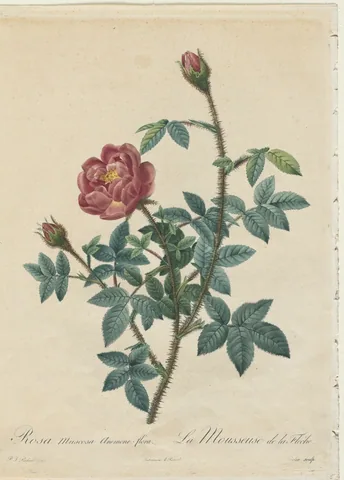
For the engraved roses, the Pompon Rose, the Moss Rose and the Provence or French Rose are stipple and line engravings colored by hand, also from Cleveland, from the Les Roses years. They are small and dense, good in a bathroom, a guest room or a run of frames up the stairs.
The lilies, irises and the rest
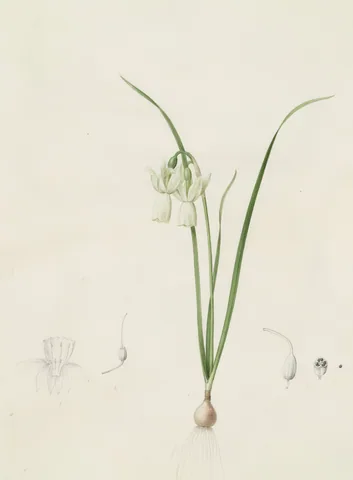
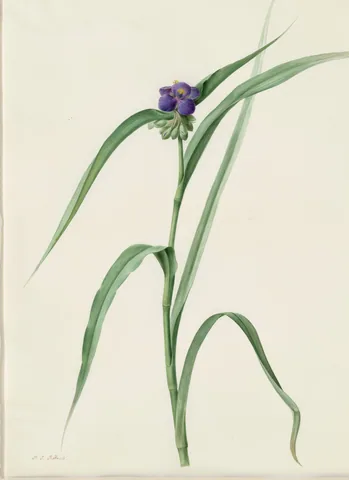
Les Liliacées gives the taller, more graphic flowers: Iris ochroleuca, white irises marked with yellow, Narcissus calathinus and Tradescantia virginica, all his own watercolors on vellum. They are tall, which suits a narrow wall or the space beside a window; the iris at 13 × 20 in, $119 framed, or up to 32 × 48 in as canvas. The engraved Crocus sativus, the saffron crocus, is a small, jewel-like plate for a kitchen.
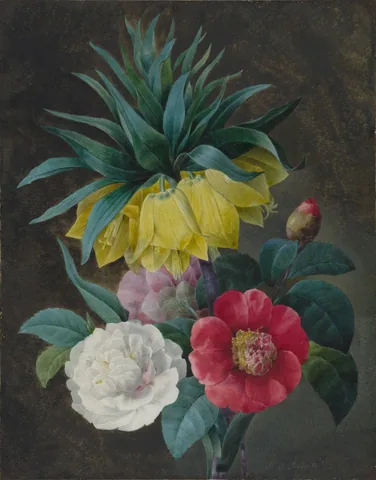
For one bigger piece over a sofa, a bed or a dresser, choose a bouquet instead of a single stem: Four Peonies and a Crown Imperial or A Bouquet of Flowers with Insects, both watercolors in the National Gallery of Art, full and generous where the book plates are spare.
Choosing by color
Cottage rooms run on soft color, so let the flower pick up something already in the room: the pink of a quilt, the red of a rug, the cream of painted cabinets. For pink, the Cabbage Rose and the Moss Rose. For a stronger note, the red Pompon Rose. For a cool, fresh wall, the white irises of Iris ochroleuca. If the room already has a lot of pattern, a floral wallpaper or chintz, choose the plainest plates and give them wide mats, so the pictures read as calm spaces in a busy room rather than more pattern. Tying a room together with art shows how to choose the color.
Where they go in a cottage home
- Over the bed. A pair of roses or a row of three, about two-thirds the width of the bed. What to hang over a bed has the sizes for each mattress.
- The living room. A grid of four or six over the sofa, all one size, all one frame. Gallery wall layouts draws a grid of six Redouté roses to scale.
- Kitchen and breakfast nook. The crocus, a rose, or a pair, behind acrylic and away from the stove. Art for a kitchen has the rules.
- Bathroom. One or two small engraved roses, framed. The acrylic keeps splashes off the paper.
- Stairs and hallways. A line of tall lilies or irises, each one centered at the same height above the stair tread below it, so the row climbs with the stairs.
- A nursery or a child’s room. The gentlest roses in pale frames.
Frames and mats
Cottage frames are light and a little old-fashioned. White wood is the classic, crisp against a painted wall; maple or natural oak suits pine furniture and wood floors. For a French country look, try gold. Choose a mat in cream or antique white rather than bright white; it warms the paper ground of the plates, and a generous mat makes a small flower look precious rather than lost. Match the frames across a group: it is the thread that ties the roses together. How to choose a frame color goes through each.
On paper they look truest, as they were made: a framed print on smooth cotton paper, or the textured Cold Press paper for the watercolors, which has the grain of watercolor paper.
Mixing Redouté with other cottage pictures
A wall of nothing but botanical plates can feel like a herbarium. Mix in one or two pictures of people in gardens: Renoir’s A Girl with a Watering Can or Pissarro’s The Artist’s Garden at Eragny. Hans Simon Holtzbecker’s hollyhock (Alcea rosea), painted in the 1650s, is an older botanical in the same spirit, and hollyhocks are one of the old cottage-garden flowers. The rest are in Botanical and Flowers, and every Redouté is on the Redouté page.
Questions people ask
Who was Redouté?
A painter of flowers (1759 to 1840), born in what is now Belgium, called the Raphael of flowers, who worked for Marie Antoinette and the Empress Joséphine and published Les Liliacées and Les Roses.
Are these original Redouté prints?
No. They are fine-art prints made from photographs of Redouté’s watercolors and of hand-colored engravings in museums, and each listing says which it is.
How many Redouté prints should I hang together?
Two or three in a row, or a grid of four or six, all the same size and in matching frames.
What frame suits Redouté?
White wood, maple or natural oak with a cream mat for cottage style; gold for a more French look.
Redouté to start with
All Redouté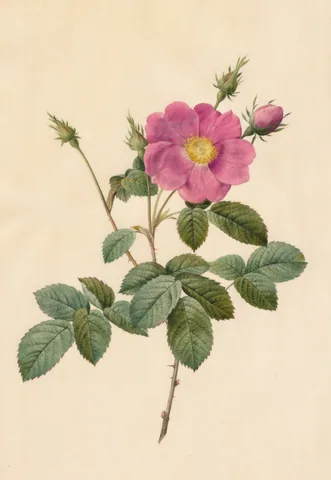


Sources
More from the Journal
 Guide · 8 min
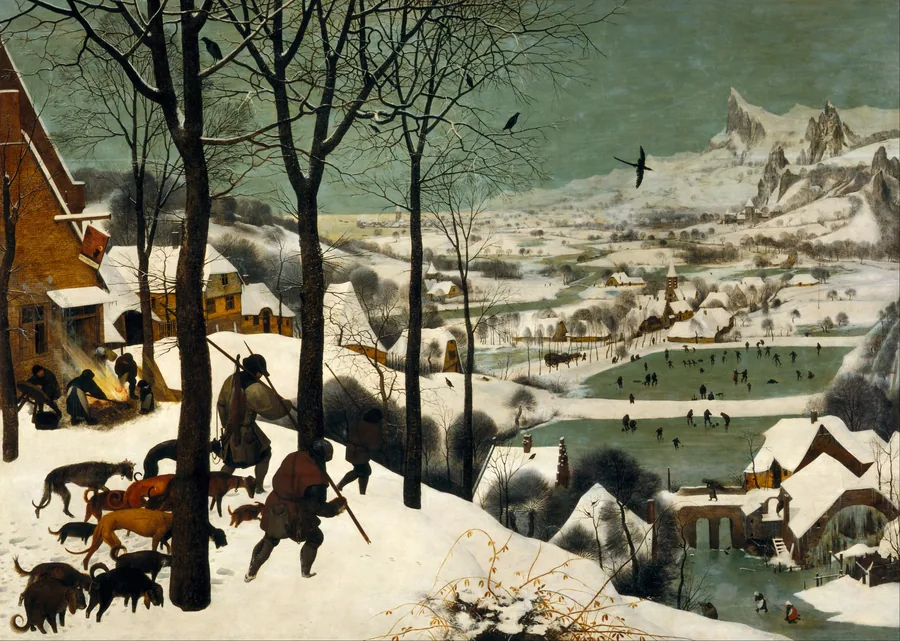
Winter and Christmas art prints worth hanging
Snow scenes that can stay up until March, Nativity paintings for December, the sizes and frames that suit them, and when to order for Christmas. Guide · 7 min
Art as a gift: how to choose a print they’ll keep
Choose for their walls, not yours: safe sizes and frames, ideas by occasion, the gift note in the box, and how early to order for the holidays. Guide · 7 min
Art gifts for mom and dad: ideas by what they love
Art gift ideas for parents, by what they love: gardens, the sea, books, travel, home. Safe sizes, a personal line of words, and when to order for Christmas. Guide · 6 min