
Guide
Entryway and hallway art: sizes, heights and ideas
What to hang in an entryway and a hallway: art over a console, a row down a long hall, tall pictures for narrow walls, and the sizes and heights that work.
The entry is the first wall anyone sees in your home, and the hallway is the one you walk past most often. Both are awkward: the walls are narrow, broken by doors and light switches, and you see them up close or in passing rather than from a sofa. The good news is that they need less art than you think, and that small and tall pictures, the hardest to place anywhere else, are exactly right here.
Over an entry console
If there is a console, a bench or a chest by the door, the art belongs to it. Use the same rule as over a sofa: the art, frame included, about two-thirds as wide as the furniture. Hang it so the bottom of the frame is 6 to 10 inches above the top, about 8 is the sweet spot, so the two read as one arrangement, and leave room for a lamp or a bowl for keys.
| Console | Aim for | Framed print |
|---|---|---|
| 36 in | about 24 in | 16 × 14 in, 23 in across, $109 |
| 48 in | about 32 in | 24 × 21 in, 31 in across, $194 |
| 60 in | about 40 in | 30 × 26 in, 37 in across, $224 |
A mirror over the console is the practical choice, and many entries have one. Then hang the art on the wall you face as you come in, or on the side wall beside the mirror, rather than crowding both onto one wall.
A bare entry wall
With no furniture under it, hang the art at the usual height: its center 57 inches from the floor, roughly eye level. In a small entry, one picture is enough. Choose something that sets the tone of the house and is easy to take in at a glance as you walk past; a strong shape reads better than fine detail from the doorway.
Tall pictures for narrow walls
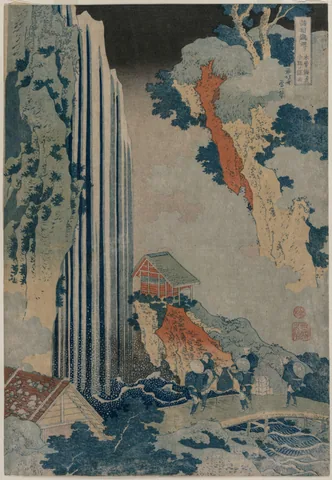
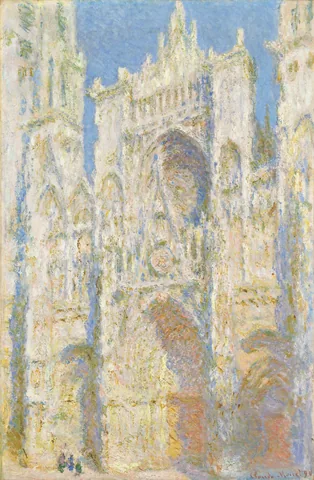
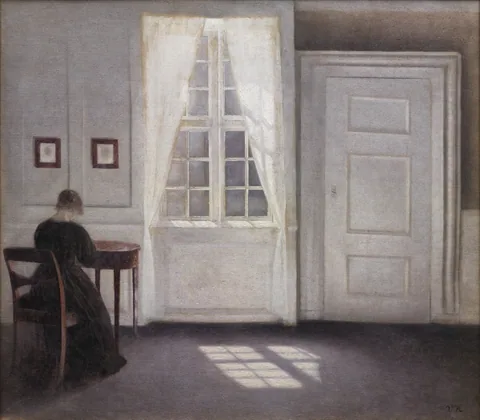
The narrow strip of wall beside a door, between two doors or at the end of a short passage is where portrait-shaped pictures shine. Some of the best paintings in the catalog are tall:
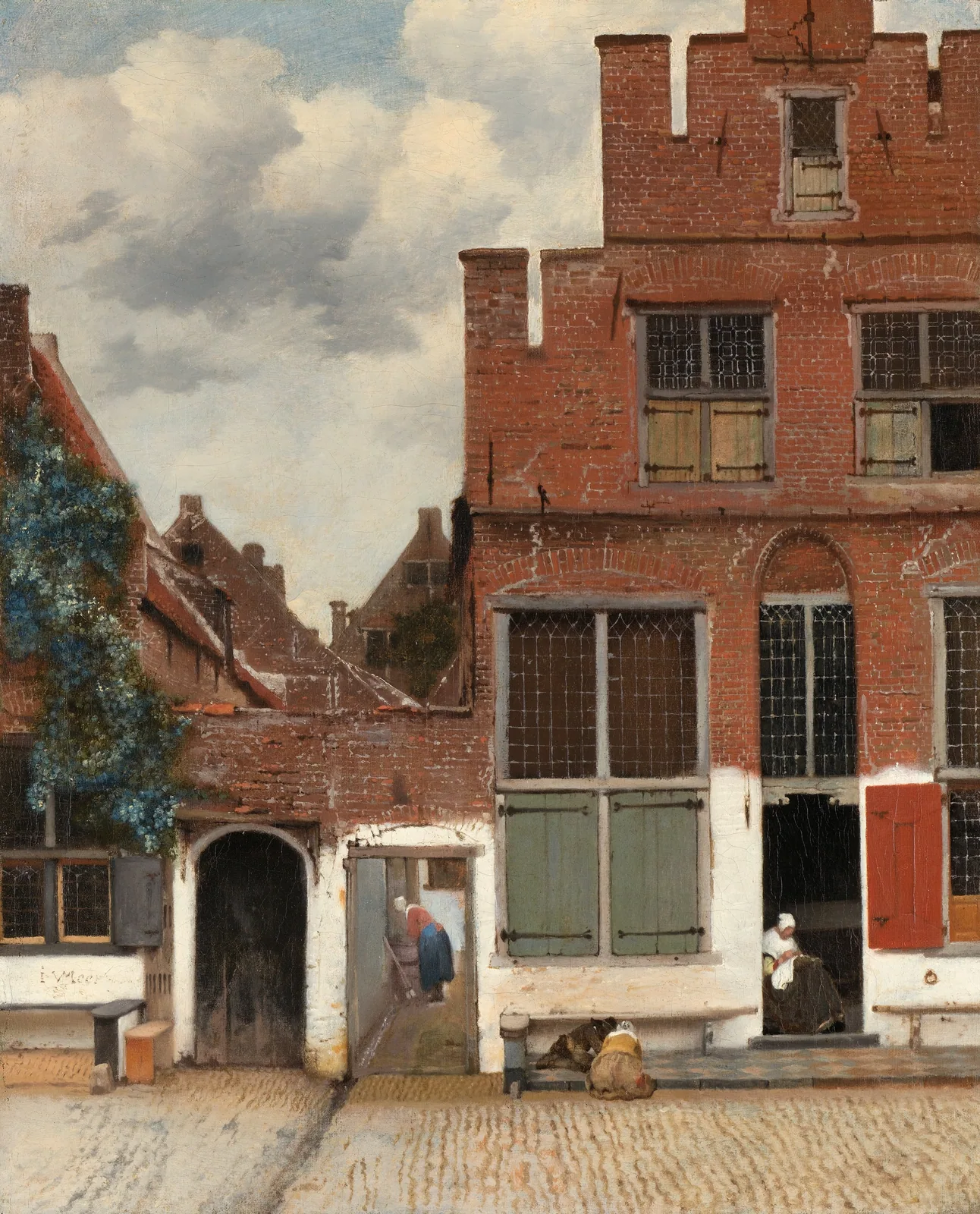
- The Little Street, Johannes Vermeer. Brick houses on a street in Delft, a doorway and a passage to a courtyard. It is one of only three views of Delft Vermeer painted, and in 2015 research in the city’s archives placed it on Vlamingstraat. A picture of a front door, for beside your own. It is small, about 21 by 17 inches, in the Rijksmuseum.
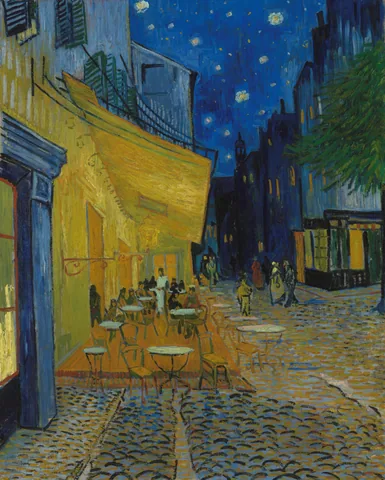
- Café Terrace at Night, Van Gogh. Yellow light spilling onto a street: a welcome on a dark hall wall.
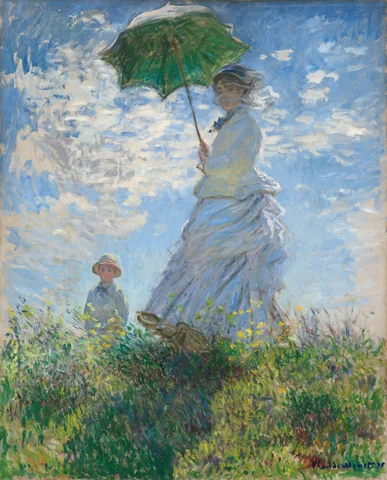
- Woman with a Parasol, Monet. Wind, sky and movement, for an entry that gets little daylight.
- Sudden Shower over Shin-Ōhashi Bridge, Hiroshige. People hurrying across a bridge in the rain, the right subject for a coat-and-umbrella corner.
- Ono Waterfall on the Kiso Road, Hokusai, and Monet’s Rouen Cathedral: both tall, both simple from a distance.
- Iris ochroleuca, Redouté, and Audubon’s Snowy Owl: a flower or a bird, quiet and narrow.
Down a long hallway
A hallway is best treated as a row. Hang a run of pictures at one height, the centers all at 57 inches, so the eye travels along a straight line, and keep the gaps the same between every frame. Pictures from one series look most deliberate: Hiroshige’s Edo views, Audubon’s birds or Redouté’s flowers, all at one size and in one frame. A long, low picture such as Avercamp’s A Scene on the Ice, almost twice as wide as it is tall, works above a bench or a radiator cover along the wall.
Hallway art is seen from a foot or two away, so it can be small, 12 to 20 inches on the long side, and it rewards detail: this is the place for the busy, close-looking pictures that get lost across a living room. Gallery wall layouts has the spacing for a grid or a row.
The end of the hall is different. The wall you walk toward is a focal point, seen from the whole length of the hall, so give it one larger piece with a strong, simple shape, and light it if you can.
Light and color in a dark hall
Many halls have no window. Pale pictures help there: a light sky, a snow scene, white flowers, with a white or cream mat that catches whatever light there is. If the hall has one ceiling light, hang the most important picture where that light falls, and keep very dark paintings for walls that get daylight. A warm bulb flatters old paintings more than a cold one.
Narrow halls: think about depth
In a tight hallway people brush the walls with a shoulder, a bag or a laundry basket. A shallow frame is kinder there: our slim wood frames stand 0.875 in off the wall, while the deep box frames stand out 2.25 in. A canvas on slim bars or a metal print is also shallow. Hang with two hooks or a security fixing so a bumped frame stays level; hanging and hardware lists the options.
Stairs
On a staircase, center each frame 57 to 60 inches above the stair tread directly below it, so the row climbs at the same angle as the handrail. How high to hang art draws it out and has a nail calculator.
Frames for an entry and a hall
Match the front door and the floor. A black frame suits black hardware and a modern entry; natural oak suits wood floors and a bench; white keeps a dark, windowless hall light. In a hallway row, use one frame for every piece. Framed prints behind acrylic are the sensible choice where people pass close: the acrylic takes fingerprints and knocks and keeps dust off the paper.
Questions people ask
What size art over an entry table?
About two-thirds of the table’s width, frame included, with the bottom of the frame about 8 inches above it.
How high should hallway art hang?
Centers at 57 inches from the floor, all at the same height down the length of the hall.
What art suits a narrow wall?
A tall, portrait-shaped picture, or two small ones stacked, such as Vermeer’s Little Street or a Hiroshige Edo view.
Should hallway art match?
It helps. One frame color and one size down a hall reads as a planned row; mixed frames read as clutter in a narrow space.
Tall pictures for narrow walls
Portrait prints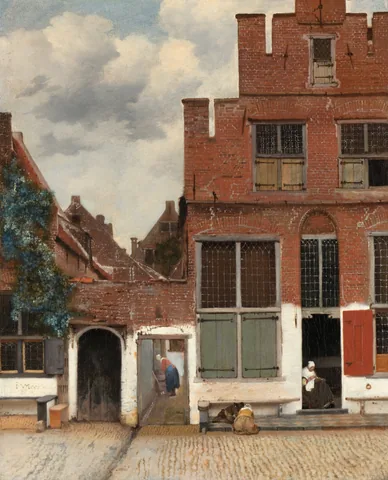


Sources
More from the Journal
 Guide · 8 min
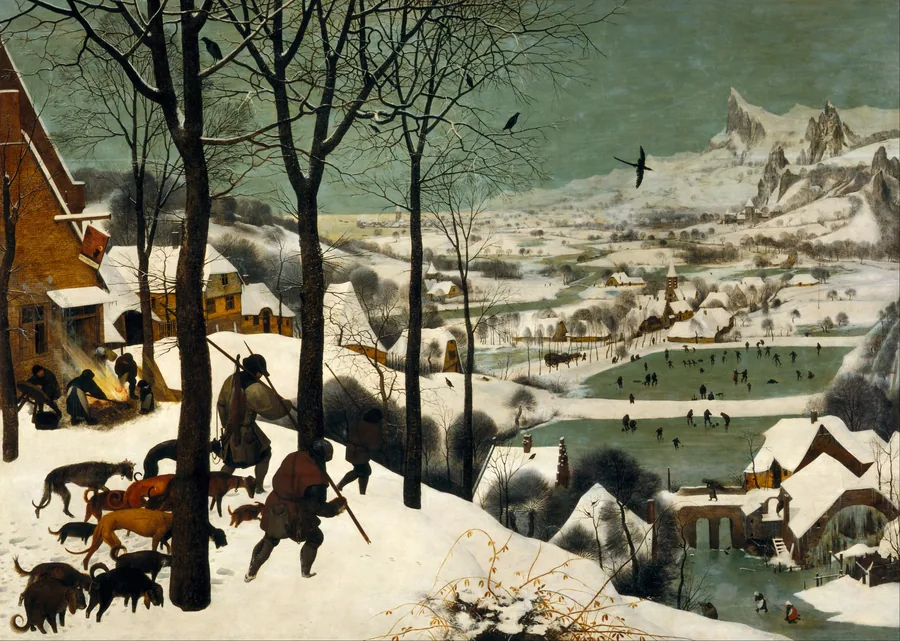
Winter and Christmas art prints worth hanging
Snow scenes that can stay up until March, Nativity paintings for December, the sizes and frames that suit them, and when to order for Christmas. Guide · 7 min
Art as a gift: how to choose a print they’ll keep
Choose for their walls, not yours: safe sizes and frames, ideas by occasion, the gift note in the box, and how early to order for the holidays. Guide · 7 min
Art gifts for mom and dad: ideas by what they love
Art gift ideas for parents, by what they love: gardens, the sea, books, travel, home. Safe sizes, a personal line of words, and when to order for Christmas. Guide · 6 min