Biggest sale yet: 30% off canvas, 25% off framed and posters, 15% off everything else, at checkout through Nov 30.
Paintings from the Low Countries, 1400s to 1700s: flower bouquets, winter ice, harbors, quiet courtyards and portraits by Rembrandt, Hals, Ruisdael and their circle.
978 artworks · page 13 of 21
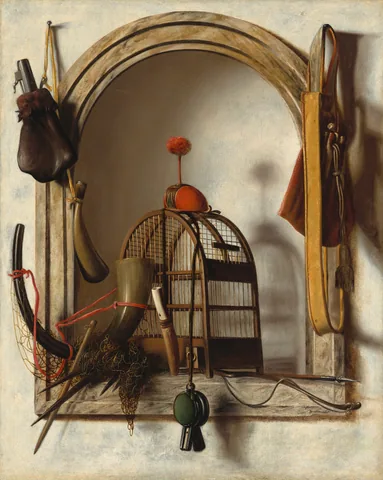
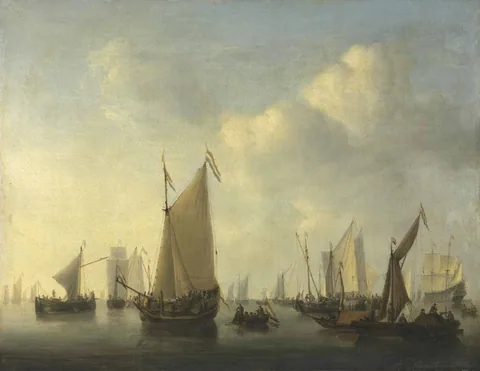
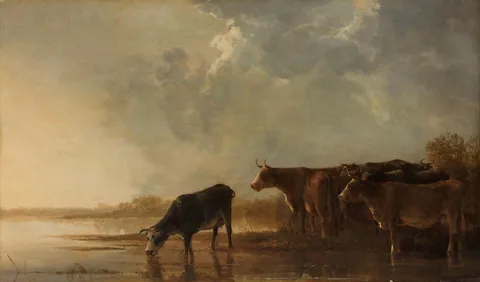
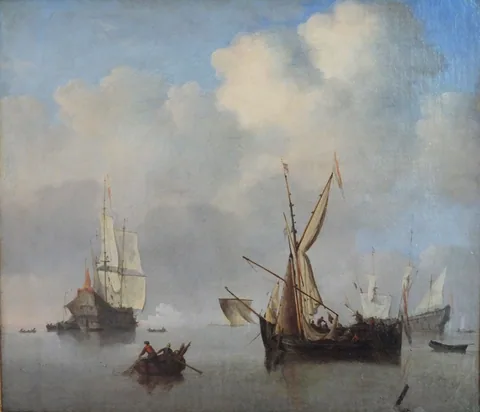
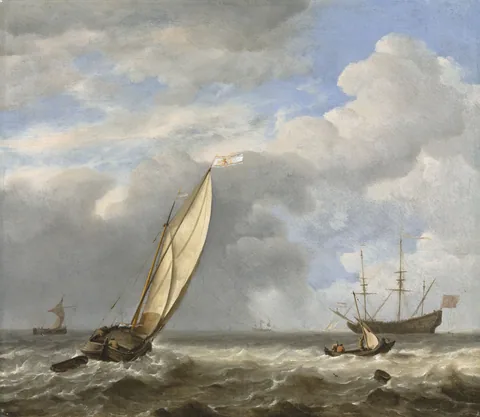
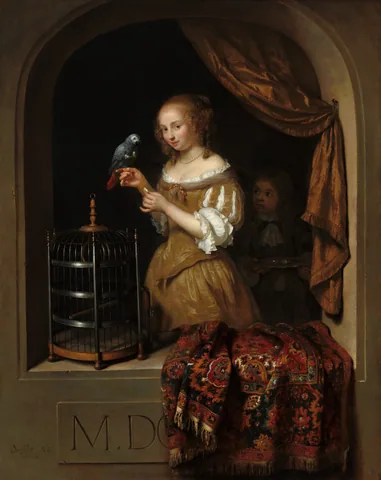
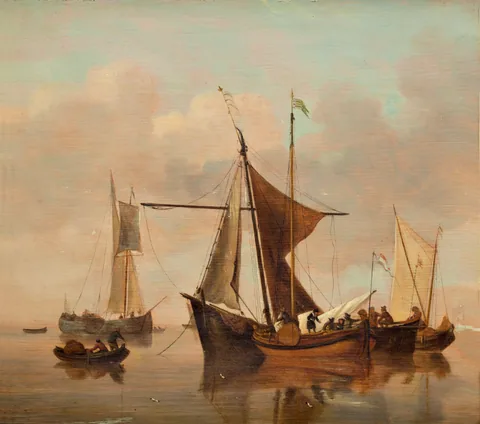
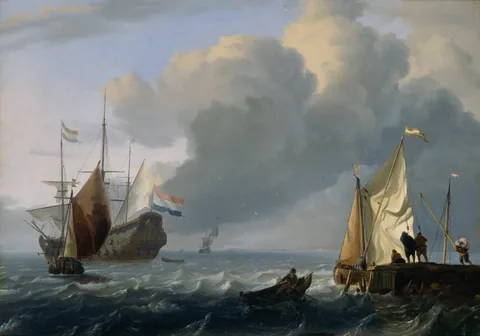
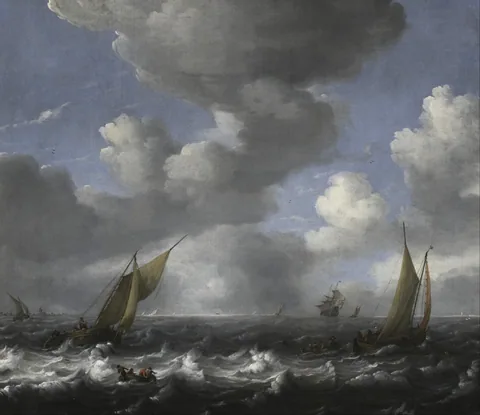
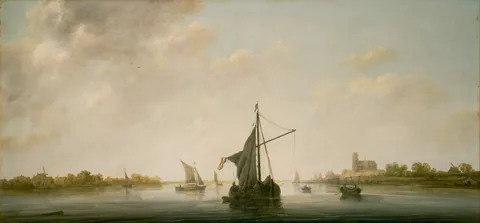
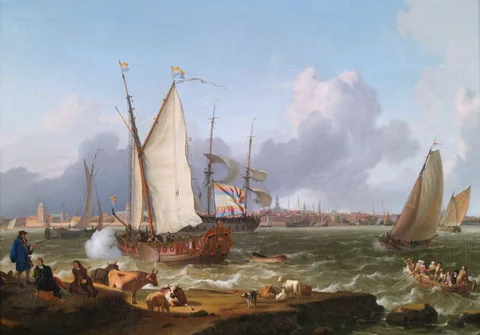
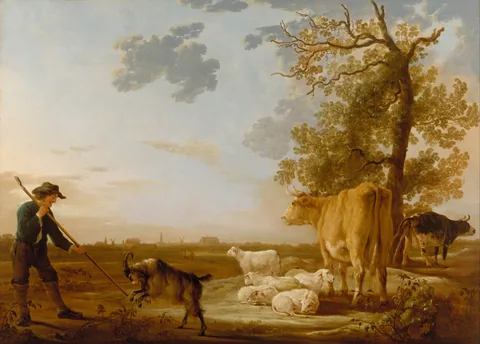
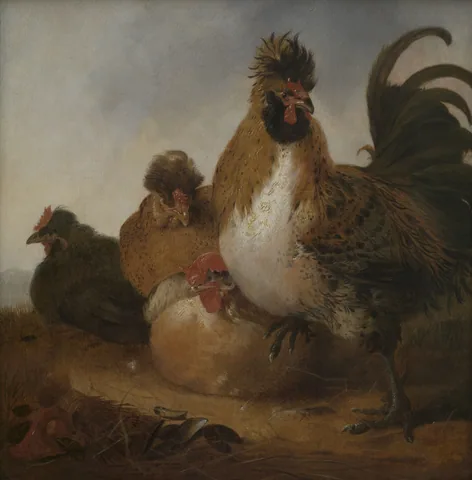
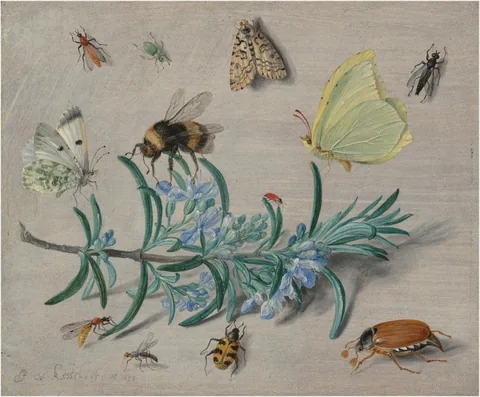
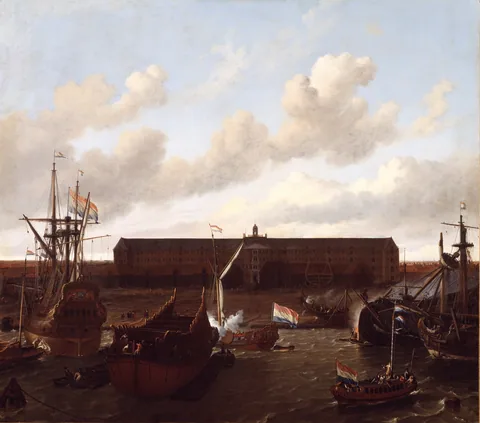
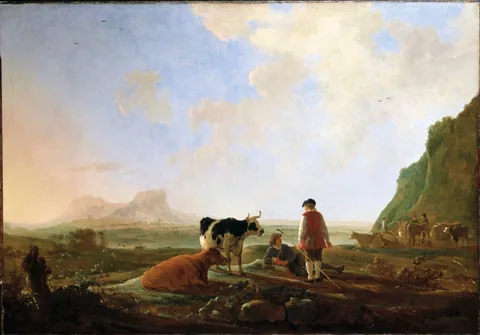
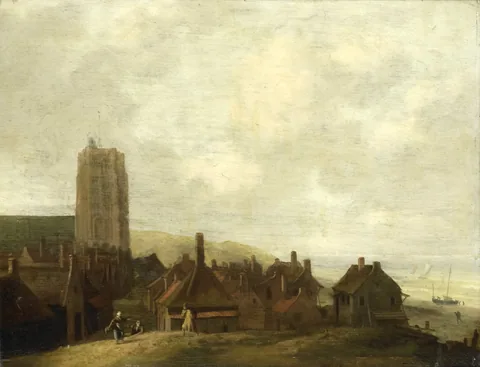
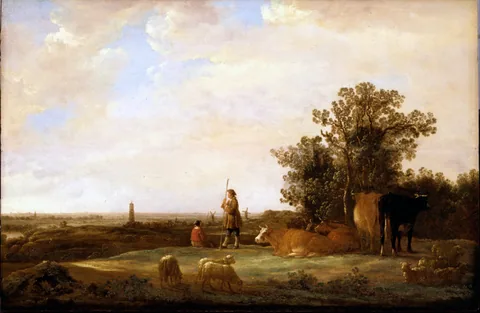
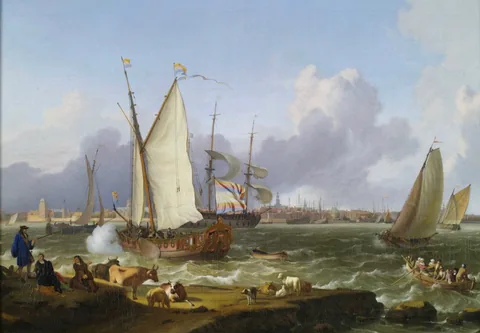
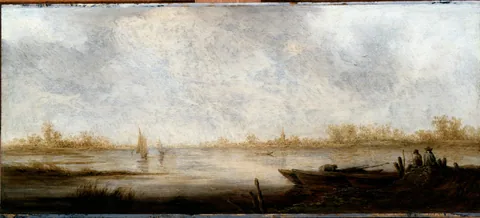
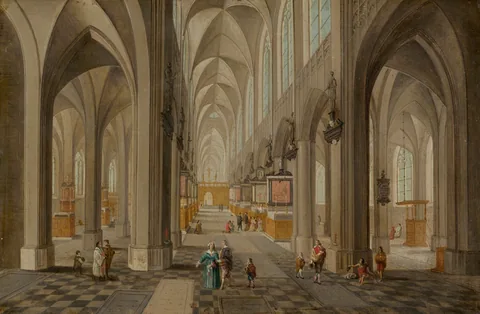
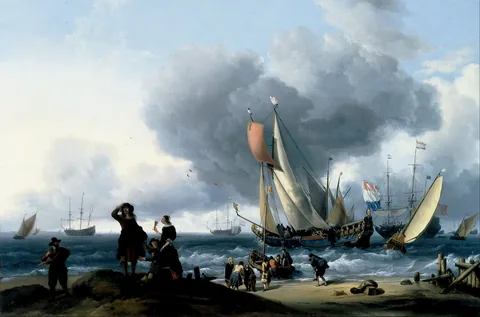
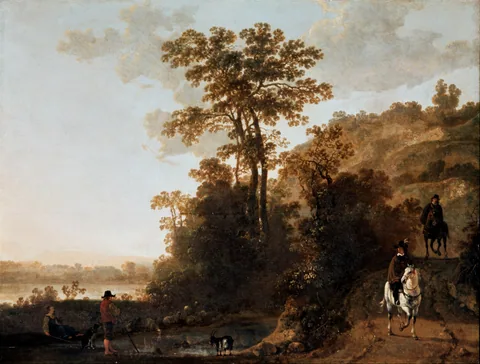
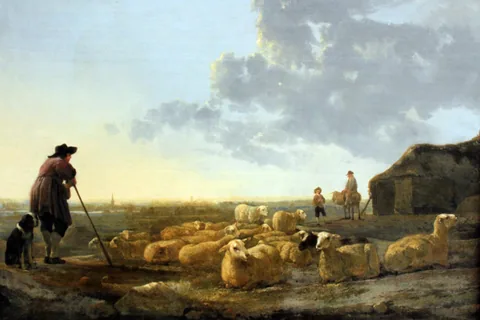
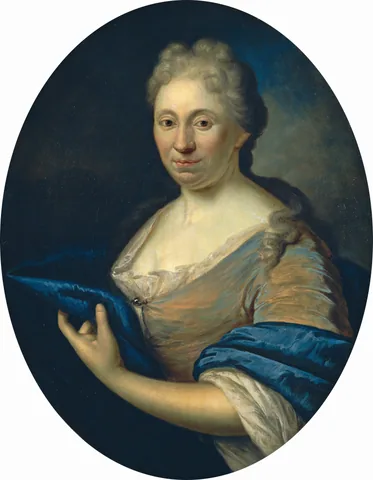
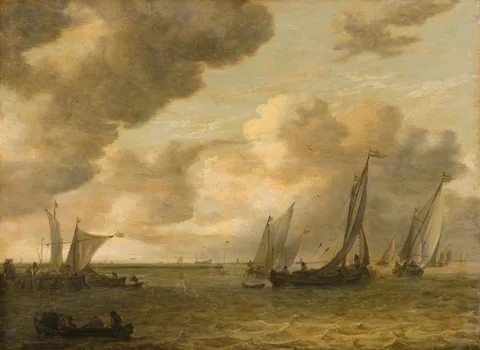
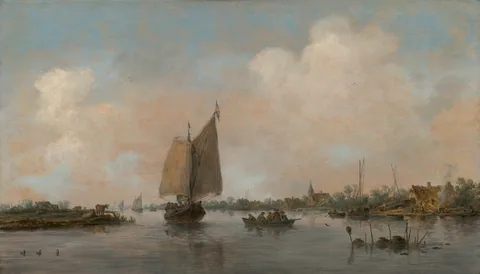
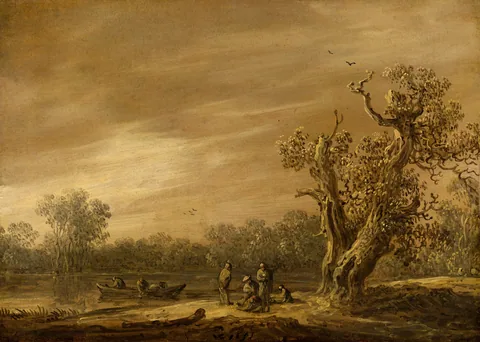
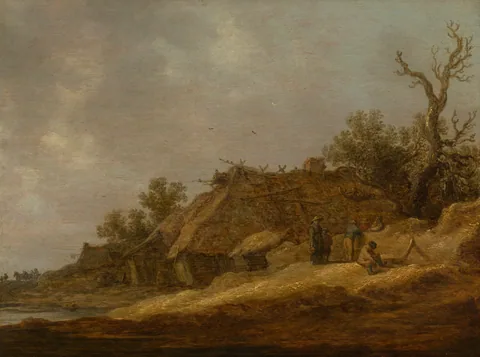
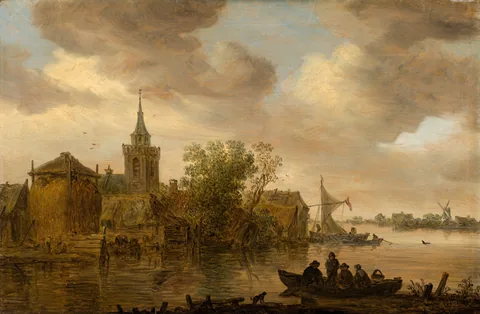
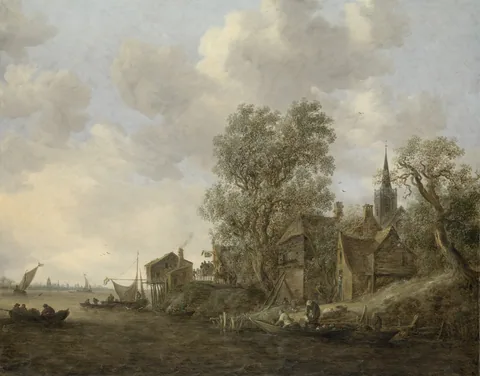
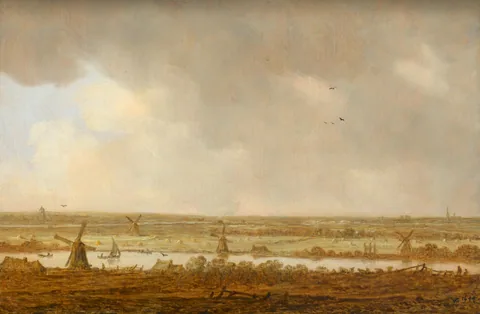
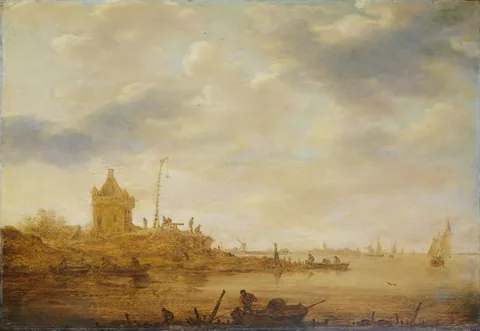
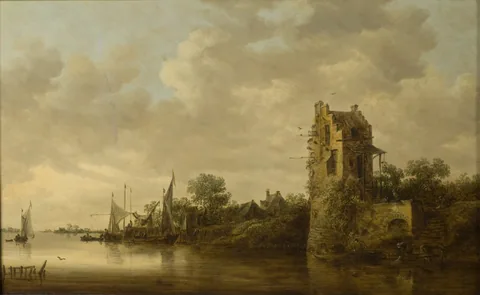
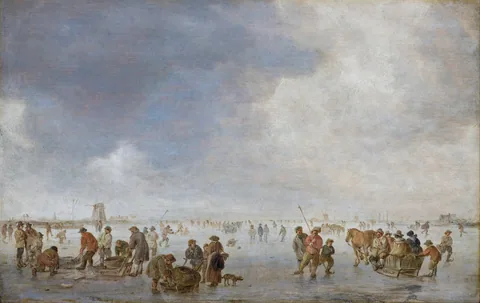
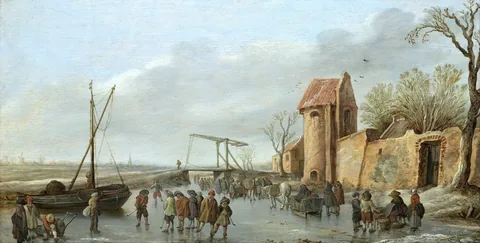
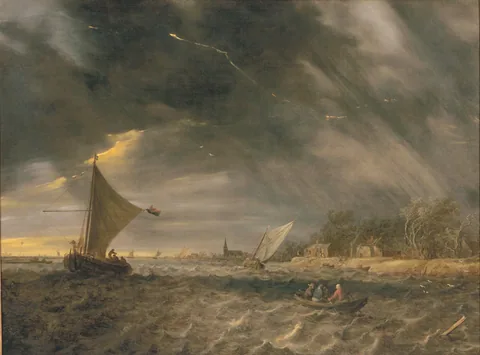
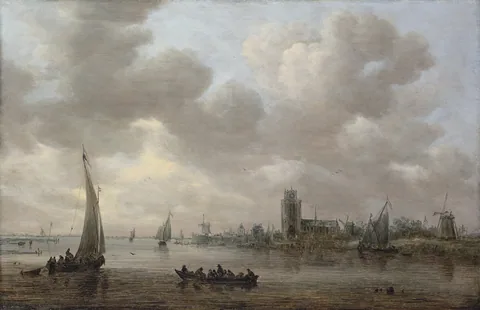
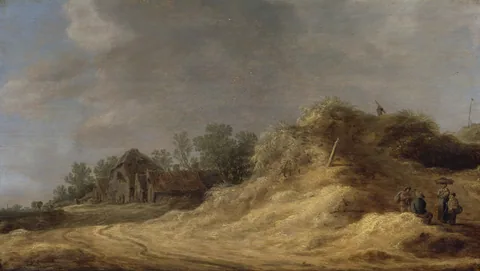
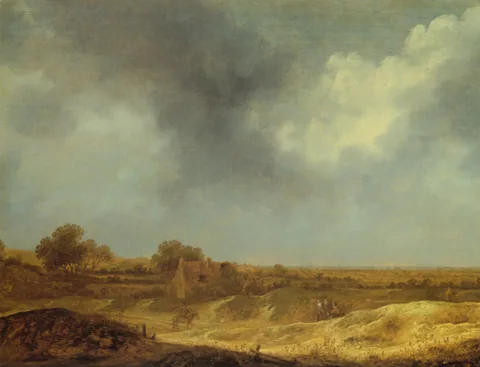
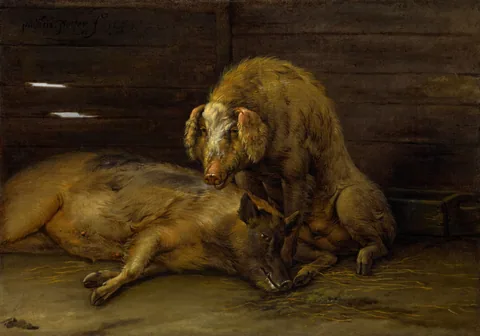
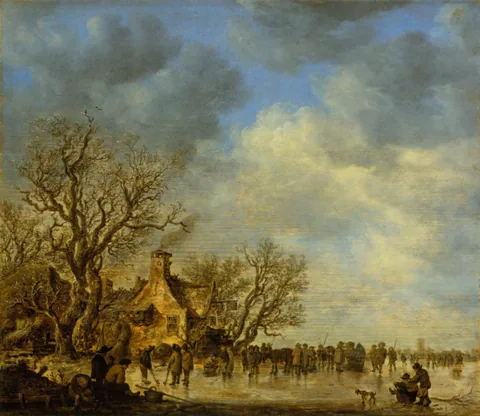
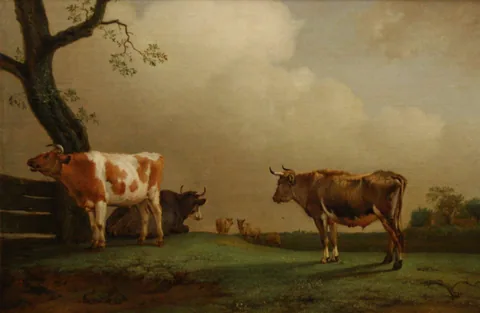
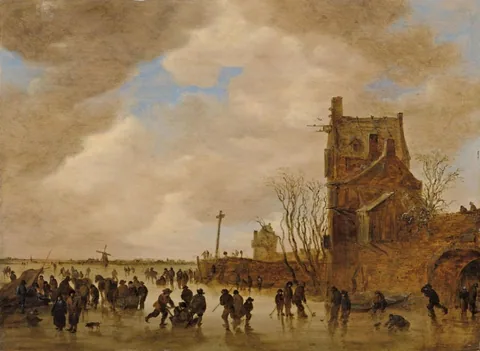
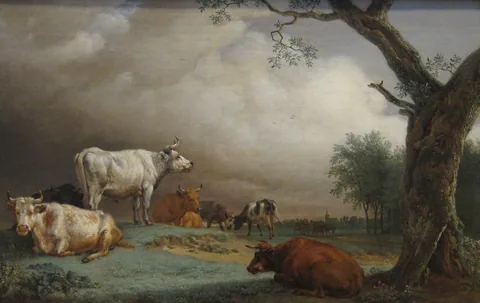
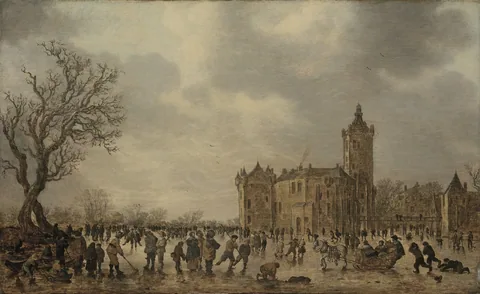
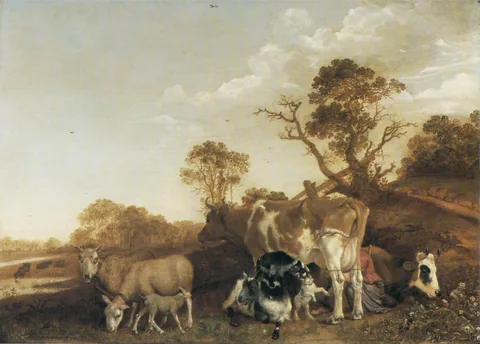
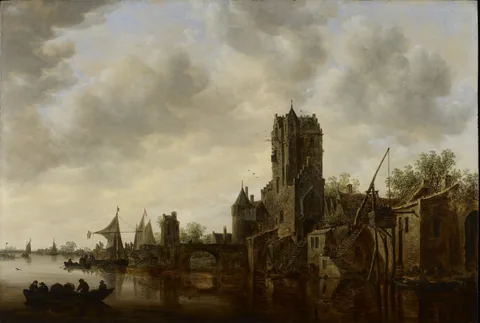
In the 1600s the young Dutch Republic was the most prosperous nation in Europe. Religious painting declined sharply there, and a large new market grew for every kind of secular picture: landscapes, seascapes, still lifes, flowers, portraits and scenes of daily life, usually from painters who specialized in one of them. To the south, in the Spanish-ruled Netherlands, Antwerp, the city of Rubens and Van Dyck, was the center of Flemish Baroque painting.
The Flemish line begins earlier, with Pieter Brueghel the Elder, whose Netherlandish Proverbs fills a village with sayings acted out, and his son Jan Brueghel the Elder, friend and frequent collaborator of Rubens. On the Dutch side, Rembrandt is here with The Night Watch and The Jewish Bride, and Vermeer with The Milkmaid, View of Delft and The Little Street. Landscape is the real strength of the collection: the skies of Jacob van Ruisdael, its largest name; the warm river light of Aelbert Cuyp, as in The Maas at Dordrecht; Jan van Goyen's brown and gray estuaries; Hobbema's avenue at Middelharnis; and the frozen rivers of Hendrick Avercamp. Add the ships of Willem van de Velde the Younger, the courtyards of Pieter de Hooch and the flower pieces of Rachel Ruysch and Jan van Huysum.
These paintings suit warm wood, deep color and lamplight. A black frame with a gold lip or an espresso frame flatters interiors and still lifes, and gold suits the flower pieces. A wide river view or winter scene makes a fine single piece over a sofa as gallery-wrapped canvas, while small interiors look best framed with a mat and grouped in twos or threes. Vermeer and De Hooch sit naturally side by side when they are framed alike.
Flemish painting comes from the Southern Netherlands under Spanish rule, with Antwerp, home of Rubens and Van Dyck, at its center and a strong line in Counter-Reformation religious pictures. Dutch painting comes from the Dutch Republic to the north, which split away during the Eighty Years' War; there religious painting declined sharply, and a large market grew for landscapes, still lifes, portraits and everyday scenes.
From Vermeer: Girl with a Pearl Earring, The Milkmaid, View of Delft, The Little Street, The Astronomer, The Art of Painting, Woman Holding a Balance, The Music Lesson, Girl Reading a Letter at an Open Window and Woman in Blue Reading a Letter. From Rembrandt: The Night Watch, The Jewish Bride and more. Search either name to see them all.
Not if you choose the intimate ones. Interiors by Vermeer and Pieter de Hooch, a small Coorte still life or a single flower piece suit a small room or a hallway, framed with a mat. Keep the larger, open pieces, such as Ruisdael's skies, Cuyp's rivers, Willem van de Velde's ships or Avercamp's skating scenes, for walls where you can stand back and take in the whole scene.
Sources: Wikipedia: Dutch Golden Age painting; Wikipedia: Flemish Baroque painting; Wikipedia: Pieter Bruegel the Elder; Wikipedia: Netherlandish Proverbs; Wikipedia: Jan Brueghel the Elder; Wikipedia: Aelbert Cuyp; Wikipedia: Hendrick Avercamp; Wikipedia: Jacob van Ruisdael; Wikipedia: Rachel Ruysch; Wikipedia: Jan van Huysum
