
Story
Dürer’s Self-Portrait at 26: the artist as a gentleman
Painted in 1498 after his first trip to Italy: fine clothes, gloves, a mountain view and a cool stare. What it says, and choosing a print.
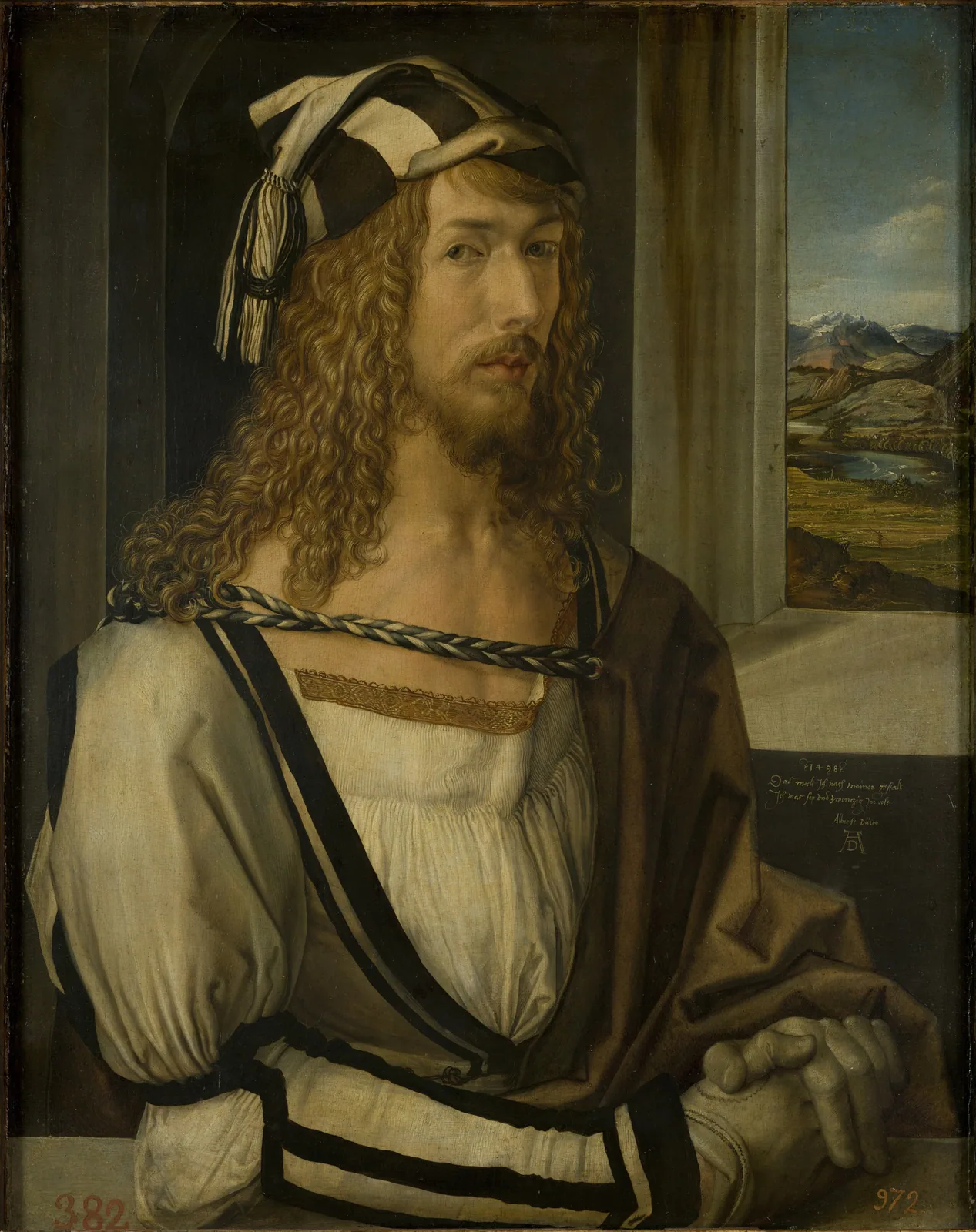
A young man with long golden curls looks out at us, cool and a little ironic. He wears a patterned hat with a tassel, a fine linen shirt edged with gold, a black and white jacket and a cloak tied over one shoulder. His hands rest in soft gloves. Through the window behind him lie a lake and snow-capped mountains. Albrecht Dürer painted himself like this in 1498, at 26.
Dressed as a gentleman
Here Dürer presents himself as a well-dressed gentleman, raised to the social position he felt his talent deserved. The gloves are telling. In his other portraits Dürer usually gave his sitters something to hold; here his own hands are idle, folded in silk.
He had recently come back from his first journey to Italy. Writing from Italy to Willibald Pirckheimer, he said he would freeze after the Italian sun, and put the contrast bluntly: “Here I am a gentleman, at home only a parasite.” The fine clothes may be partly a brave front.
The view from the window
The landscape through the window, a lake, a plain and distant snowy peaks, may recall his travels abroad, or his state of mind. The writer Marcel Brion saw the painting as a farewell to Dürer’s carefree youth.
Three self-portraits
Dürer drew himself at 13 with the help of a mirror. He painted three self-portraits: one holding a thistle, in 1493, now in the Louvre; this one, in 1498; and the portrait of 1500 in Munich.
Where is the painting?
In the Museo del Prado in Madrid. For a long time it hung beside a portrait of Dürer’s father. In 1636 the city of Nuremberg gave the pair to King Charles I of England, and in 1654 King Philip IV of Spain acquired this one.
Look closer
These details come from the scan we print from, 24,047 pixels on the long side. Pick a detail, or zoom in and drag to look around.
A cool, steady look straight at us, the light from the window on his face.
Choosing a print
Life size, or larger. The panel is about 20 by 16 inches. Our 16 × 20 in framed print is about life size, and framed prints go up to 29 × 36 in. Our scan is very detailed, down to single curls. Framed prints go up to 29 × 36 in, canvas up to 32 × 40 in and unframed art prints up to 38 × 48 in.
Where it works. A study, a library or a hallway. It is a natural gift for an artist, a designer or anyone who takes their style seriously. See our gift guide.
Which material. The fine detail suits smooth cotton paper in a frame, with a mat. See our papers and mats.
Frames. A wide gold frame like our Gold Plein Air suits an old panel; black wood picks up the stripes. See all our frames.
Two self-portraits. Pair it with his Portrait of the Artist Holding a Thistle, painted five years earlier. Open the two as a set.
Questions
How old was Dürer in this self-portrait?
He was 26. He painted it in 1498, after his first trip to Italy.
Where is it?
In the Museo del Prado in Madrid.
How many self-portraits did Dürer paint?
Three painted ones: 1493 (the Louvre), 1498 (the Prado) and 1500 (Munich), plus drawings.
How big is it?
52 × 41 cm, about 20 × 16 in.
Can it be printed legally?
Yes. It is more than 500 years old and in the public domain. What public domain means.
More Dürer
All Dürer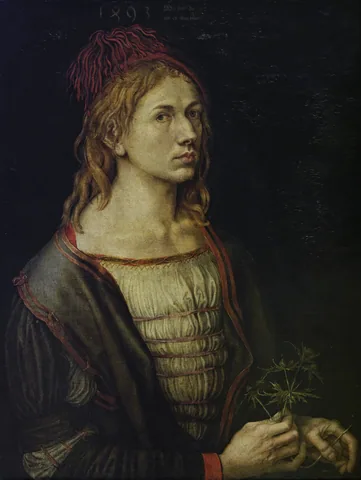
More in Interiors and Portraits and Old Masters.
Sources
More from the Journal
 Story · 7 min
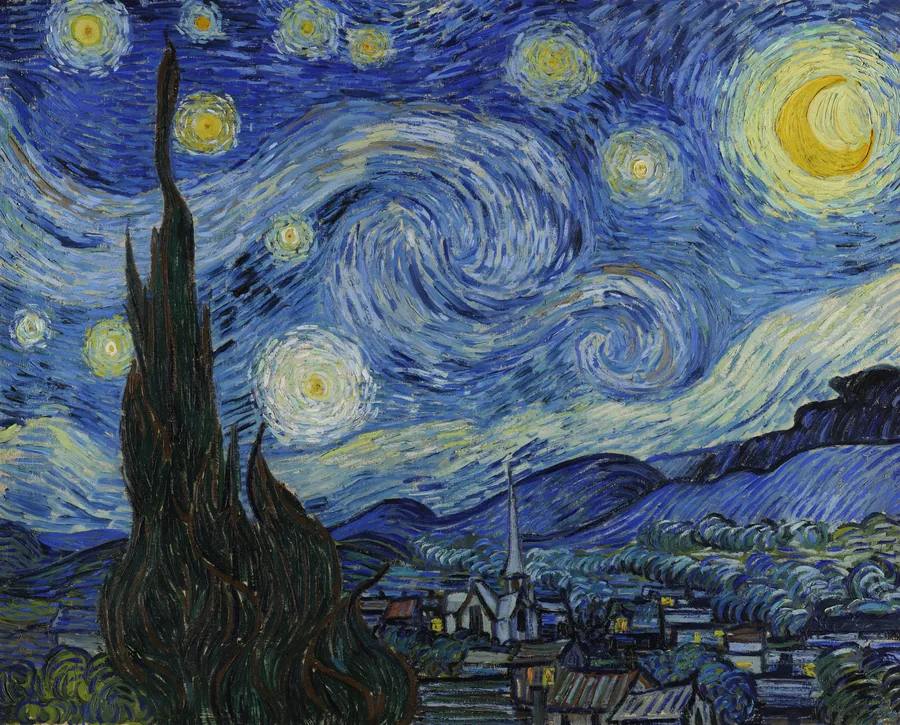
Van Gogh’s Starry Night: the facts, and choosing a print
Painted in June 1889 at an asylum in Provence: the view from his window, plus a village he made up. What is real, what it means, and which print to choose.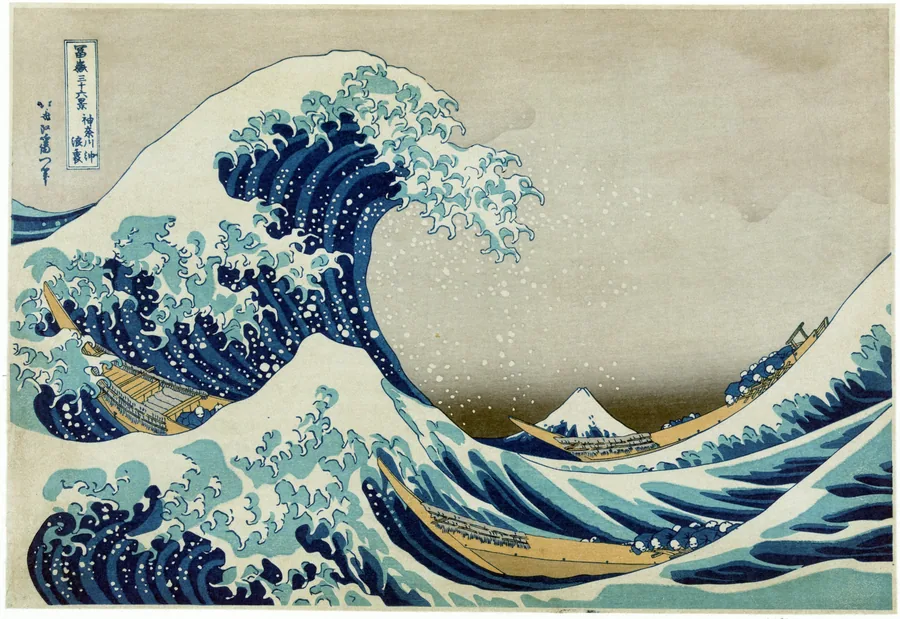 Story · 7 min
The Great Wave off Kanagawa: meaning, history and prints
A woodblock print, not a painting, and a storm wave, not a tsunami. What it shows, why no two impressions match, and how to choose a print.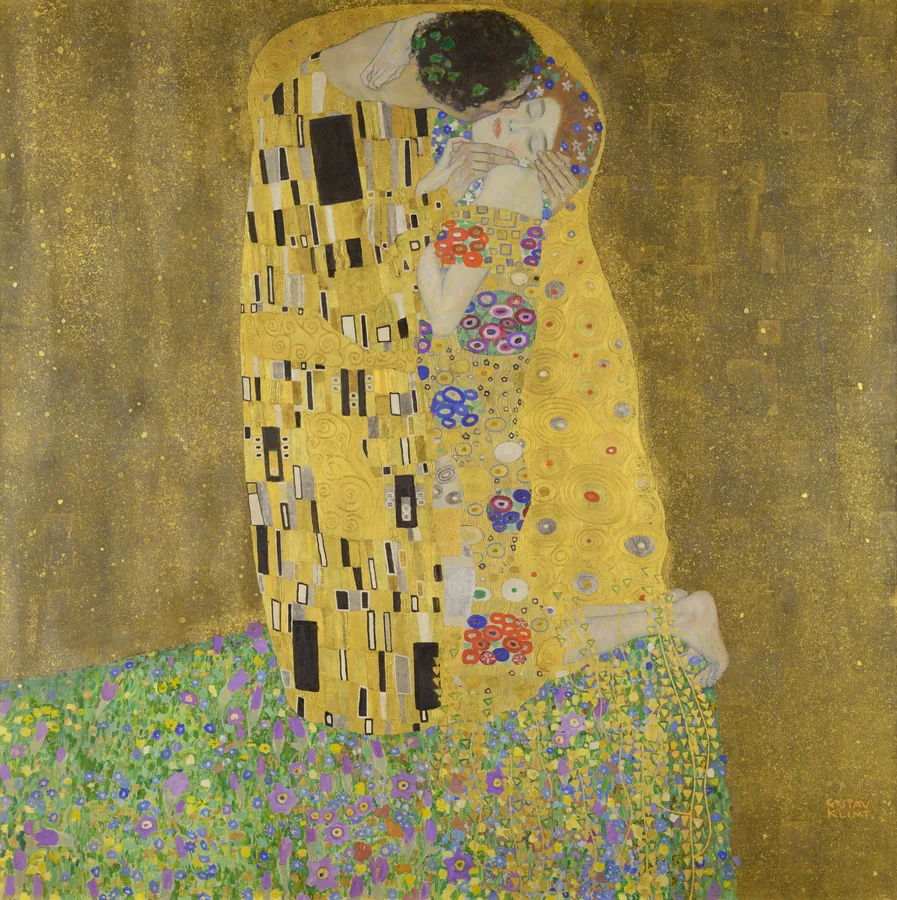 Story · 7 min
Klimt’s The Kiss: gold leaf, meaning and choosing a print
Real gold leaf on canvas, finished in 1909. The story of Klimt’s lovers, what a print can and can’t reproduce, and which size to choose. Story · 7 min