
Story
Manet’s The Railway: the story behind Gare Saint-Lazare
A woman with a puppy, a girl at the railings and a train you can only see as steam. Why it baffled the 1874 Salon, and choosing a print.
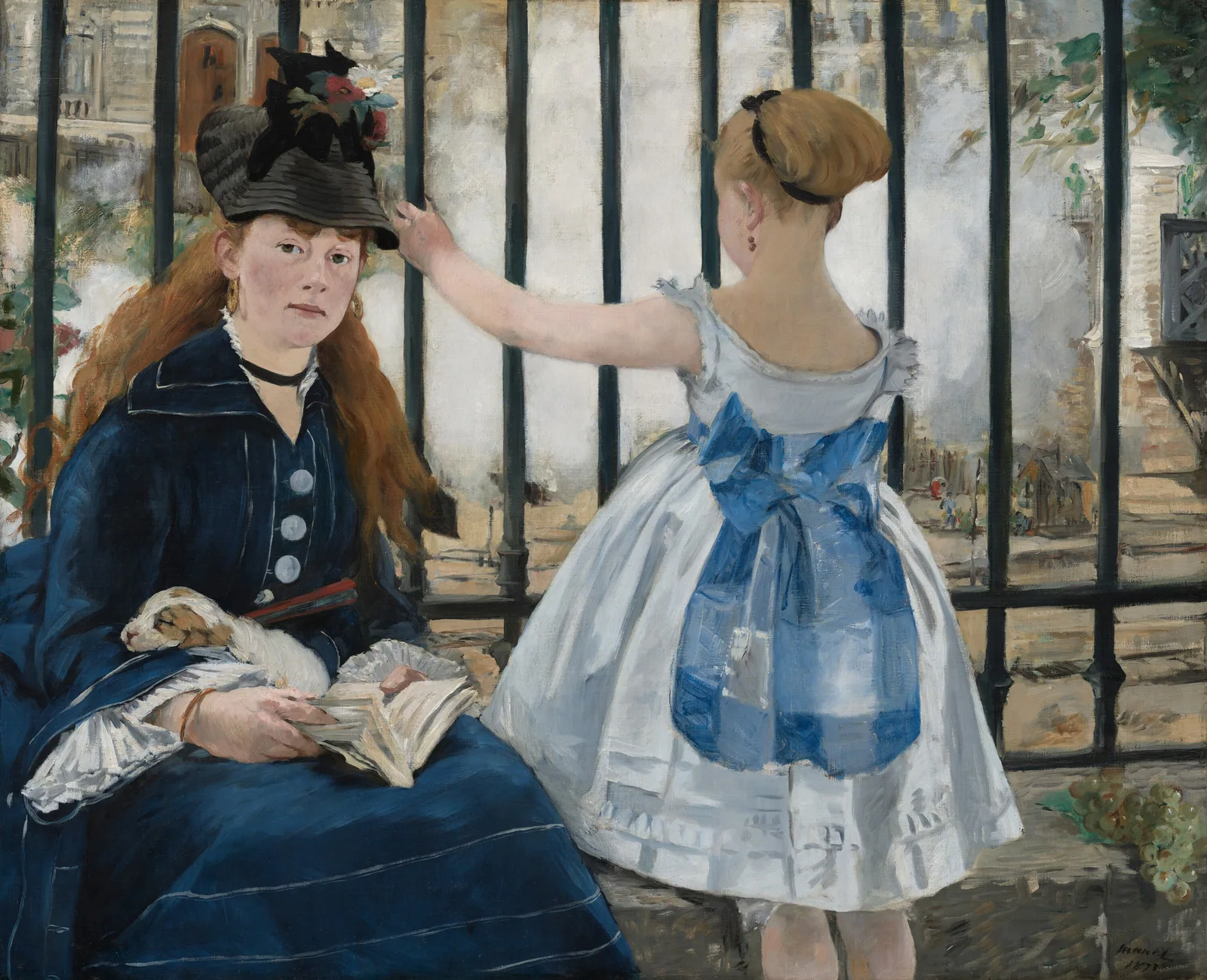
A woman in dark blue sits by an iron railing with a puppy asleep in her arm and a book open in her lap. She looks up at us as if we had interrupted her. Beside her a little girl in a white dress with a big blue bow stands with her back to us, gripping the railings and staring at something we cannot see: the railway below, where a train has left only a cloud of steam. Édouard Manet painted it in 1873, and it is often called Gare Saint-Lazare, after the Paris station nearby.
Who are they?
The woman is Victorine Meurent, Manet’s favorite model, who posed for some of his most famous pictures. This was the last time he painted her. The girl was the daughter of Manet’s neighbor, Alphonse Hirsch. They are not mother and daughter, and the painting does not tell us how they are connected.
Modern Paris
The scene is near the Gare Saint-Lazare. Behind the railings you can make out modern apartment buildings, a signal box and the Pont de l’Europe. One of the houses is on the rue de Saint-Pétersbourg, where Manet had rented a studio since July 1872.
The railings run straight across the canvas. Instead of a deep view into the distance, Manet flattens the picture and cuts the figures off from the world beyond, where the steam drifts. A few small things fill the foreground: the sleeping puppy, a fan, the book and, on the right, a bunch of grapes, perhaps a hint of autumn.
The Salon of 1874
Manet showed it at the Paris Salon in 1874. Visitors and critics found it baffling, its composition incoherent and its painting sketchy, and caricaturists made fun of it.
Where is The Railway?
In the National Gallery of Art in Washington. The baritone Jean-Baptiste Faure bought it soon after it was painted. The dealer Paul Durand-Ruel bought it in 1881 for 5,400 francs, and on 31 December 1898 the American collector Henry Osborne Havemeyer paid 100,000 francs for it. It stayed in the Havemeyer family until it was given to the National Gallery of Art in 1956.
Look closer
These details come from the scan we print from, 32,954 pixels on the long side. Pick a detail, or zoom in and drag to look around.
Manet’s favorite model, looking up from her book, in her last painting for him.
Choosing a print
Life size. The canvas is about 37 by 44 inches. Framed prints go up to 36 × 29 in, canvas up to 40 × 32 in and unframed art prints up to 48 × 39 in.
Where it works. A living room or a hallway. The wide shape sits well over a sofa or a console. At 24 × 19 in it fits a smaller wall. See what size art over a sofa.
Which material. The deep blue dress and the white one suit smooth cotton paper in a frame. Canvas, with its matte finish and no cover, shows off Manet’s loose brushwork. See our papers and canvas.
Frames. Black wood echoes the iron railings; white wood picks up the girl’s dress and the steam. See all our frames.
Manet’s Paris. Pair it with The Balcony, another scene of people who seem lost in their own thoughts. Open the two as a set.
Questions
Why can’t you see the train?
Manet shows only its white cloud of steam beyond the railings. The girl is watching it; we see only her back.
Who is the woman in The Railway?
Victorine Meurent, Manet’s favorite model. It was the last time he painted her.
Where is it?
In the National Gallery of Art in Washington, since 1956.
How big is it?
93.3 × 111.5 cm, about 36¾ × 44 in.
Can it be printed legally?
Yes. Manet died in 1883, and his paintings are in the public domain. What public domain means.
More Manet
All Manet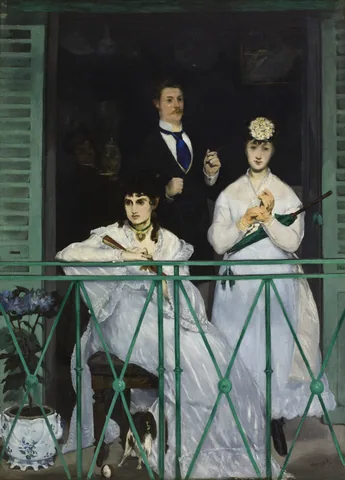
More in Impressionists and Cityscapes.
Sources
More from the Journal
 Story · 7 min
Van Gogh’s Starry Night: the facts, and choosing a print
Painted in June 1889 at an asylum in Provence: the view from his window, plus a village he made up. What is real, what it means, and which print to choose.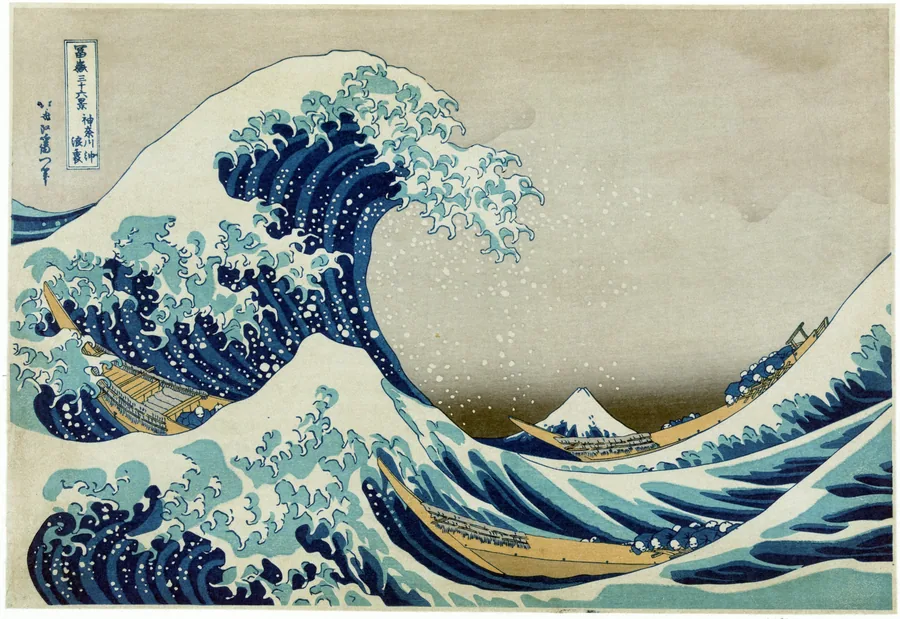 Story · 7 min
The Great Wave off Kanagawa: meaning, history and prints
A woodblock print, not a painting, and a storm wave, not a tsunami. What it shows, why no two impressions match, and how to choose a print.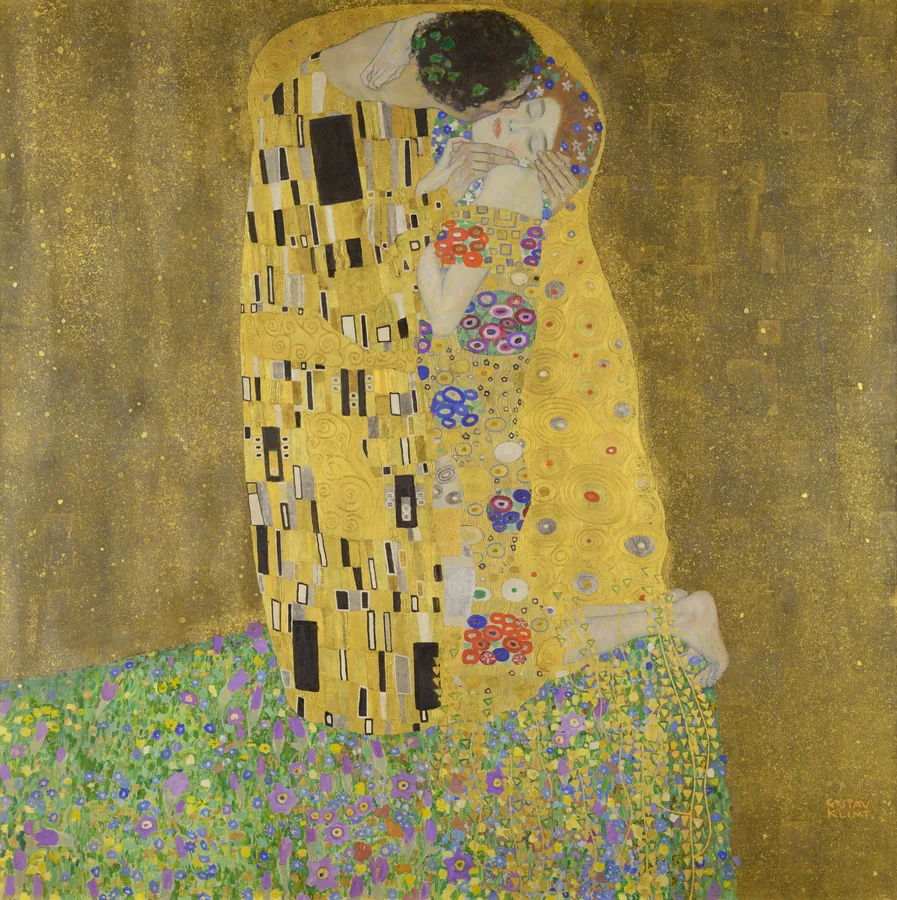 Story · 7 min
Klimt’s The Kiss: gold leaf, meaning and choosing a print
Real gold leaf on canvas, finished in 1909. The story of Klimt’s lovers, what a print can and can’t reproduce, and which size to choose. Story · 7 min