
Story
Raphael’s The Dream of a Knight: meaning and a print
A young knight asleep between Virtue and Pleasure, painted by Raphael at about 21 on a panel smaller than a book. What it means, and a print.
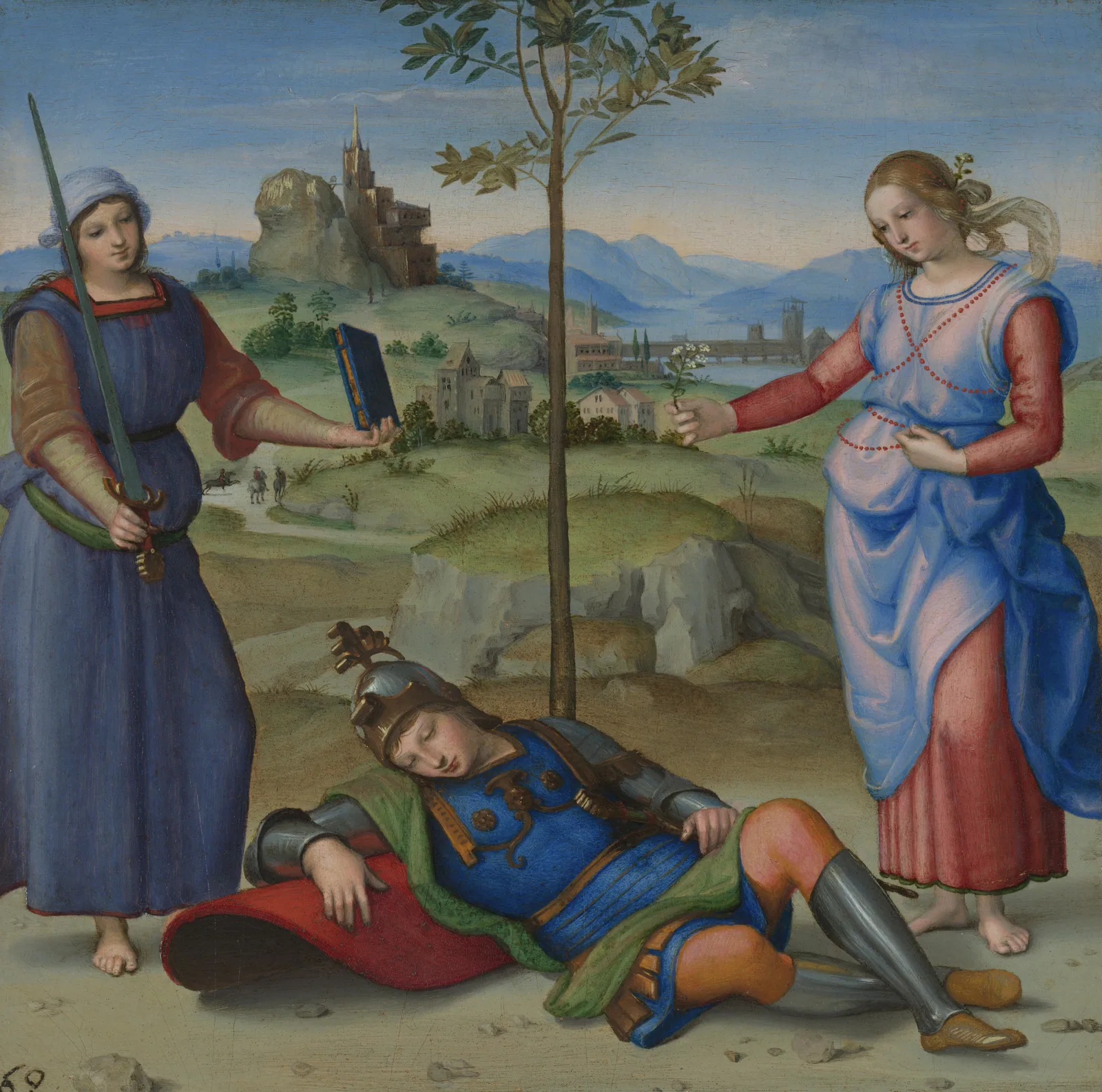
A young knight in blue armor has fallen asleep on his shield under a slender tree. In his dream two women appear. On the left, one in plain clothes holds out a sword and a book; on the right, one with loose fair hair offers him a sprig of flowers. Raphael painted it around 1504, when he was about 21. The panel is tiny, under seven inches square.
What is The Dream of a Knight about?
The sleeper is the young Roman soldier Scipio. According to the National Gallery, which owns the painting, the scene is inspired by a passage in the Punica, a Latin poem by Silius Italicus, in which Scipio has a vision of two women: Virtue and her rival Pleasure.
- Virtue, on the left, is soberly dressed with her hair covered. She offers a book and a sword, emblems of learning and valor. Behind her rises a steep, craggy rock with a castle on top: the hard path of virtue.
- Pleasure, on the right, has her dress caught up at the hip and fair hair escaping her veil. She offers a sprig of flowers, standing for love. Behind her, gentle meadows slope down to the shore of a lake.
A choice, or both?
It looks like a choice between the two. As the National Gallery reads it, Raphael treats the scene not as a moral dilemma but as a combination of the qualities an ideal knight should have: learning, courage and love. The bay tree in the middle, whose leaves stay green all year, stands for lasting honor.
The drawing Raphael made for it, now in the British Museum, shows Pleasure in a low-cut dress. In the painting she is dressed more modestly.
A pair with The Three Graces
A companion picture, The Three Graces, now in the Musée Condé at Chantilly in France, was recorded alongside it in the Borghese collection in Rome in the 1600s. The two may have been made together to mark a marriage.
Where is The Dream of a Knight?
In the National Gallery in London, in room 61. The gallery bought it in 1847 from the Reverend Thomas Egerton. It is painted in oil on a poplar panel.
Look closer
These details come from the scan we print from, 7,616 pixels on the long side. The real panel is under seven inches across, so these views are far bigger than life. Pick a detail, or zoom in and drag to look around.
Scipio asleep on his shield under a young bay tree, in blue armor, dreaming.
Choosing a print
Small like the original, or larger. The panel is under seven inches square, a jewel of a picture. A 12 × 12 in framed print keeps that intimate scale, with room for a mat. At 20 × 20 in the details read from across a room. Our scan is sharp enough to go up to 30 × 30 in framed. Framed prints go up to 30 × 30 in, canvas up to 40 × 40 in and unframed art prints up to 48 × 48 in.
Where it works. A square picture suits a symmetrical spot: centered over a dresser or a desk, or in a pair. It is a lovely gift for a graduate or a couple, with its message of learning, courage and love.
Which material. The fine Renaissance detail suits smooth cotton paper in a frame. See our papers and mats.
Frames. A wide gold frame like our Gold Plein Air suits a Renaissance panel. See all our frames.
Early Raphael. Pair it with his Portrait of Maddalena Doni. Open the two as a set.
Questions
What does The Dream of a Knight mean?
The knight Scipio dreams of Virtue (book and sword) and Pleasure (flowers). Raphael shows them as qualities to unite, not to choose between.
How big is The Dream of a Knight?
Only 17.1 × 17.3 cm, under 7 inches square.
Where is it?
In the National Gallery in London, since 1847.
How old was Raphael when he painted it?
About 21. He was born in 1483 and painted it around 1504.
Can it be printed legally?
Yes. It is more than 500 years old and in the public domain. What public domain means.
More Raphael
All Raphael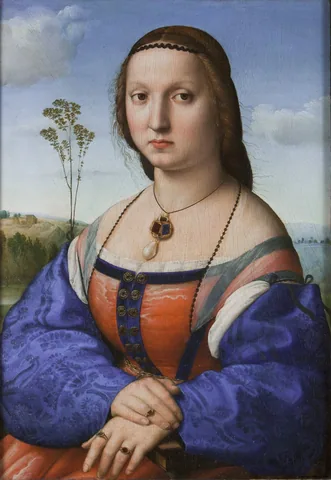
More in Old Masters.
Sources
More from the Journal
 Story · 7 min
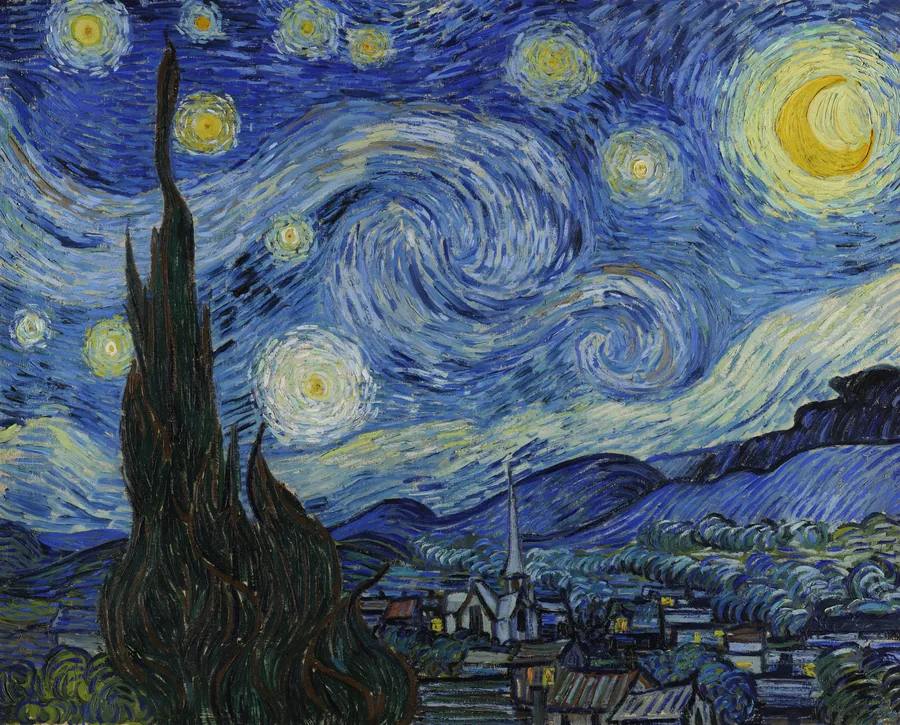
Van Gogh’s Starry Night: the facts, and choosing a print
Painted in June 1889 at an asylum in Provence: the view from his window, plus a village he made up. What is real, what it means, and which print to choose. Story · 7 min
The Great Wave off Kanagawa: meaning, history and prints
A woodblock print, not a painting, and a storm wave, not a tsunami. What it shows, why no two impressions match, and how to choose a print. Story · 7 min
Klimt’s The Kiss: gold leaf, meaning and choosing a print
Real gold leaf on canvas, finished in 1909. The story of Klimt’s lovers, what a print can and can’t reproduce, and which size to choose. Story · 7 min