
Story
Renoir’s Girls at the Piano: the story and the versions
Two girls at an upright piano, painted in 1892 for a Paris museum. why Renoir painted it again and again, where the versions are, and choosing a print.
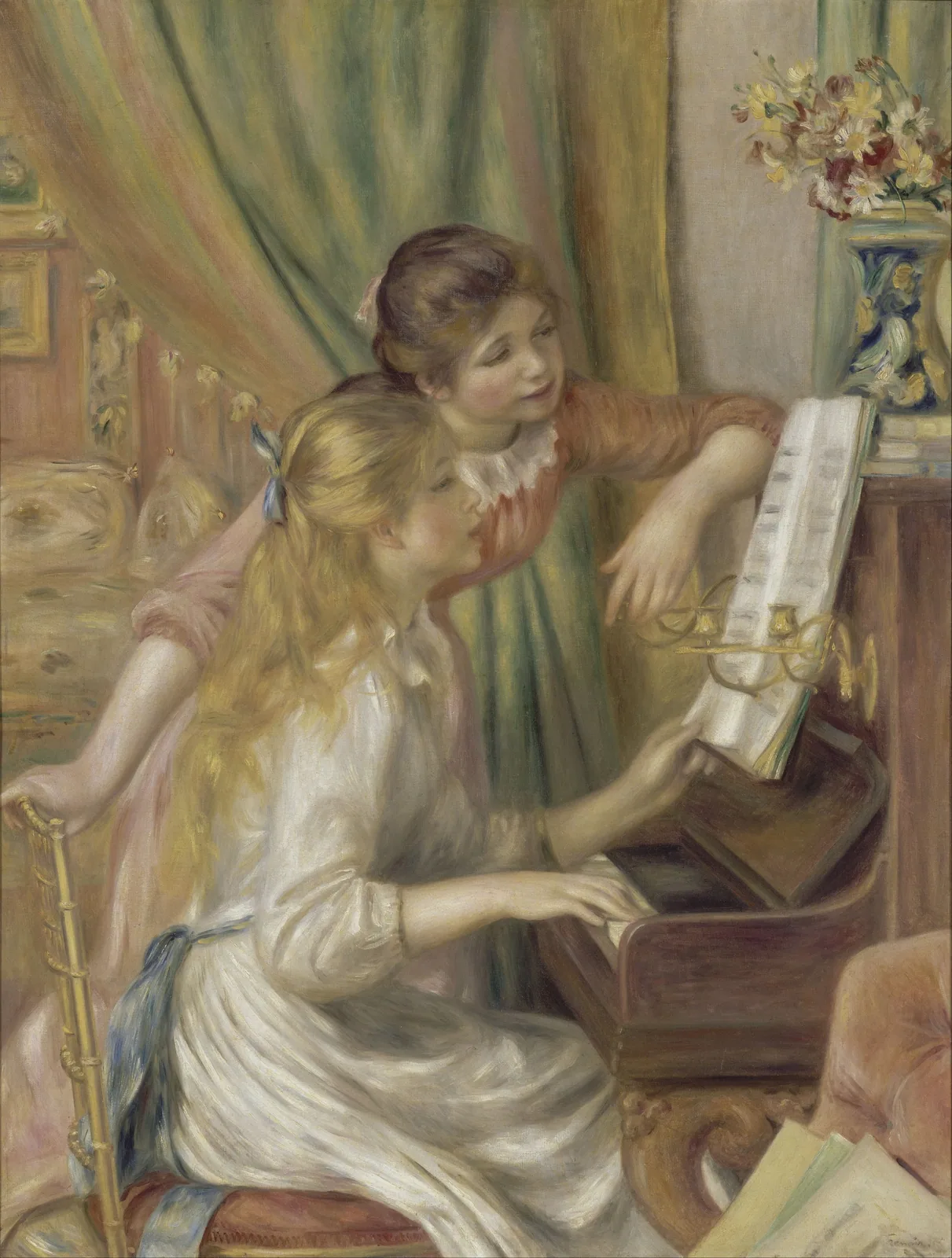
Two girls share an upright piano in a comfortable middle-class home. One, in a white dress with a blue sash, sits and plays; the other, in pink, leans over her shoulder to follow the music. Behind them a curtain, a vase of flowers and the room itself melt into soft color. Pierre-Auguste Renoir painted it in 1892, when he was about fifty.
Painted for a museum
Renoir completed it as an informal commission for the Musée du Luxembourg in Paris. It was the painting that finally earned him recognition. That version is now in the Musée d’Orsay, and it is the one we print.
Why are there so many versions?
Renoir painted the subject several times: three other oil versions and two sketches, one in oil and one in pastel. He called them “repetitions,” and they went to dealers and collectors. Unlike Monet’s series, which were meant to be shown together to record changes of light, Renoir’s versions are separate studies in composition. The poses and details shift slightly from one to the next.
- Musée d’Orsay, Paris: the museum version, 116 × 90 cm.
- Metropolitan Museum of Art, New York: a version in the Robert Lehman Collection.
- Musée de l’Orangerie, Paris: a looser oil sketch.
- Private collections: the version known as the Caillebotte version, another oil and the pastel.
A softer Renoir
By the 1890s Renoir had moved on from pure Impressionism, and from the sharper, drier style of his previous period. Here the brushwork is soft and fluid, almost transparent. The painter André Lhote said Renoir had noticed his early pictures cracking and fading, so he kept his mixtures simple and painted in a single thin layer.
Where is Girls at the Piano?
In the Musée d’Orsay in Paris. The canvas is about 46 by 35 inches.
Look closer
These details come from the scan we print from, 5,292 pixels on the long side. Pick a detail, or zoom in and drag to look around.
Leaning on the piano, following the music over her friend’s shoulder.
Choosing a print
Size. The canvas is about 46 by 35 inches. Our scan prints sharply up to 23 × 30 in, a little smaller than the original. At 18 × 24 in it suits a smaller wall. Framed prints, canvas and unframed art prints all go up to 23 × 30 in.
Where it works. A music room, beside a piano, a girl’s bedroom or a sitting room. It is a lovely gift for a piano teacher, a young musician or two sisters. See our gift guide.
Which material. The soft, pale colors suit smooth cotton paper in a frame, or canvas, with its matte finish and no cover. See our papers and canvas.
Frames. Gold picks up the curtain and the fair hair; white wood keeps it light and fresh. See all our frames.
Two girls. Pair it with Renoir’s Two Sisters. Open the two as a set.
Questions
Where is Girls at the Piano?
The museum version is in the Musée d’Orsay in Paris. Others are in New York, at the Orangerie and in private hands.
How many versions are there?
Four oils and two sketches, one in oil and one in pastel.
When was it painted?
In 1892.
How big is it?
116 × 90 cm, about 46 × 35 in.
Can it be printed legally?
Yes. Renoir died in 1919, and his paintings are in the public domain. What public domain means.
More Renoir
All Renoir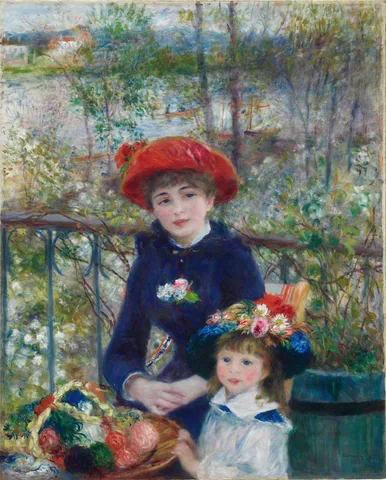
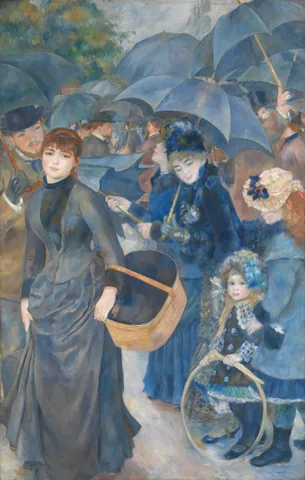
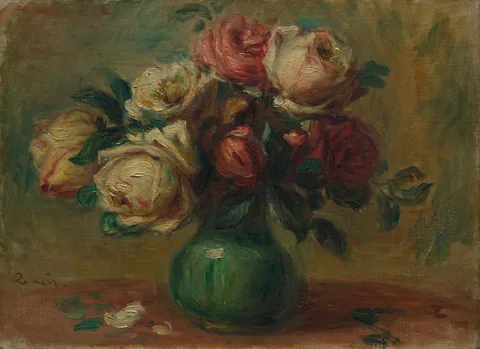
More in Impressionists and Interiors and Portraits.
Sources
More from the Journal
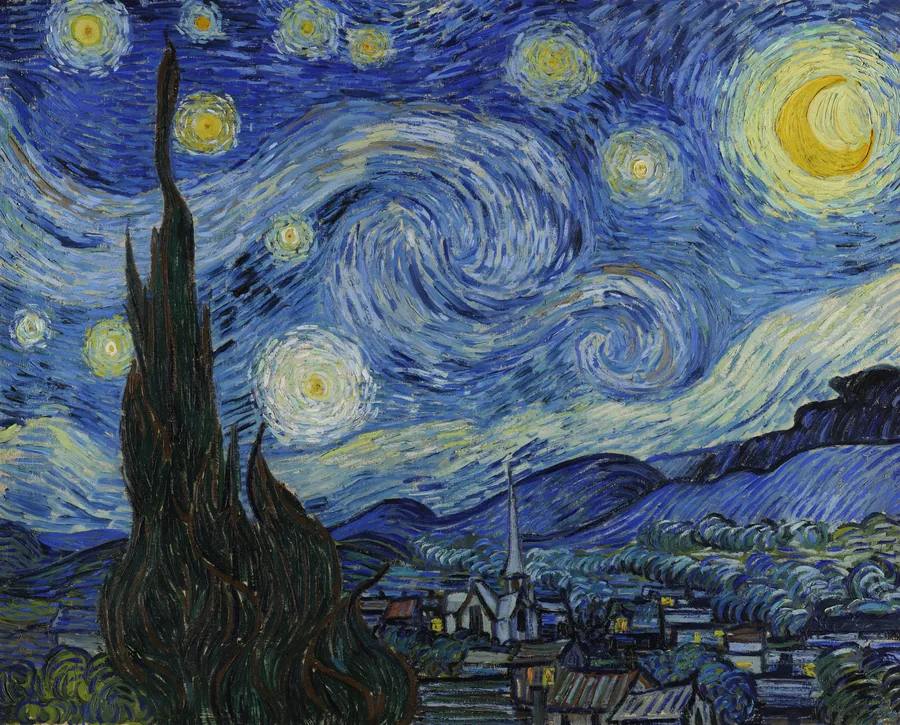 Story · 7 min
Van Gogh’s Starry Night: the facts, and choosing a print
Painted in June 1889 at an asylum in Provence: the view from his window, plus a village he made up. What is real, what it means, and which print to choose.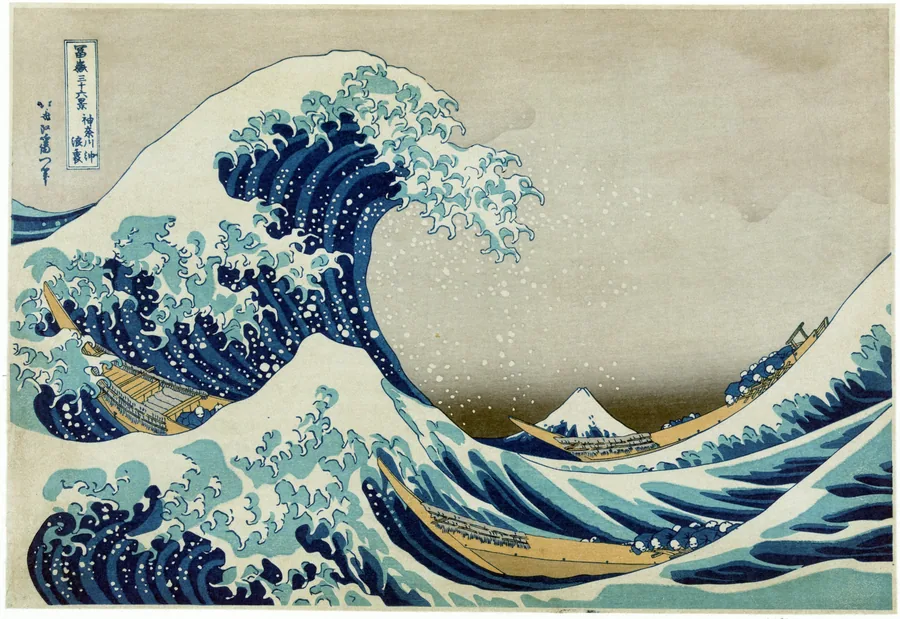 Story · 7 min
The Great Wave off Kanagawa: meaning, history and prints
A woodblock print, not a painting, and a storm wave, not a tsunami. What it shows, why no two impressions match, and how to choose a print. Story · 7 min
Klimt’s The Kiss: gold leaf, meaning and choosing a print
Real gold leaf on canvas, finished in 1909. The story of Klimt’s lovers, what a print can and can’t reproduce, and which size to choose. Story · 7 min