
Story
Carnation, Lily, Lily, Rose: Sargent’s twilight garden
Two girls lighting paper lanterns among lilies at dusk. How Sargent painted it a little each evening, what the title means, and a print.
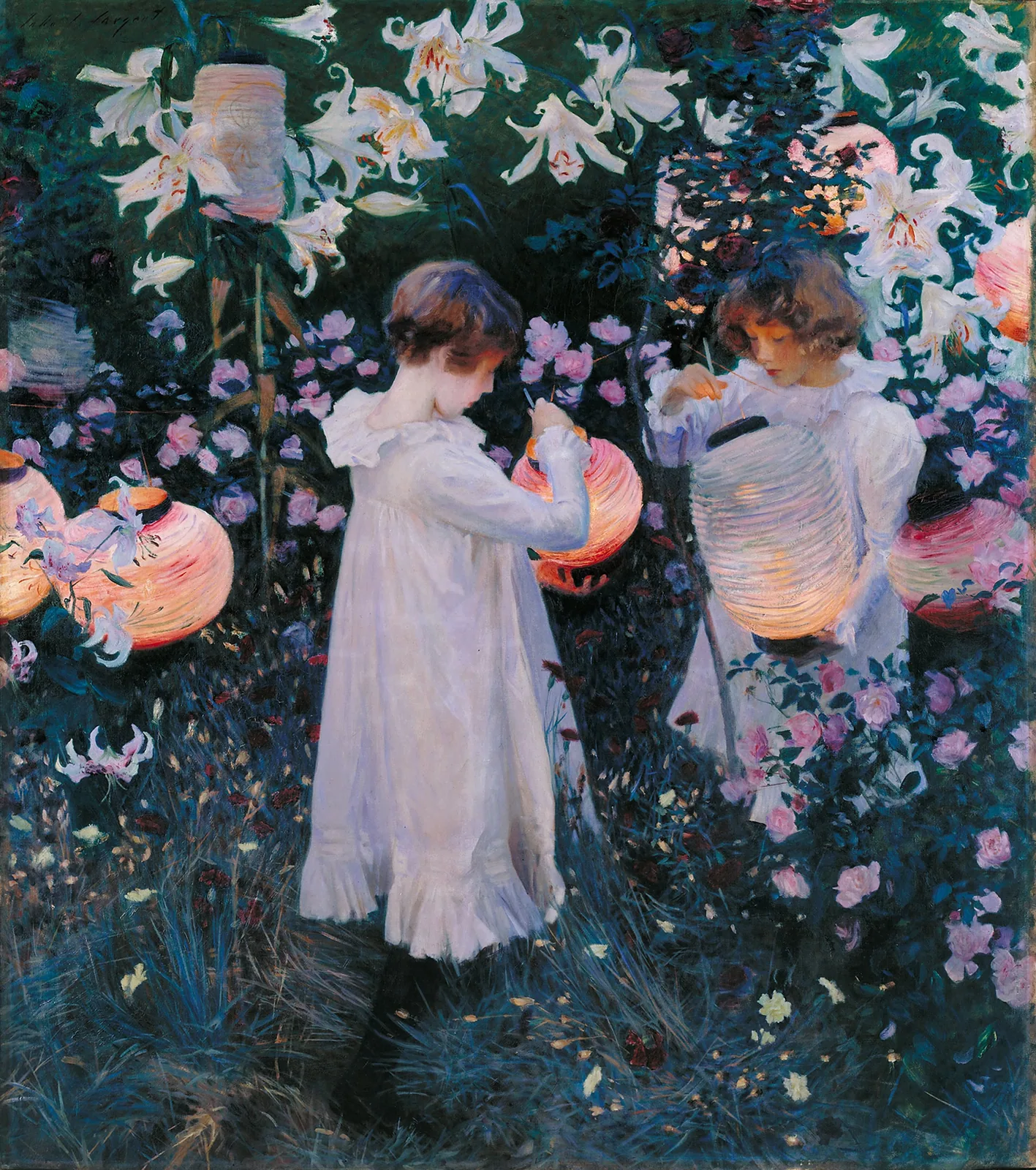
Two little girls in white dresses stand in a garden at dusk, lighting paper lanterns. Around them grow tall white lilies, pink roses and yellow carnations, and the lanterns glow warm against the cool blue-green of the evening. It is a picture of a single fading moment, and John Singer Sargent spent the better part of two summers catching it. Carnation, Lily, Lily, Rose, painted in 1885 and 1886, still hangs at Tate Britain in London, where it has been since the year it was first shown.
A fresh start after a scandal
Sargent was an American, born in Florence to American parents, who lived most of his life in Europe. In 1884 he was a rising portrait painter in Paris, and he showed his portrait of a society beauty, now known as Madame X, at the Paris Salon. The reaction was so hostile that it likely pushed him to leave France. He had been thinking about London for a while, urged on by the novelist Henry James, and in 1886 he settled in Chelsea.
In the summer of 1885 he went to stay at Broadway, a village in the Cotswolds, with friends that included the painters Francis Davis Millet and Edwin Austin Abbey. The writer Robert Louis Stevenson was staying there too, and his verses inspired Sargent.
The idea: lanterns among the lilies
The image began on the river. In September 1885, boating on the Thames at Pangbourne with Abbey, Sargent saw paper lanterns hanging among trees and lilies. He decided to paint children lighting lanterns in a garden at twilight.
He first planned to use Millet’s five-year-old daughter as his model. But he wanted golden hair, and he chose instead the two daughters of the illustrator Frederick Barnard: Dolly, who was 11, and Polly, who was 7. They are the girls in the painting.
A little each evening
The difficulty was the light. Sargent wanted the exact moment at dusk when the last daylight and the glow of the lanterns are in balance, and that does not last long. So he painted outdoors, in the open air, in the manner of the French Impressionists, working each evening for just that brief stretch of perfect light, from September into November 1885. Then the light was gone and he had to stop until the next day.
The season was against him too. As summer ended, the real flowers died, and he replaced them with artificial ones. When autumn came the painting was still not finished. He took it up again the next summer, in 1886, at Millet’s new home in Broadway, and finally finished it in late October 1886. Along the way he cut about two feet off the left side of the canvas, which left it nearly square.
Sargent had visited Claude Monet at Giverny in 1885, and you can feel the French influence in the loose, quick brushwork of the flowers and grass. Monet himself later said that Sargent was not an Impressionist in the sense that the French painters used the word.
Looking closely
Start with the lanterns. They are the warmest things in the picture, and the girls bend over them as they light them. Then let your eye travel up the tall stems of the lilies rising around the children, and out to the roses and carnations. The garden fills the canvas and closes in on all sides, so the painting feels like a private, enclosed world, the way a garden can feel to a child at the end of a summer day.
The near-square shape helps. After Sargent cut down the canvas, there was no room for anything but the girls and the flowers, and the picture holds them close. It is a painting about a few minutes of light, made over the course of more than a year.
What does the title mean?
The odd, singsong title comes from a song. It is the refrain of “Ye Shepherds Tell Me,” a pastoral glee by the composer Joseph Mazzinghi, and Sargent and his friends seized on its refrain for the picture. The words are also, more or less, a list of the flowers in the painting. The tall white lilies may be Japanese mountain lilies.
Frenchified, and bought at once
The painting was shown at the Royal Academy summer exhibition in London in 1887. Reviews were mixed. Some critics disliked its Frenchified style, the open-air, Impressionist manner that still seemed foreign in London. Others praised it, and the response was enthusiastic. Frederic Leighton, the President of the Royal Academy, encouraged the Tate Gallery to buy it that same year with funds from the Chantrey Bequest. It was the first work by Sargent to be bought by a public museum, and it is still at Tate Britain.
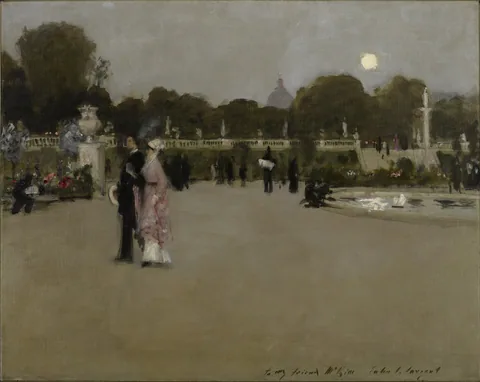
Sargent went on to paint portraits for many years. Later in life he grew ambivalent about formal portrait work, stopped his studio portrait practice in 1907, and gave his time to murals and to painting outdoors, including more than 2,000 watercolors. The twilight garden is an early sign of that love of painting light in the open air. For another of his dusk scenes, see Luxembourg Gardens at Twilight.
Choosing a print
Size. The original is big, about 5½ by 5 feet, and nearly square. Our scan is 3,762 pixels on its long side, which keeps a print to a medium size: up to 21 × 24 in framed, or 21 × 24 in on canvas. Framed prints, canvas and unframed art prints all go up to 21 × 24 in. At 18 × 20 in it suits a bedroom or a child’s room. Its square shape works well above a dresser, a bed or a console table.
Paper or canvas. The glow of the lanterns and the soft dusk colors are lovely on smooth paper behind glazing. Canvas gives the loose brushwork of the flowers a painted feel. See our papers and canvas.
Frames and walls. A gold frame echoes the lantern light; a white or pale wood frame keeps it fresh and gardeny. It looks best on a soft green, cream or warm white wall. See our frames.
Where it works. A bedroom, a nursery, a sunroom or a hallway near a garden door. For a pair, hang it with one of Sargent’s outdoor scenes, or with other flower paintings from our collection.
Questions
What does Carnation, Lily, Lily, Rose mean?
It is the refrain of a popular song of the time, “Ye Shepherds Tell Me” by Joseph Mazzinghi, and also a list of the flowers in the garden.
Who are the girls?
Dolly and Polly Barnard, aged 11 and 7, daughters of the illustrator Frederick Barnard.
How long did it take?
Two summers. Sargent painted only for a short time each evening at dusk, from September to November 1885, and finished in October 1886.
Where was it painted?
At Farnham House in Broadway, a village in the Cotswolds, in 1885. Sargent finished it the next summer at Francis Davis Millet’s new home in the same village. By then the real flowers had died, and some were replaced with artificial ones.
Where is it?
At Tate Britain, London, which bought it in 1887. It is 174 × 153.7 cm.
Can it be printed legally?
Yes. Sargent died in 1925, and the painting is in the public domain. What public domain means.
More Sargent
All Sargent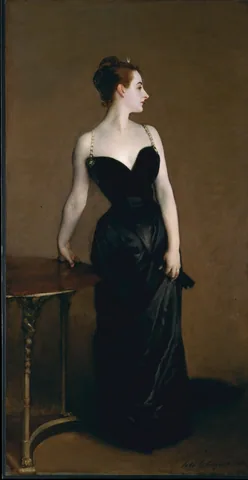
More in Botanical and Flowers.
Sources
More from the Journal
 Story · 7 min
Van Gogh’s Starry Night: the facts, and choosing a print
Painted in June 1889 at an asylum in Provence: the view from his window, plus a village he made up. What is real, what it means, and which print to choose.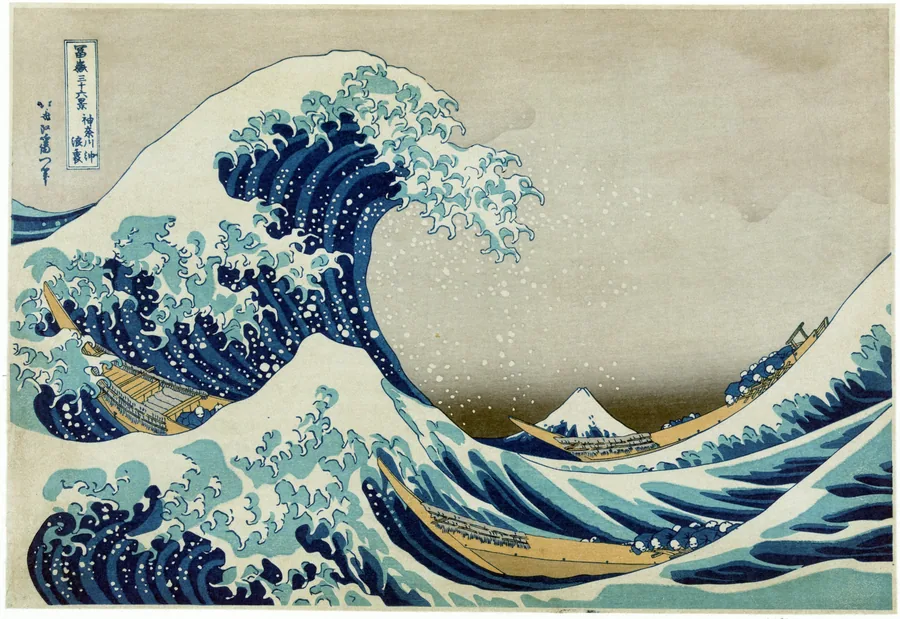 Story · 7 min
The Great Wave off Kanagawa: meaning, history and prints
A woodblock print, not a painting, and a storm wave, not a tsunami. What it shows, why no two impressions match, and how to choose a print.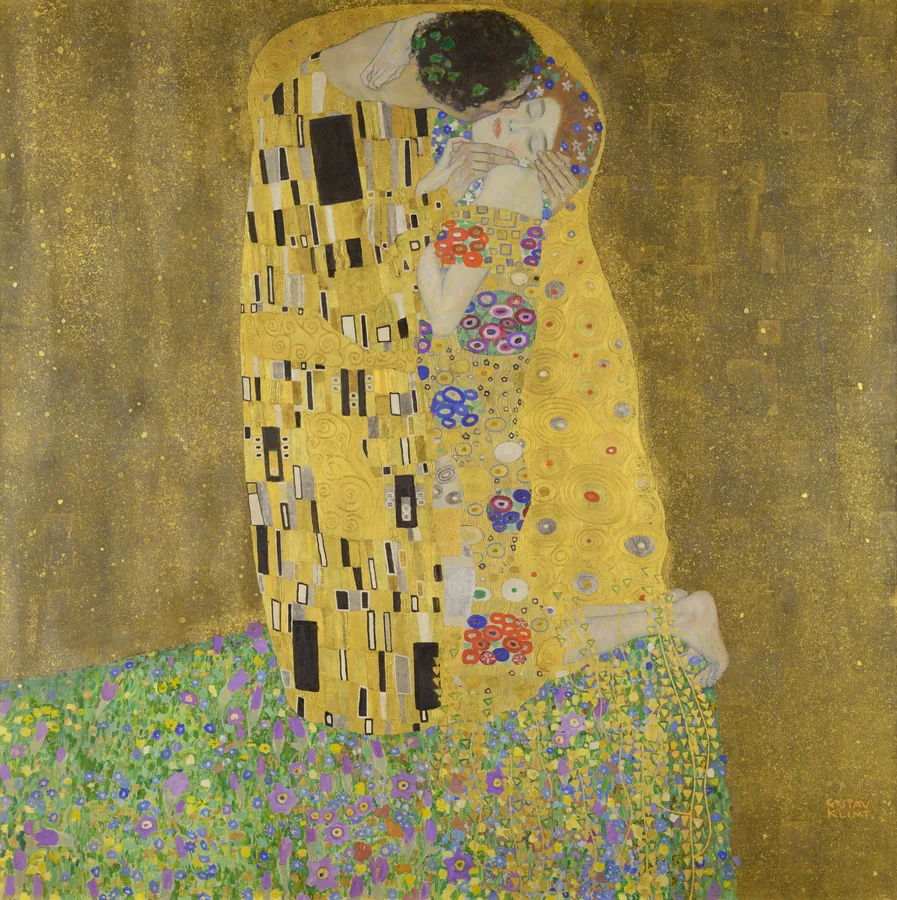 Story · 7 min
Klimt’s The Kiss: gold leaf, meaning and choosing a print
Real gold leaf on canvas, finished in 1909. The story of Klimt’s lovers, what a print can and can’t reproduce, and which size to choose. Story · 7 min