
Story
Sargent’s Madame X: the scandal of the fallen strap
A Paris beauty in a black dress, a strap off her shoulder, and a Salon scandal. Who Madame X was, what Sargent changed, and choosing a print.
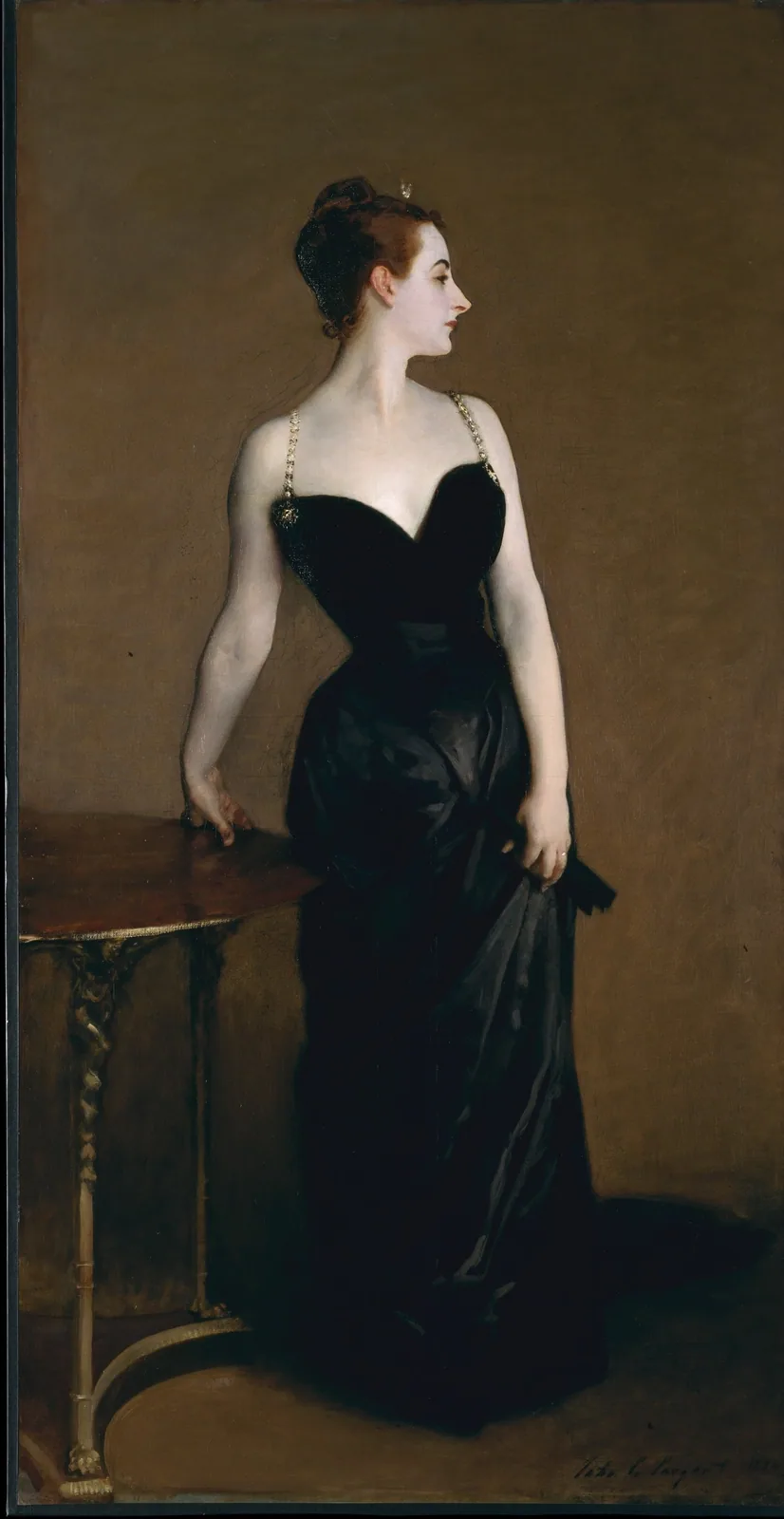
A woman in a black gown stands against a warm brown wall, her body turned toward us and her head turned sharply away in profile. Her skin is startlingly pale. One hand rests on a small gilt table. John Singer Sargent painted her in Paris and showed her at the Salon of 1884, and the picture caused a scandal.
Who was Madame X?
Her name was Virginie Amélie Avegno Gautreau. Born in America and raised in New Orleans, she married the French banker Pierre Gautreau and became one of the best-known beauties in Paris, a “professional beauty,” as such women were called. She was famous for her pale skin, which she powdered with lavender. She agreed to sit for Sargent in February 1883.
When the portrait went to the Salon, it was listed as Portrait de Mme ***, a gesture at keeping her anonymous. Nobody was fooled. Everyone knew who she was, and the title we use now, Madame X, grew from that thin disguise.
The scandal of the strap
As first shown, one of the jeweled straps of her dress had slipped off her right shoulder. For Paris in 1884 that was too much. Critics called the figure vulgar, and one joked: “One more struggle, and the lady will be free.” Her mother asked Sargent to withdraw the painting. He refused, saying he had painted her exactly as she was dressed.
Afterward, though, he repainted the strap so that it sits firmly on her shoulder, as you see it now. An unfinished version of the same pose, with the strap left unresolved, is in the Tate in London.
How Sargent painted her
The pose is deliberately strange: the body faces us, the head twists away, the right arm bends back against the table. The colors are few: black dress, brown wall, pale skin. To get that skin, Sargent mixed lead white with rose madder, vermilion, viridian and bone black, a cool, unnatural pallor that makes her look almost like a statue.
“The best thing I have ever done”
Sargent kept the painting for decades. It hung in his Paris studio and then his London one, and from 1905 he lent it to international exhibitions. In 1916 he sold it to the Metropolitan Museum of Art in New York, writing: “I suppose it is the best thing I have ever done.” It has been at the Met ever since.
Look closer
These details come from the scan we print from, 3,692 pixels on the long side. Pick a detail, or zoom in and drag to look around.
Her head turned sharply away in profile: proud, cool, unapproachable.
Choosing a print
A tall, narrow picture. The original is more than seven and a half feet tall. Our scan prints sharply up to 12 × 24 in, and we don’t sell it bigger than that. Framed prints, canvas and unframed art prints all go up to 12 × 24 in. The tall, slim shape is perfect for a narrow wall: beside a door, between two windows, at the end of a hall or next to a mirror.
Where it works. A dressing room, a bedroom or an elegant hallway. It suits a black-and-white or neutral room and anyone who loves fashion. At 10 × 20 in it fits a slim wall beside a bookcase.
Which material. The black dress and brown wall are dark. Behind clear acrylic, dark areas reflect a facing window, so hang a framed print with side light, or choose canvas, with its matte finish and no cover. See our papers and canvas.
Frames. Black wood matches the dress and looks dramatic; gold picks up the gilt table and her jewels. See all our frames.
Questions
Who is Madame X?
Virginie Amélie Avegno Gautreau, an American-born Paris socialite married to the banker Pierre Gautreau.
Why was Madame X a scandal?
At the 1884 Salon one strap of her dress had slipped off her shoulder, and critics called it vulgar. Sargent later repainted it.
Where is Madame X?
In the Metropolitan Museum of Art in New York, which bought it from Sargent in 1916.
How big is it?
234.95 × 109.86 cm, about 92½ × 43¼ in.
Can it be printed legally?
Yes. Sargent died in 1925, and the painting is in the public domain. What public domain means.
More Sargent
All Sargent
More in Interiors and Portraits.
Sources
More from the Journal
 Story · 7 min
Van Gogh’s Starry Night: the facts, and choosing a print
Painted in June 1889 at an asylum in Provence: the view from his window, plus a village he made up. What is real, what it means, and which print to choose.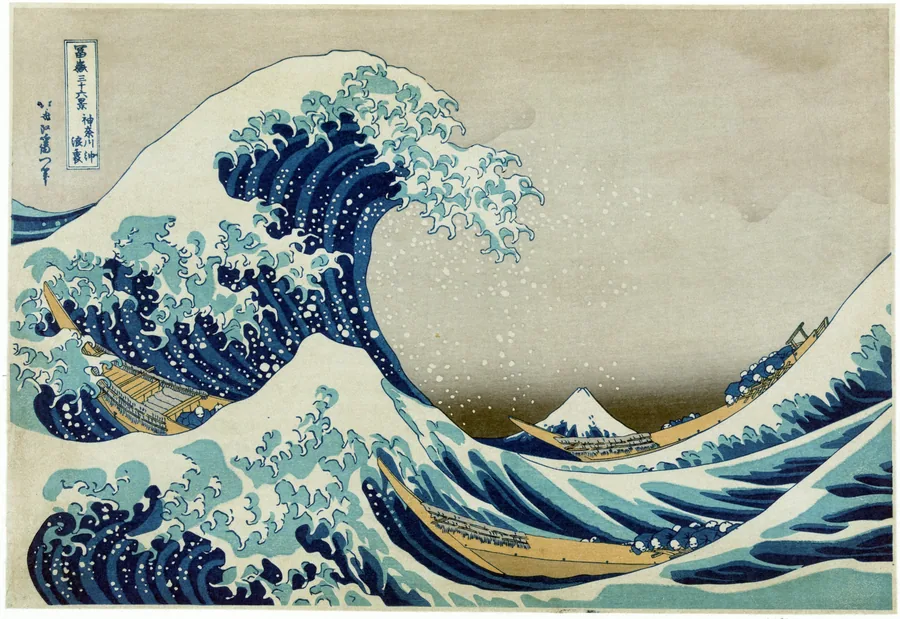 Story · 7 min
The Great Wave off Kanagawa: meaning, history and prints
A woodblock print, not a painting, and a storm wave, not a tsunami. What it shows, why no two impressions match, and how to choose a print.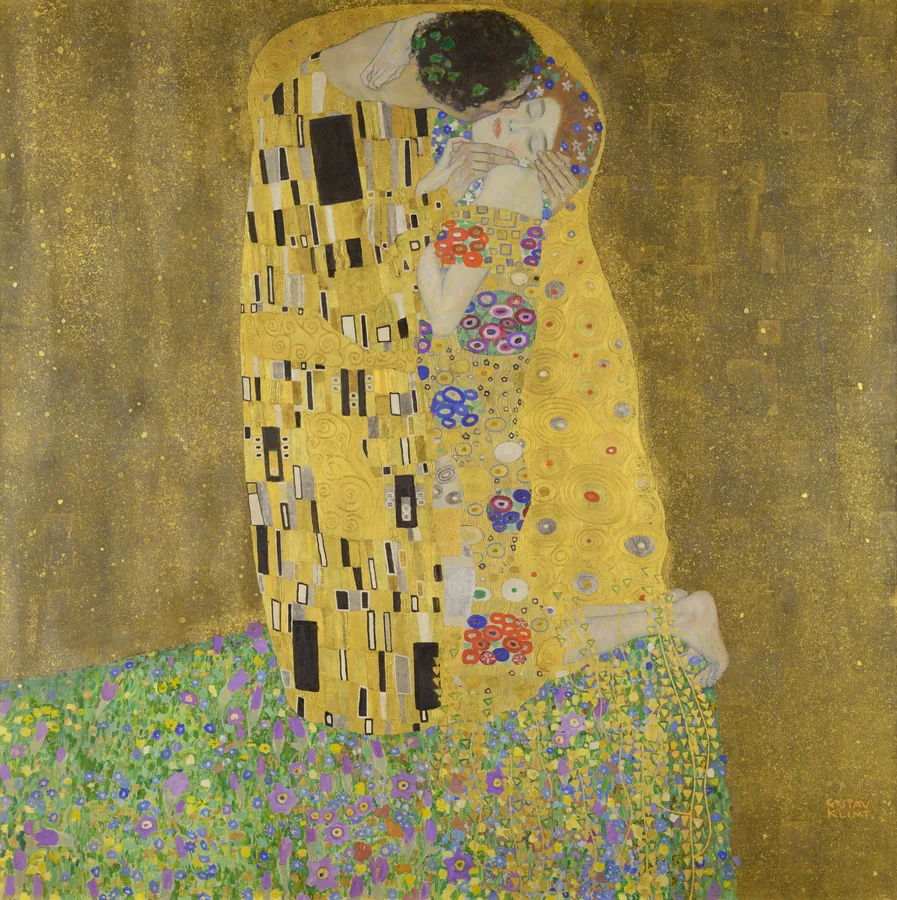 Story · 7 min
Klimt’s The Kiss: gold leaf, meaning and choosing a print
Real gold leaf on canvas, finished in 1909. The story of Klimt’s lovers, what a print can and can’t reproduce, and which size to choose. Story · 7 min