
Story
Vermeer’s The Astronomer: the story and a print
A scholar at a star globe, his twin The Geographer, a theft by the Nazis and a return to the Louvre. What to look for, and choosing a print.
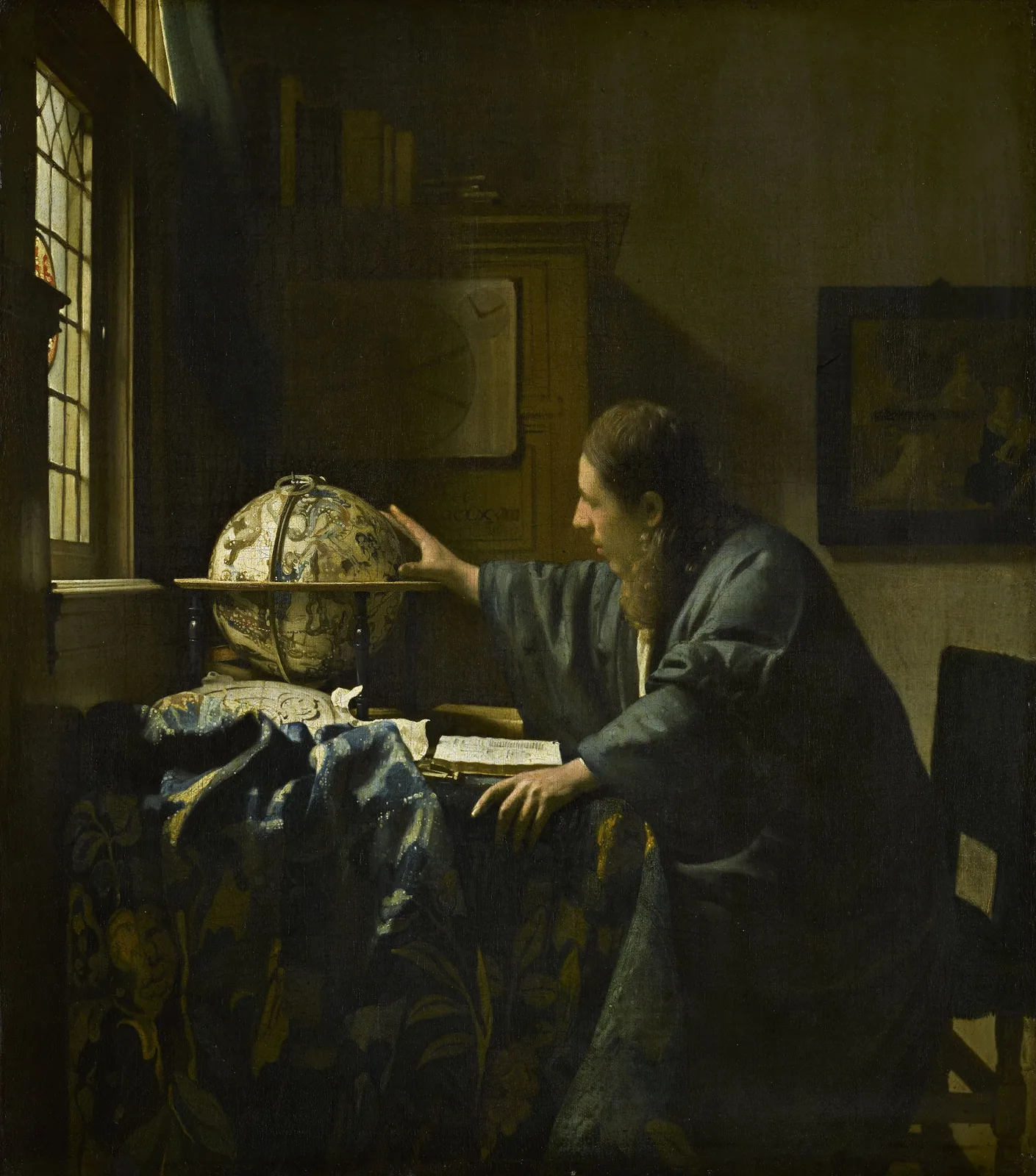
A scholar in a long blue robe leans over his table and reaches for a globe of the stars, as if he has just thought of something and needs to check it. Light comes from a window on the left; the rest of the room falls away into shadow. Johannes Vermeer painted The Astronomer around 1668. It hangs in the Louvre.
How do we know he is an astronomer?
From the objects. The globe on the table is a celestial globe, a map of the constellations, of a kind made by the Dutch mapmaker Jodocus Hondius. The book open in front of him has been identified as the 1621 edition of Adriaan Metius’s Institutiones Astronomicae Geographicae, a guide to astronomy and geography, open at Book III. Vermeer chose real, recognizable things.
What is missing is just as interesting. There is no telescope. The art historian Julian Jason Haladyn reads that absence as the point: this is not a man looking out at the sky, but a man thinking, his study of the heavens happening in his head.
The picture on the wall
Behind him, half lost in shadow, hangs a painting of the Finding of Moses, the baby found in the river by Pharaoh’s daughter. Why Vermeer put it there is open to interpretation.
The Geographer, and who posed
The Astronomer has a twin, The Geographer, which seems to show the same man. A study in 2017 found that both canvases were cut from the same bolt of cloth, which supports the idea that they were made as a pair. Who posed is not known. One long-standing suggestion is Antonie van Leeuwenhoek, the Delft scientist famous for his microscopes; it remains a guess.
Taken by the Nazis
The painting was sold in Rotterdam in 1713 and passed through Dutch collections before the banker Alphonse James de Rothschild bought it in the 1880s. It went to his son Édouard. In 1940 a Nazi looting unit, the Einsatzstab Reichsleiter Rosenberg, seized it from Édouard de Rothschild’s home. Hitler meant it for the museum he planned in Linz. After the war the Monuments Men found it, and it was returned to the Rothschild family.
In 1983 it passed to the French state in payment of inheritance tax, and it has been in the Louvre ever since. In 1997 it was reunited with The Geographer for an exhibition.
Look closer
These details come from the scan we print from, 5,000 pixels on the long side. Pick a detail, or zoom in and drag to look around.
A celestial globe, a map of the stars, of a type made by Jodocus Hondius, painted with its constellation figures.
Choosing a print
Life size. The canvas is about 20 by 17½ inches. Our 18 × 20 in framed print is close to life size, and framed prints go up to 26 × 30 in. Framed prints, canvas and unframed art prints all go up to 26 × 30 in.
Where it works. A study, a home office or a library: it is a portrait of thinking. It is a natural gift for a scientist, a teacher or anyone who loves the night sky. See our gift guide.
Mind the dark. Most of the picture is deep shadow. Behind clear acrylic, dark areas reflect a facing window, so hang a framed print with side light, or choose canvas, which has a matte finish and no cover. See our papers and canvas.
Frames. Black wood suits a Dutch interior and keeps it sober; a wide gold frame like our Gold Plein Air picks up the light on the globe. See all our frames.
A pair. We don’t sell The Geographer, but Vermeer’s The Art of Painting is another picture about knowledge and craft, with a great map on the wall. Open the two as a set.
Questions
Who is the man in The Astronomer?
Nobody knows. The Delft scientist Antonie van Leeuwenhoek has been suggested, but it is unproven.
What is the globe?
A celestial globe, a map of the stars, of a type made by Jodocus Hondius.
Where is The Astronomer?
In the Louvre in Paris, since 1983.
How big is it?
51 × 45 cm, about 20 × 17½ in.
Can it be printed legally?
Yes. It is more than 350 years old and in the public domain. What public domain means.
More Vermeer
All Vermeer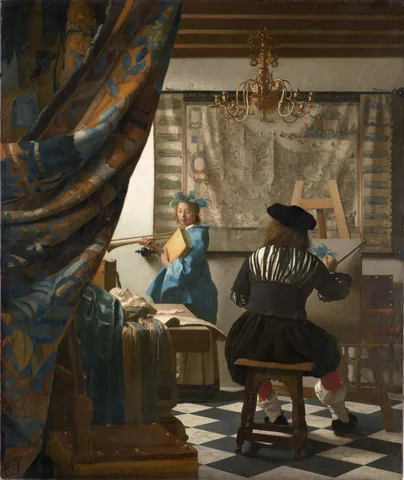
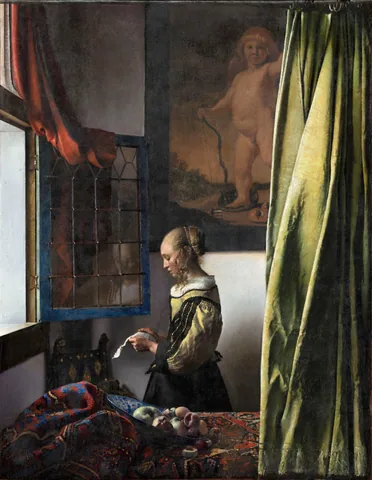
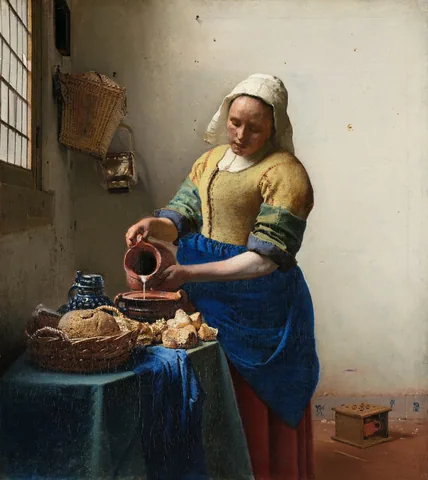
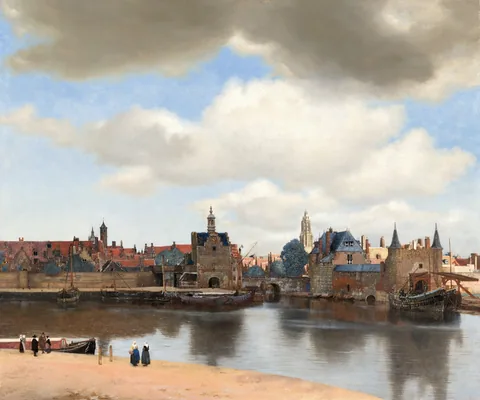
More in Dutch and Flemish Masters and Interiors and Portraits.
Sources
More from the Journal
 Story · 7 min
Van Gogh’s Starry Night: the facts, and choosing a print
Painted in June 1889 at an asylum in Provence: the view from his window, plus a village he made up. What is real, what it means, and which print to choose.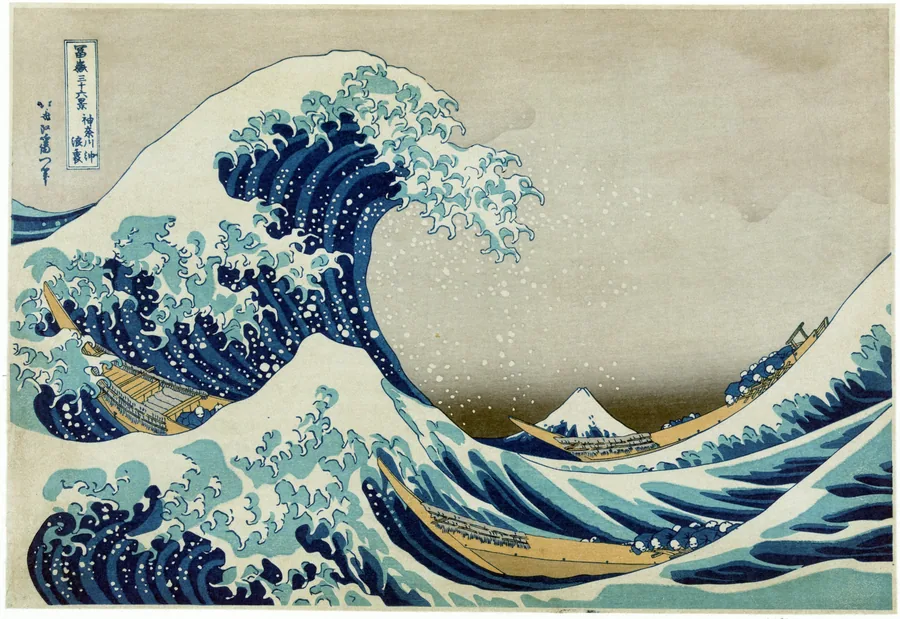 Story · 7 min
The Great Wave off Kanagawa: meaning, history and prints
A woodblock print, not a painting, and a storm wave, not a tsunami. What it shows, why no two impressions match, and how to choose a print.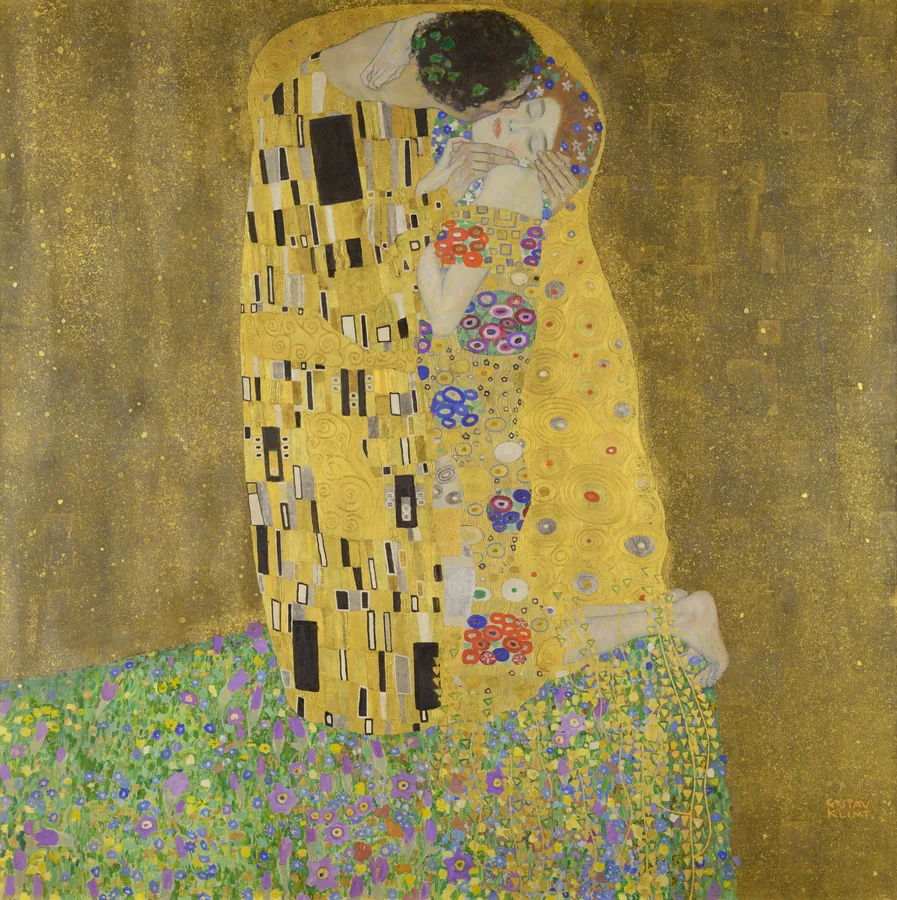 Story · 7 min
Klimt’s The Kiss: gold leaf, meaning and choosing a print
Real gold leaf on canvas, finished in 1909. The story of Klimt’s lovers, what a print can and can’t reproduce, and which size to choose. Story · 7 min