
Story
Audubon’s Carolina Parrot: the story of a lost bird
America’s only native parrot, painted by Audubon before it vanished. The story of the Carolina Parrot plate, how it was made, and a print.
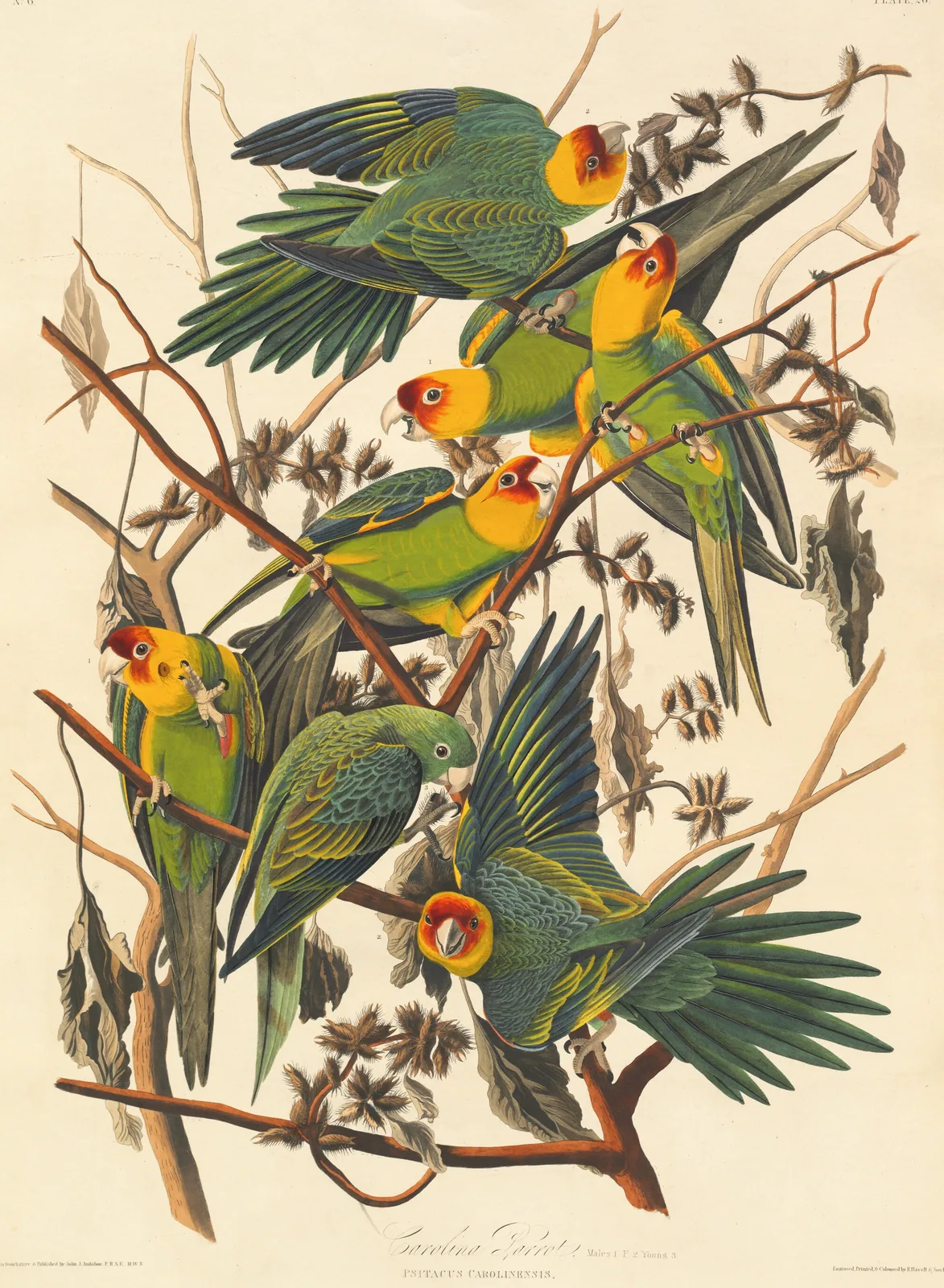
A flock of small green parrots crowds a branch, climbing, reaching, twisting to look at one another. Their heads are bright yellow, their faces orange. They are Carolina parakeets, the only parrot native to the eastern United States, and they are gone: the last known bird died in a zoo in 1918. This picture, from John James Audubon’s The Birds of America, is how most people now know them.
What this print is
It is worth being clear. Audubon painted his birds in watercolor. This image is not one of those watercolors but a print made after one: a copper plate etched and engraved by professional printmakers, with aquatint for tone, printed on large sheets of paper and then colored by hand. It was published as one of the 435 plates of The Birds of America. Our reproduction is made from an impression in the National Gallery of Art in Washington.
America’s own parrot
The Carolina parakeet lived across the eastern, midwestern and Plains states, in old forests along rivers and wetlands, especially along the Mississippi and Missouri. It had the northernmost range of any known parrot. It was a small green bird with a yellow head, an orange face, a pale beak, and yellow on its shoulders and the edges of its wings.
It lived in big, noisy flocks of up to about 300 birds and fed mainly on the seeds of trees and shrubs, as well as fruit and buds. It was especially known for eating cockleburs, which are toxic to many animals. Audubon noted that cats apparently died after eating the birds.
How Audubon worked
Audubon was born in Saint-Domingue, now Haiti, and raised in France. He came to the United States in 1803 and ran shops in Louisville and in Henderson, Kentucky, before going bankrupt and being jailed for debt. He drew portraits for money. Then he set himself an enormous goal: a complete pictorial record of the birds of North America, every bird life size.
His method was his own. He shot birds with fine shot, then used wires and threads to hold them in natural positions while he drew, instead of stuffing them into rigid poses as many ornithologists of the time did. That is why his birds seem to move. In the Carolina Parrot the birds climb, twist and turn toward one another, each in its own pose, so the plate reads as a portrait of a lively flock rather than a row of specimens.
The making of The Birds of America
No American printer could do what he wanted, so in 1826 Audubon took his portfolio to Britain, where he was celebrated as the American woodsman. In Edinburgh, William Lizars engraved the first plates, up to ten, before his colorists went on strike. Robert Havell Jr. in London then took over and saw the project through, with help from his father, Robert Havell Sr. The plates were etched on copper, with engraving and aquatint, and more than fifty colorists painted the prints by hand, in assembly-line fashion.
The book came out in sections from 1827 to 1838: 435 life-size prints showing 497 species, on sheets about 39 by 26 inches, the format known as the Double Elephant Folio. Subscribers paid around $1,000 for the set, delivered five plates at a time. They included King Charles X of France and, later, the American statesmen Daniel Webster and Henry Clay. Only about 120 complete sets are known to survive today, and complete copies have sold at auction for millions of dollars, one of them in 2010 for a record price for any printed book at the time. Audubon also wrote a companion text, Ornithological Biography, with the Scottish ornithologist William MacGillivray.
How the parakeet disappeared
Audubon was already remarking on the parakeet’s decline as early as 1832. The birds had a fatal habit: when some of a flock were shot, the others returned to the dead and dying birds, so that whole flocks could be killed at once. They were hunted for their feathers and to protect crops, and caught for the pet trade. Their forests were cut down. Competition from European honeybees for nesting hollows may also have played a part. Even so, the speed of the final collapse has never been fully explained.
The last wild bird was reportedly killed in Okeechobee County, Florida, in 1904. The last bird in captivity, named Incas, died at the Cincinnati Zoo on February 21, 1918. In 1939 the American Ornithologists’ Union declared the species extinct.
That gives this plate a weight Audubon never intended. He made it as a record of a living bird. It has become a memorial.
Look at the plate with that in mind and the details change their meaning. The bright colors that once made the parakeet a target for feather hunters, the crowding of the birds that made a flock so easy to shoot, the sociable way they lean toward one another: everything that made the species vivid also helped to doom it.
Audubon’s legacy
The National Audubon Society, founded in 1905, was named in his honor. His reputation is more complicated today. In his lifetime and since, he has been accused of fraud, plagiarism and scientific misconduct, and he is widely criticized for buying and selling enslaved people and for taking Native American remains. The prints remain among the most celebrated natural history images ever made, and it is possible to admire them while knowing the man who made them was no hero.
Choosing a print
Size. The original plate is about 33 by 24 inches, and the birds are life size. Our scan is 6,287 pixels on its long side, which allows a print close to the scale of the original: up to 26 × 36 in framed, or 29 × 40 in on canvas. Framed prints go up to 26 × 36 in, canvas up to 29 × 40 in and unframed art prints up to 29 × 40 in. At 18 × 24 in it fits a smaller wall.
Paper or canvas. This was printed on paper, and smooth fine-art paper keeps the fine engraved lines and the cream of the old sheet. See our papers.
Frame and mat. A wide white or cream mat recalls the margins of the big book page. Natural wood or black both suit it. See our frames and mats.
Where it works. A study, a library, a living room or a sunroom. It makes a good set with other Audubon plates, such as the White-Headed Eagle, hung in a row.
Questions
What is a Carolina parrot?
The Carolina parakeet, the only parrot native to the eastern United States. It was green with a yellow head and orange face, and it is extinct.
When did the Carolina parakeet go extinct?
The last known bird, Incas, died at the Cincinnati Zoo in 1918. The species was declared extinct in 1939.
Is this an original Audubon print?
No. It is a reproduction of a hand-colored engraving made after Audubon’s watercolor for The Birds of America, printed on modern paper.
Who made the engravings?
William Lizars engraved the first few plates in Edinburgh; Robert Havell Jr. in London oversaw the rest, through to the end.
Can it be printed legally?
Yes. The plate is in the public domain, and the National Gallery of Art releases its image for open use. What public domain means.
More Audubon
All Audubon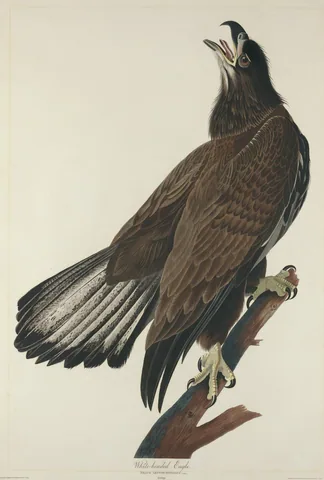
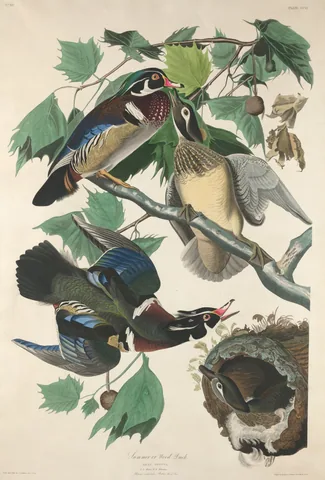
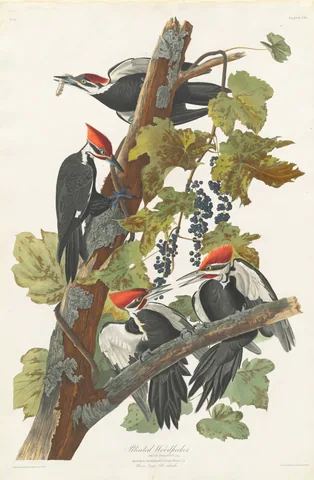
More in Natural History Plates and Birds and Animals.
Sources
More from the Journal
 Story · 7 min
Van Gogh’s Starry Night: the facts, and choosing a print
Painted in June 1889 at an asylum in Provence: the view from his window, plus a village he made up. What is real, what it means, and which print to choose.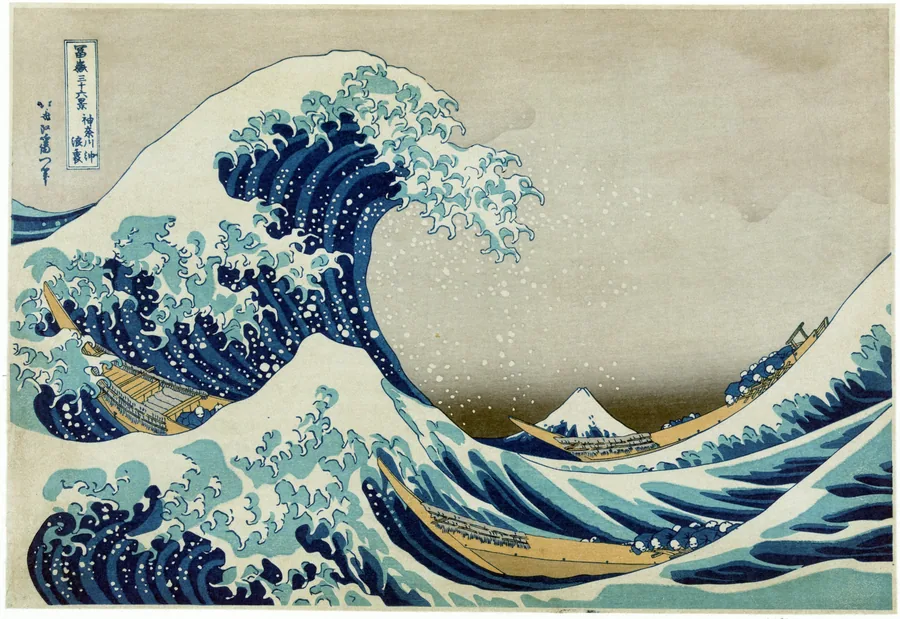 Story · 7 min
The Great Wave off Kanagawa: meaning, history and prints
A woodblock print, not a painting, and a storm wave, not a tsunami. What it shows, why no two impressions match, and how to choose a print.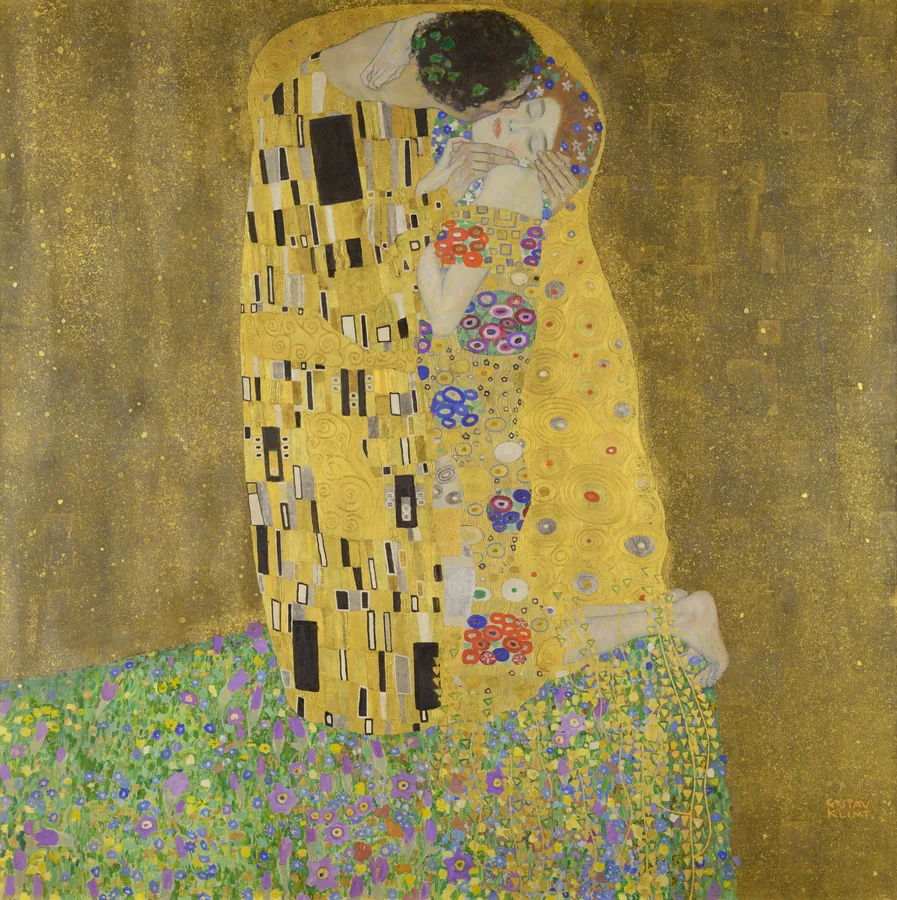 Story · 7 min
Klimt’s The Kiss: gold leaf, meaning and choosing a print
Real gold leaf on canvas, finished in 1909. The story of Klimt’s lovers, what a print can and can’t reproduce, and which size to choose. Story · 7 min