
Guide
Black and white wall art: real prints, not filters
Black and white art from the masters of the print: Dürer woodcuts, Piranesi etchings, Turner and Whistler, with the room each suits, the sizes, and frames.
Most black and white wall art for sale is a color photo or painting with the color taken out. There is a better source: long before color printing was easy, the great printmakers worked in black ink on paper, and they designed for it. Lines, cross-hatching and the bare paper do the work that color does in a painting. These prints were made to be black and white, and that is why they look so sure of themselves on a wall. This guide picks the best of ours, says where each one hangs, and how large it can go. If you have a painting in mind instead, there is a way to have that in black and white too, at the end.
A note on “white”
The paper of an old print is rarely bright white. It has aged to cream, ivory or a light tan, and we print what is there, so a Dürer or a Piranesi reads as black on warm cream. In a room of bright white walls and black metal that warmth is welcome: it keeps the print from looking like a photocopy. If you want a crisper look, set the print in a white mat, which makes the paper look warmer still by contrast, or pick a cream mat to blend it in.
Woodcuts and engravings: Dürer
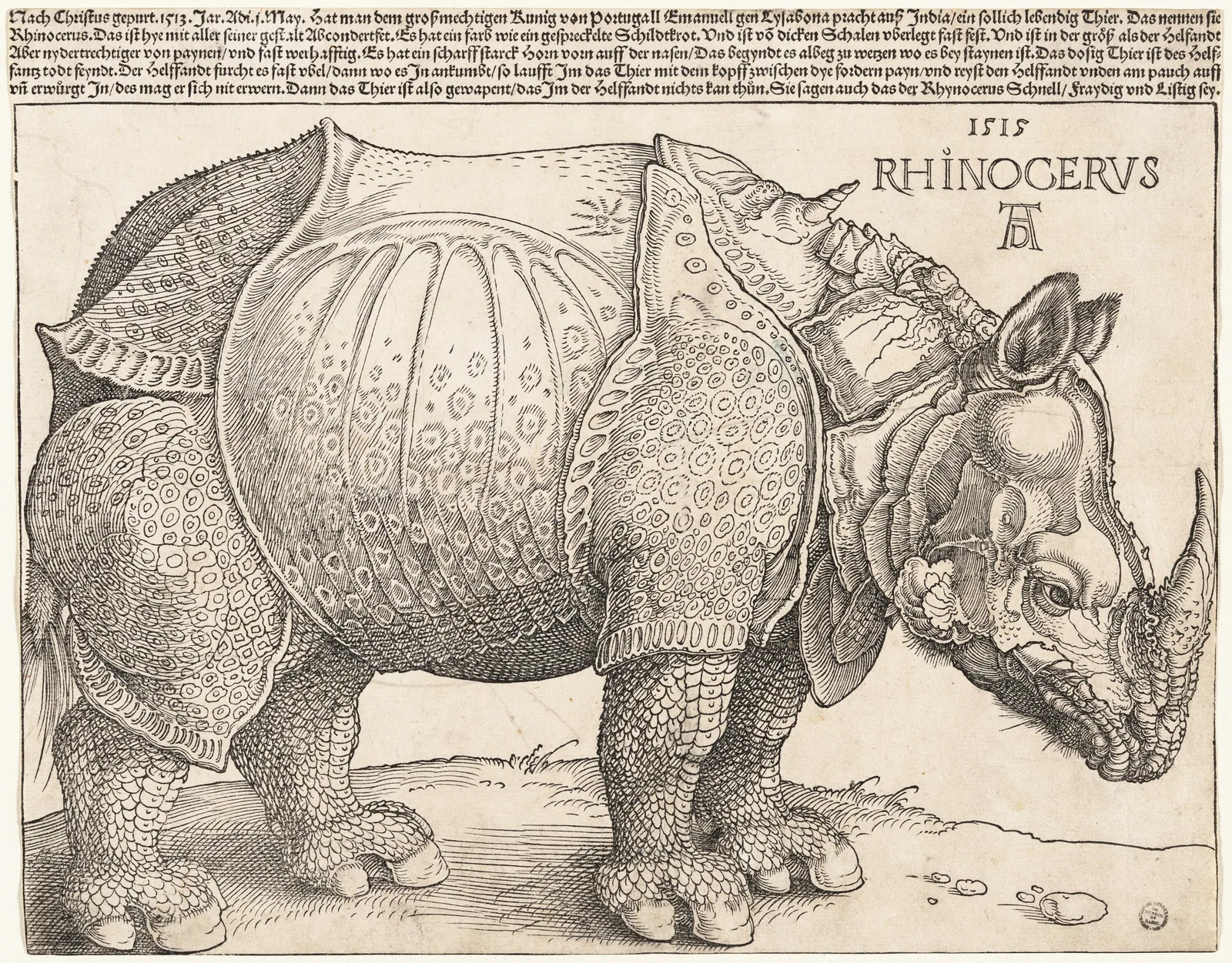
The Rhinoceros, 1515. Albrecht Dürer never saw a rhinoceros. He worked from a written description and a quick sketch of one brought to Lisbon that year, and he gave it armor plates, rivets, scaly legs and a small twisted horn on its back, none of which a real rhinoceros has. It was copied for three centuries and treated as an accurate picture until the late 18th century. It is witty, graphic and instantly recognized, and our scan holds up at size, enough for the wall over a loveseat or a console on its own. Framed prints go up to 36 × 28 in, canvas up to 40 × 31 in and unframed art prints up to 48 × 38 in.
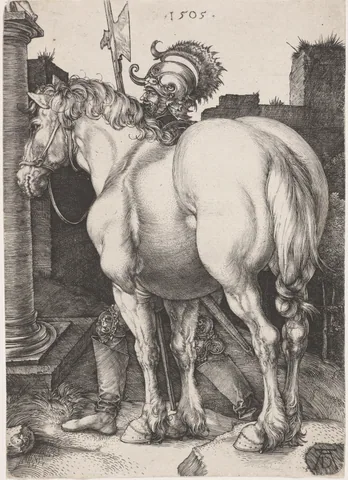
The Large Horse, 1505. A muscular white horse beside a column, an armored rider behind it. The original engraving is smaller than a postcard, about 6½ by 4¾ inches, yet the detail holds up when enlarged, and our listing goes up to 26 × 36 in framed. Upright, it suits a hallway or the wall of a study. Saint George on Horseback (1508), the saint with the dead dragon under his horse’s hooves, is the smaller companion.
Etchings of Rome and its prisons: Piranesi
Giovanni Battista Piranesi (1720 to 1778) was an architect and archaeologist as well as an artist, and his etchings of Rome were widely collected in his lifetime by gentlemen on the Grand Tour, English buyers above all. They are still the classic black and white art for a study, a library or a formal living room.
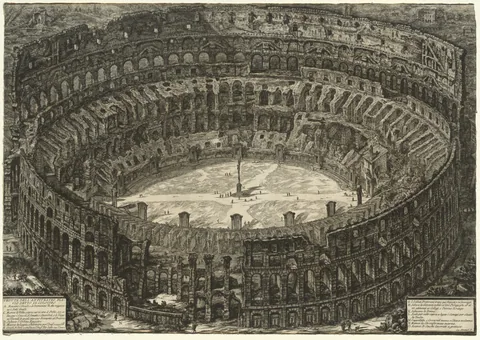
- Views of Rome: The Colosseum, 1776. The interior of the Colosseum, tier on tier of arches, with tiny figures among the ruins to give the scale. Framed prints go up to 36 × 25 in, canvas up to 48 × 34 in and unframed art prints up to 48 × 34 in.
- Views of Rome: The Isola Tiberina, 1775. The river, a stone bridge, a church tower and boats: a softer Rome, good with the Colosseum as a pair.
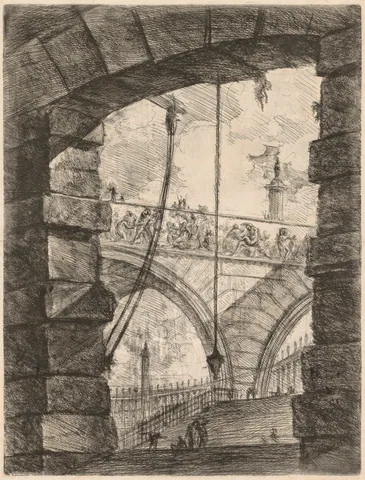
- The Prisons: A Lofty Arch with a Frieze. From the Imaginary Prisons, first published in 1750 and reworked as sixteen numbered plates in 1761: enormous vaults, stairs and arches, some of them in geometry that could not exist. Upright and dramatic, it is made for a stairway or a dark reading corner. Framed prints go up to 27 × 36 in, canvas up to 30 × 40 in and unframed art prints up to 30 × 40 in.
Mezzotints and etchings: Turner, Whistler and Canaletto
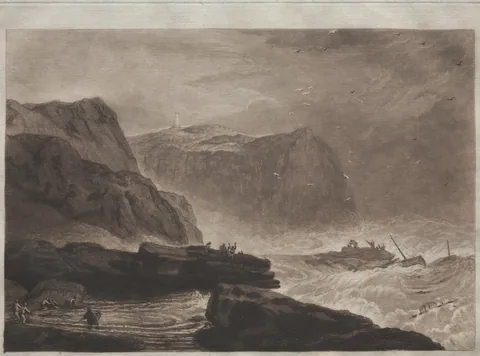
Turner’s Liber Studiorum. From 1807 to 1819 Turner published 71 landscapes, etched by him and worked up in mezzotint, sorting landscape into kinds: marine, mountain, pastoral, historical and architectural among them. He meant the series for the general public. Mezzotint gives deep, velvety blacks and soft grays, so these are the most atmospheric prints here. Coast of Yorkshire, near Whitby, a boat in trouble below the cliffs and a lighthouse, is the one to start with.
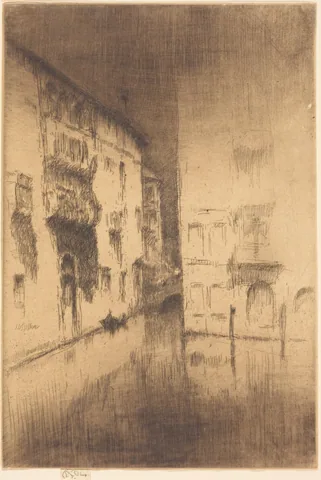
Whistler. Nocturne: Palaces (1879 to 1880) is a narrow Venetian canal at night, dark palaces and rippling reflections, upright and quiet: lovely over a nightstand. The Two Ships (1875) is a harbor of tall masts in haze. Whistler’s best-known painting is in our story of Whistler’s Mother, itself an arrangement in gray and black.
Canaletto, best known for his painted views of Venice, also etched. The Market at Dolo is a crowded riverside market on the mainland, full of small figures: a print to stand close to, so hang it where people pass slowly.
American and modern
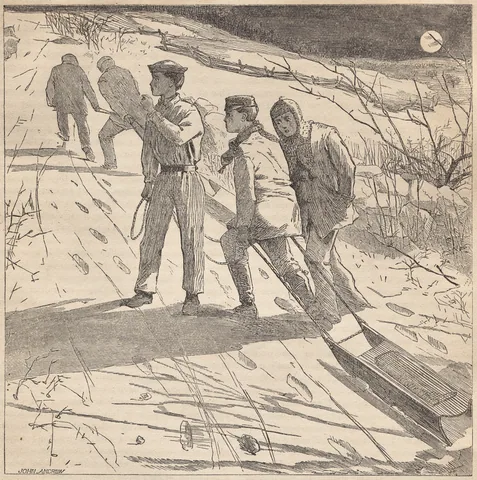
Winslow Homer made wood engravings as well as paintings. The Midnight Coast (1867), figures on a snowy slope at night under a pale moon, is nearly square and makes an unusual winter print; High Tide (1870), three figures on a beach as the waves come in, is its summer opposite. Inner Harbor, Gloucester (1923), an etching by Childe Hassam, is a quiet harbor of gables and masts for a coastal room.
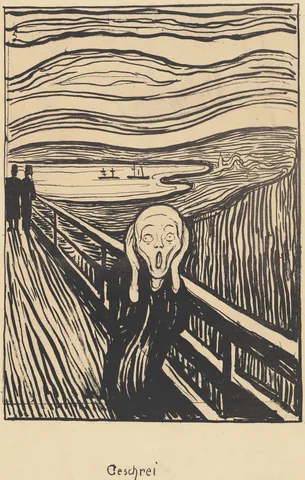
Munch. Geschrei (The Scream), 1895, is the lithograph version of the famous picture, black on cream: the figure on the bridge, the wavy sky. It is a strong choice for an office or a corner that wants a jolt; our story of The Scream explains how the versions differ. His woodcut Garden in Snow I (1913) is the calm opposite, a snowy garden cut in bold strokes.
For a modern room, Mondrian’s Composition 10 in Black and White (1915) is a painting, not a print, but it is black lines on a pale ground and hangs beautifully with any of the above. Mid-century modern wall art has more in that vein.
Where each one works
| Room | Largest framed | Largest canvas | |
|---|---|---|---|
| The Rhinoceros | Living room, a big wall | 36 × 28 | 40 × 31 |
| The Large Horse | Study, hallway | 26 × 36 | 35 × 48 |
| Views of Rome: The Colosseum | Living room, office | 36 × 25 | 48 × 34 |
| The Prisons: A Lofty Arch with a Frieze | Stairway, reading corner | 27 × 36 | 30 × 40 |
| Liber Studiorum: Coast of Yorkshire, near Whitby | Bedroom, study | 30 × 22 | 30 × 22 |
| Nocturne: Palaces | Bedroom, narrow wall | 20 × 30 | 20 × 30 |
| The Midnight Coast | Winter wall, family room | 30 × 30 | 36 × 36 |
| Geschrei (The Scream) | Office, a statement corner | 19 × 30 | 19 × 30 |
Frames, mats and paper for black and white
The classic is a black frame with a wide white or off-white mat, and it is classic for a reason: it reads as a gallery print in any room. For a softer look, a white or natural oak frame with a cream mat blends the warm paper into a light room. A black mat is dramatic around a small, bright print. Unframed, they look best on our smooth cotton paper, a matte surface with no glare.
Black and white is the easiest art to group, because nothing clashes. A row of three Piranesis, a grid of four Turner mezzotints, or a mix of eras held together by identical frames all work. Gallery wall layouts has the spacing.
Any painting, in black and white
If the picture you love is in color, the Studio can make it black and white: open any work there and pick Black and white in the row of looks. Try it with The Kiss, which keeps all its pattern without the gold. It is a different thing from a real etching, which was drawn in line from the start, but it is a good way to make a favorite painting fit a black and white room.
Questions people ask
What is the best black and white art for a living room?
Something large and bold enough to hold the wall: Dürer’s Rhinoceros, which we sell up to 36 × 28 in framed, or a pair of Piranesi views of Rome over a sofa.
Is a black and white print in pure black and white?
Not quite. Old prints are printed on paper that has aged to cream, and we print that tone, which makes them warmer than a photocopy.
What frame suits black and white art?
A black frame with a white or off-white mat is the classic. Oak or white with a cream mat is softer.
Can I get a color painting in black and white?
Yes. Open the painting in the Studio and choose Black and white from the looks.
Are these prints public domain?
Yes, all of them. What public domain art is.
Black and white prints to start with
Shop all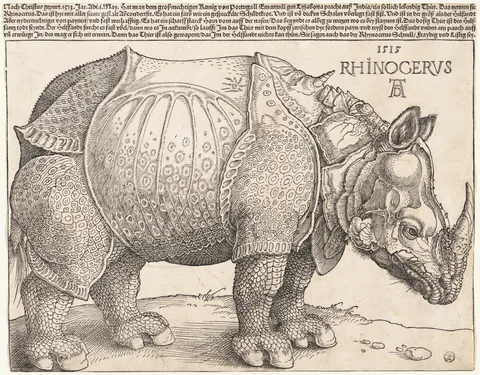
Sources
More from the Journal
 Guide · 8 min
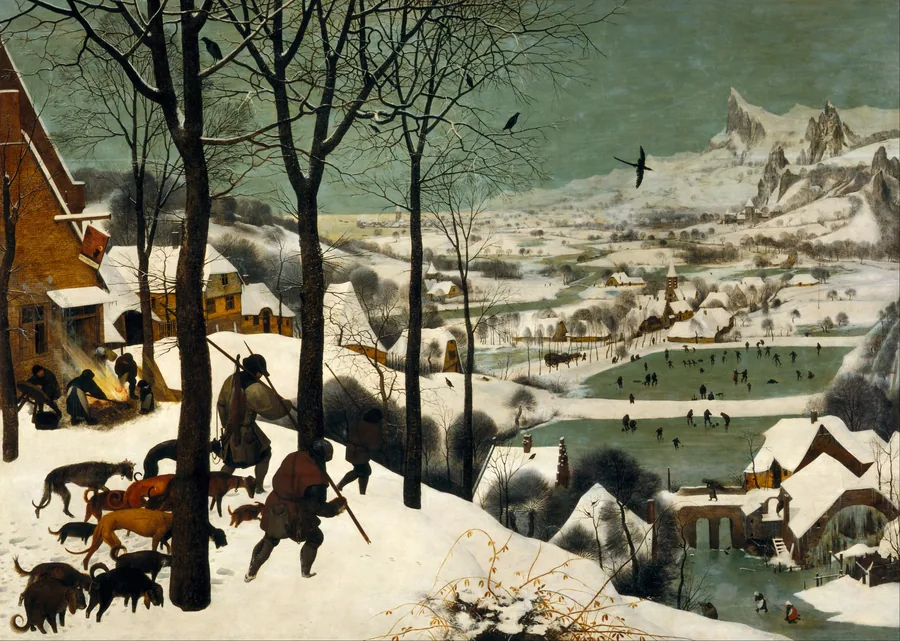
Winter and Christmas art prints worth hanging
Snow scenes that can stay up until March, Nativity paintings for December, the sizes and frames that suit them, and when to order for Christmas.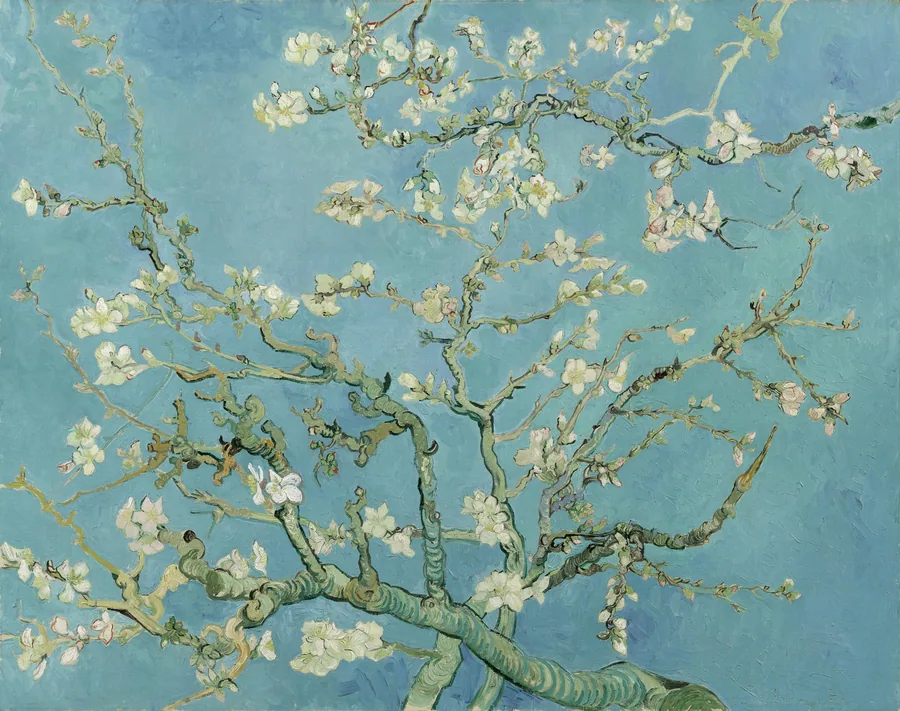 Guide · 7 min
Art as a gift: how to choose a print they’ll keep
Choose for their walls, not yours: safe sizes and frames, ideas by occasion, the gift note in the box, and how early to order for the holidays.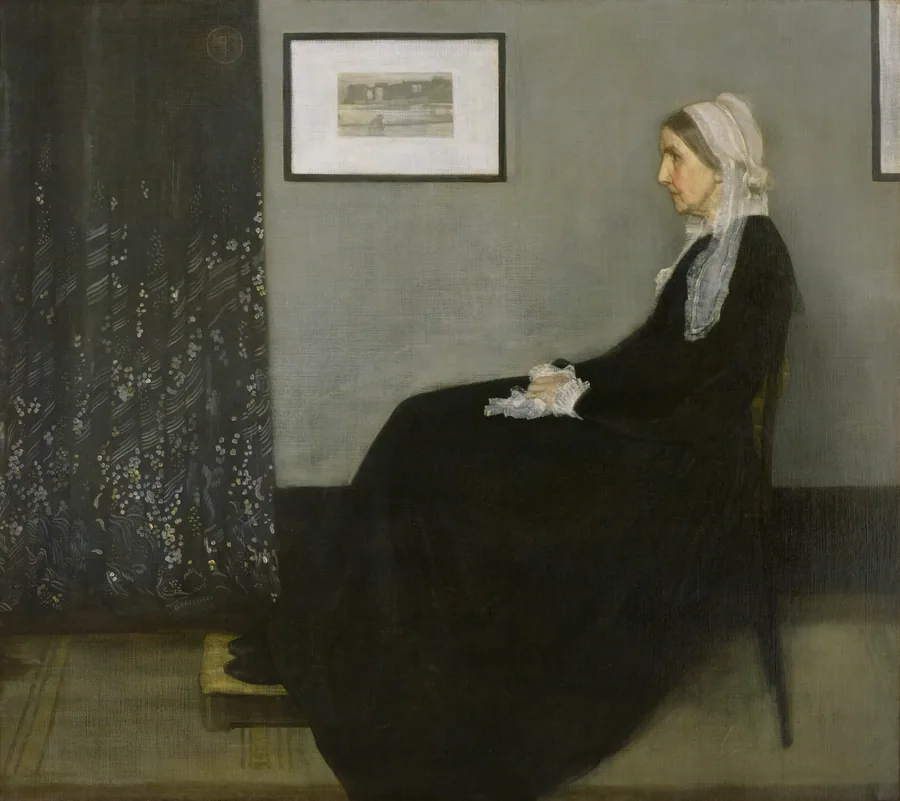 Guide · 7 min
Art gifts for mom and dad: ideas by what they love
Art gift ideas for parents, by what they love: gardens, the sea, books, travel, home. Safe sizes, a personal line of words, and when to order for Christmas. Guide · 6 min