
Story
Whistler’s Mother: the real title and the story
Its real name is Arrangement in Grey and Black No. 1. Who sat for it, why Whistler called it an arrangement, and how to choose a print.
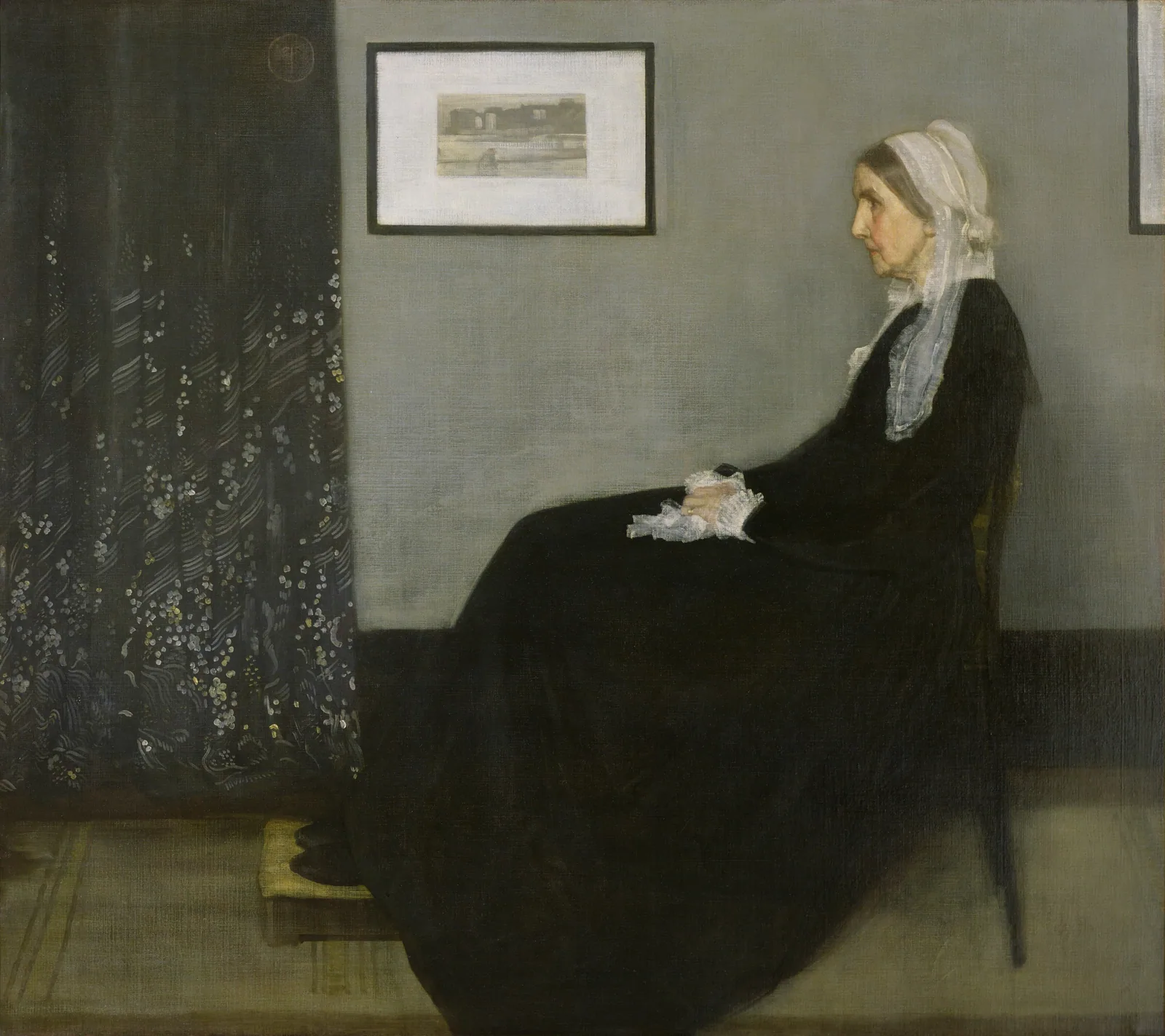
An elderly woman sits in profile on a plain chair, in a long black dress and a white lace cap, her hands folded in her lap. A gray wall, a dark curtain, a single framed print. Almost nothing happens, and yet Whistler’s Mother is famous around the world. James McNeill Whistler painted it in London in 1871, and he did not want you to call it that.
What is the real title?
Arrangement in Grey and Black No. 1. Whistler gave many of his paintings musical names, arrangements, symphonies and nocturnes, pointing to tone and shape rather than to a story. Victorian viewers would not accept a portrait called simply an “arrangement,” so a subtitle was added, “Portrait of the Painter’s Mother,” and the subtitle won.
He said so himself, in his book The Gentle Art of Making Enemies (1890): “To me it is interesting as a picture of my mother,” but what, he asked, “can or ought the public to care about the identity of the portrait?”
The “No. 1” came about almost by accident. The writer Thomas Carlyle later sat for a portrait in the same pose and colors, Arrangement in Grey and Black, No. 2, which made this one No. 1.
Who was Whistler’s mother?
Anna McNeill Whistler, who was living with her son at 96 Cheyne Walk, in Chelsea, London, when she posed. Whistler first planned to paint her standing, but she found standing for long sessions too tiring, so he sat her down. A popular story says she stepped in when another model failed to turn up; there is no way to confirm it.
Nearly rejected, then pawned
In 1872 Whistler sent it to the Royal Academy in London, where it came within a hair’s breadth of being turned down. It was the last painting he ever submitted for the academy’s approval. At one point he pawned it. In 1891 the French state bought it for the Musée du Luxembourg in Paris, and today it is in the Musée d’Orsay, still in a frame of Whistler’s own design.
A symbol of mothers
In America the painting took on a life of its own as an image of motherhood. In 1934 the U.S. Post Office issued a stamp based on it, with the words “In memory and in honor of the mothers of America.” It has been borrowed and joked about ever since; in the 1997 film Bean, Mr. Bean ruins it by accident as it arrives at an American gallery and secretly swaps in a poster.
Look closer
These details come from the scan we print from, 5,897 pixels on the long side. Pick a detail, or zoom in and drag to look around.
Seen in strict profile, calm and unsmiling, under a white lace cap.
Choosing a print
Size. The original is big, about 57 by 64 inches. Our largest framed print is 30 × 27 in, and canvas goes to 36 × 32 in. Framed prints go up to 30 × 27 in, canvas up to 36 × 32 in and unframed art prints up to 36 × 32 in. The near-square shape suits a wall over a fireplace or a chest.
Where it works. Its quiet grays and blacks suit a modern, minimal room as well as a traditional one; it is almost an abstract arrangement of rectangles. It is a natural gift for a mother or grandmother. At 24 × 21 in it fits a hallway or a study.
Which material. Much of the picture is black. Behind clear acrylic, dark areas reflect a facing window, so hang a framed print with side light, or choose canvas, which has a matte finish and no cover. Smooth cotton paper gives the deepest blacks. See our papers and canvas.
Frames. Black wood continues the “grey and black”; a slim black frame with a white mat looks crisp and modern. See all our frames and mats, and our gift guide.
Questions
What is the real name of Whistler’s Mother?
Arrangement in Grey and Black No. 1.
Who is the woman in Whistler’s Mother?
Anna McNeill Whistler, the painter’s mother, who was living with him in Chelsea, London.
Where is Whistler’s Mother?
In the Musée d’Orsay in Paris. The French state bought it in 1891.
How big is it?
144.3 × 162.4 cm, about 57 × 64 in.
Can it be printed legally?
Yes. Whistler died in 1903, and the painting is in the public domain. What public domain means.
More Whistler
All Whistler
More in Interiors and Portraits.
Sources
More from the Journal
 Story · 7 min
Van Gogh’s Starry Night: the facts, and choosing a print
Painted in June 1889 at an asylum in Provence: the view from his window, plus a village he made up. What is real, what it means, and which print to choose.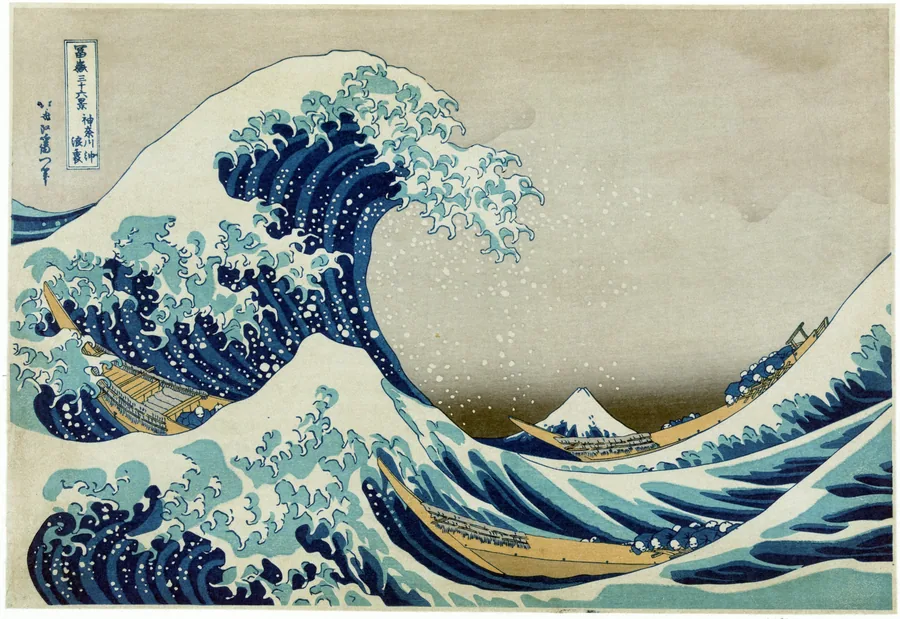 Story · 7 min
The Great Wave off Kanagawa: meaning, history and prints
A woodblock print, not a painting, and a storm wave, not a tsunami. What it shows, why no two impressions match, and how to choose a print.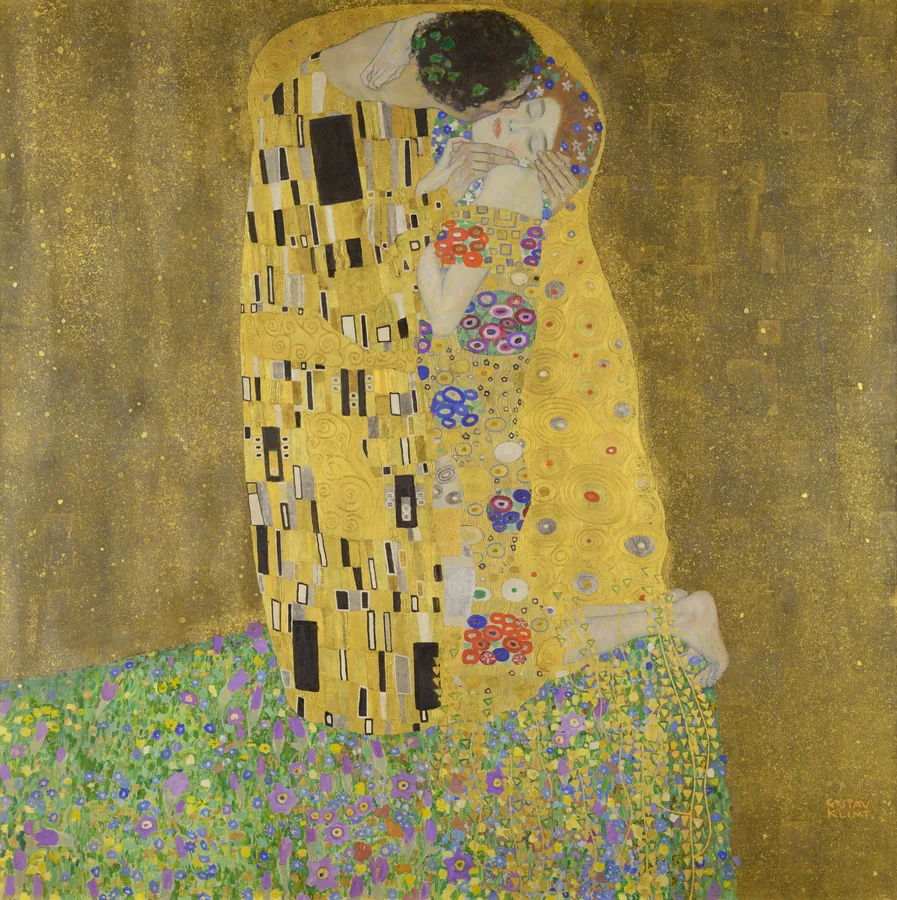 Story · 7 min
Klimt’s The Kiss: gold leaf, meaning and choosing a print
Real gold leaf on canvas, finished in 1909. The story of Klimt’s lovers, what a print can and can’t reproduce, and which size to choose. Story · 7 min