
Story
Bruegel’s The Gloomy Day: early spring in a storm
Bare trees, a storm over the bay and villagers cutting willow at the end of winter. The story of Bruegel’s early spring, and choosing a print.
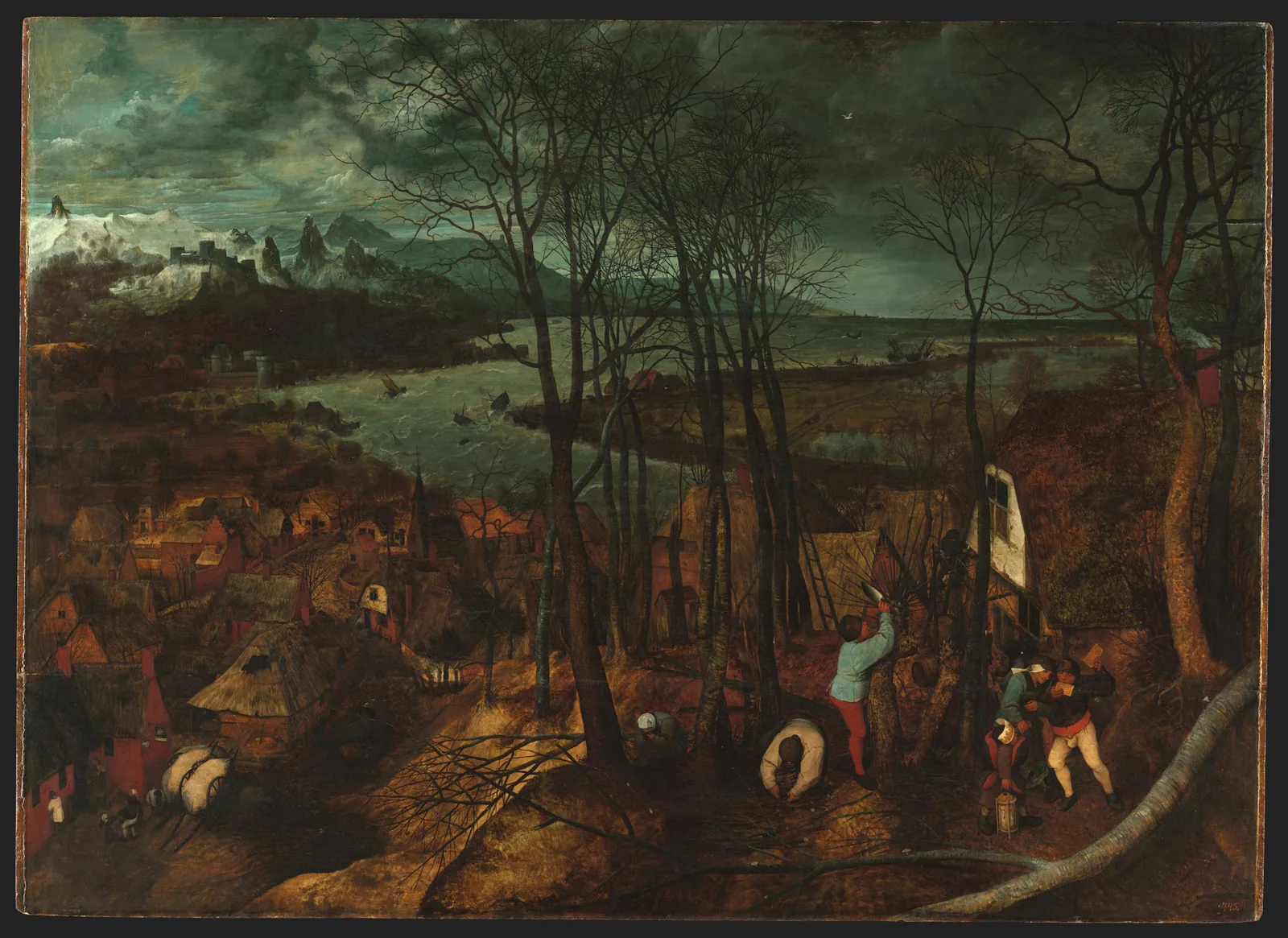
It is the end of winter. The trees are still bare, the sky is dark, and out on the bay a storm is driving ships onto the shore. In the foreground, oblivious, villagers get on with the season’s work: a man cuts willow rods, another figure gathers branches, a child wears a paper crown and another eats a waffle. Pieter Bruegel the Elder painted it in 1565.
One of the seasons
The Gloomy Day is one of a series of paintings of the times of the year that the collector Nicolaes Jonghelinck commissioned from Bruegel. In Bruegel’s time the year was often divided into six seasons, and this one is early spring, around February and March. Five of the six survive:
- The Hunters in the Snow, winter, in Vienna.
- The Gloomy Day, early spring, in Vienna.
- The Hay Harvest, early summer, in Prague.
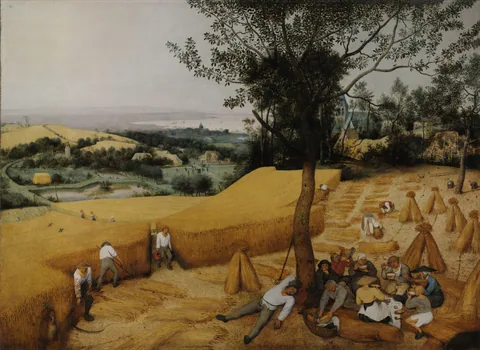
- The Harvesters, high summer, in New York.
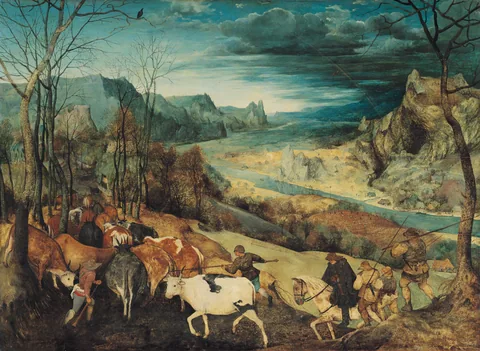
- The Return of the Herd, autumn, in Vienna.
The spring painting is lost.
What to look for
Bruegel looks down on the scene from high up. The warm browns of the foreground give way to cool greens, blues and grays in the distance. On the left rise snowy mountains with a castle, though his Flemish homeland has none: this is an imaginary “world landscape” that combines a northern bay with alpine peaks.
The small details tell you the date. The paper crown and the waffle are festival treats: the crown is linked to Epiphany, the waffle to Carnival, the feast before Lent. The people are small and pushed to the edges, and the real subject is the weather.
A cold century
Bruegel painted it during what is now called the Little Ice Age, when average temperatures in Europe fell by about 1.5°C. Summers were cool and winters cold, harvests often failed, and storm surges battered the coasts.
Where is The Gloomy Day?
In the Kunsthistorisches Museum in Vienna, beside its sister paintings. The series was given to Archduke Ernst in 1594 and passed to the Habsburgs.
Look closer
These details come from the scan we print from, 41,296 pixels on the long side. Pick a detail, or zoom in and drag to explore.
A man in a blue jacket cutting willow rods from a tree, one of the jobs of early spring.
Choosing a print
Life size. The panel is about 46½ by 64 inches. Framed prints go up to 36 × 26 in. Framed prints go up to 36 × 26 in, canvas up to 48 × 35 in and unframed art prints up to 48 × 35 in.
Where it works. A living room, a study or a dining room with a wide wall. At 30 × 22 in it fits over a sofa or a sideboard. See what size art over a sofa.
Which material. The picture is dark and moody. Behind clear acrylic, dark areas reflect a facing window, so hang a framed print with side light, or choose canvas, with its matte finish and no cover. See our papers and canvas.
Frames. Natural oak suits the browns of the foreground; black wood deepens the storm. See all our frames.
Four seasons. Open four of Bruegel’s seasons as a set, winter to autumn. Read the stories of The Hunters in the Snow and The Harvesters.
Questions
What season is The Gloomy Day?
Early spring, around February and March, at the end of winter.
Where is The Gloomy Day?
In the Kunsthistorisches Museum in Vienna, with The Hunters in the Snow and The Return of the Herd.
Why is there a child in a paper crown?
It is a festival detail, linked to Epiphany; the waffle points to Carnival. Both help date the scene.
How big is it?
118 × 163 cm, about 46½ × 64 in.
Can it be printed legally?
Yes. It was painted in 1565 and is in the public domain. What public domain means.
More Bruegel
All Bruegel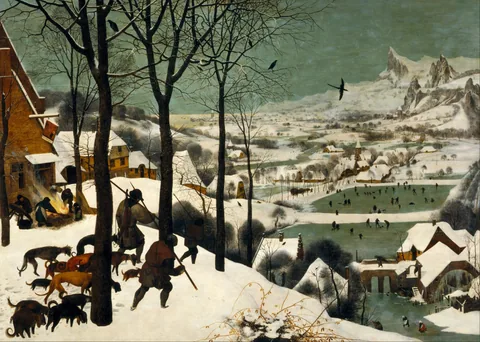
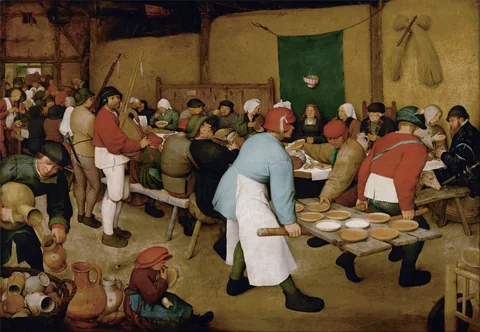
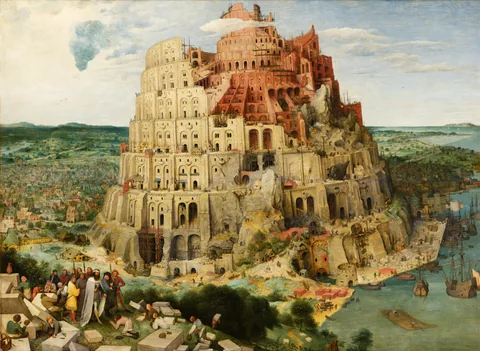
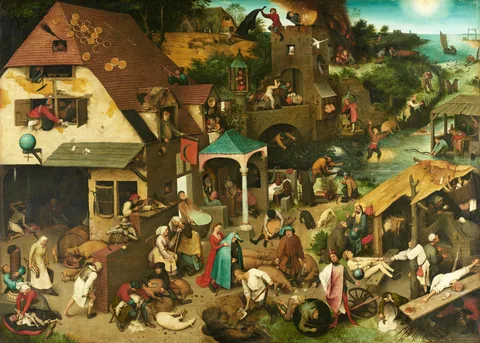
More in Landscapes and Dutch and Flemish Masters.
Sources
More from the Journal
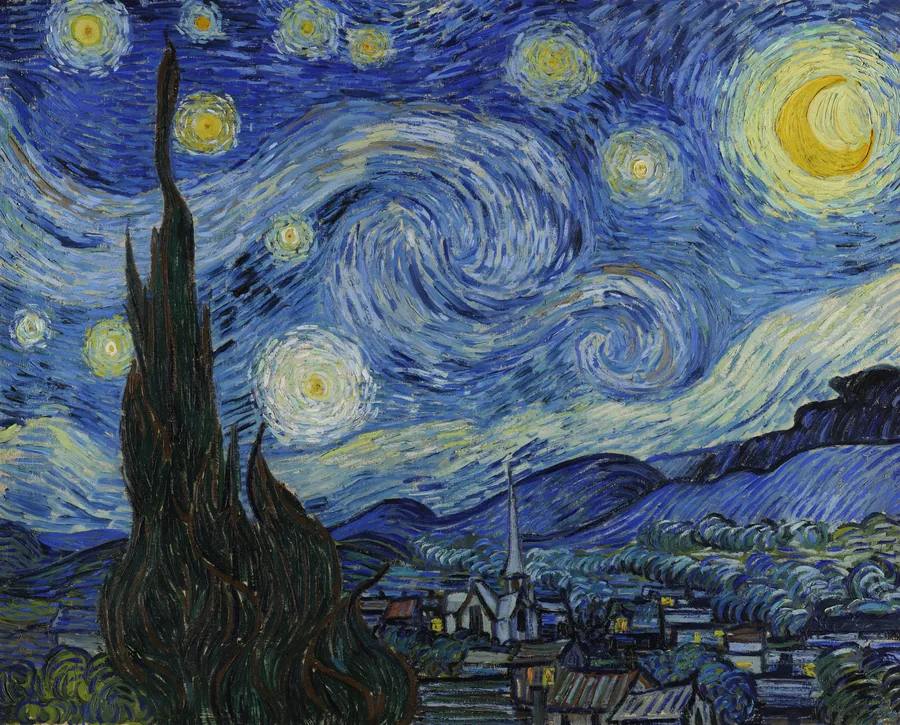 Story · 7 min
Van Gogh’s Starry Night: the facts, and choosing a print
Painted in June 1889 at an asylum in Provence: the view from his window, plus a village he made up. What is real, what it means, and which print to choose.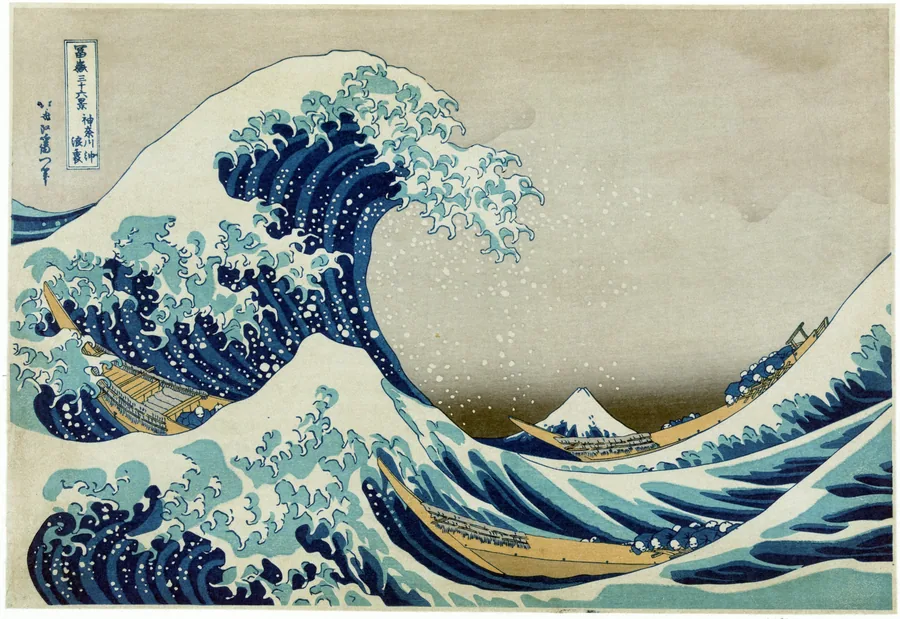 Story · 7 min
The Great Wave off Kanagawa: meaning, history and prints
A woodblock print, not a painting, and a storm wave, not a tsunami. What it shows, why no two impressions match, and how to choose a print.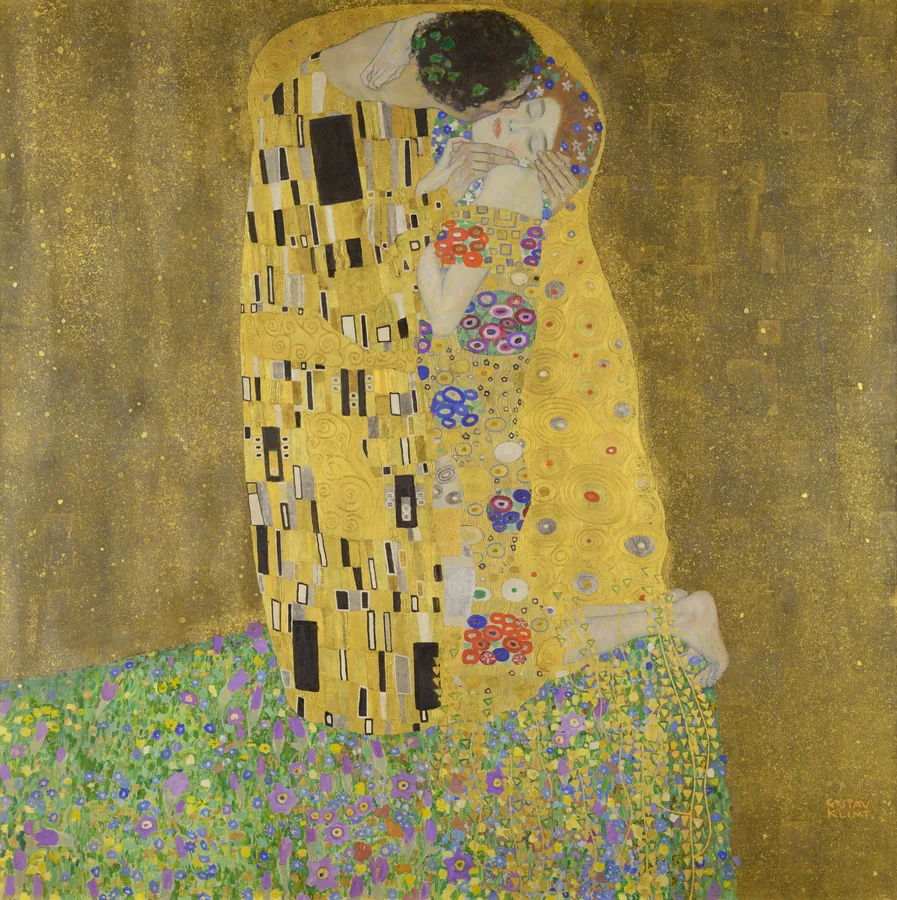 Story · 7 min
Klimt’s The Kiss: gold leaf, meaning and choosing a print
Real gold leaf on canvas, finished in 1909. The story of Klimt’s lovers, what a print can and can’t reproduce, and which size to choose. Story · 7 min