
Story
Dürer’s Young Hare: the story of the famous watercolor
A hare, a window in its eye and a thousand tiny brushstrokes. How Dürer painted Young Hare in 1502, and how to choose a print.
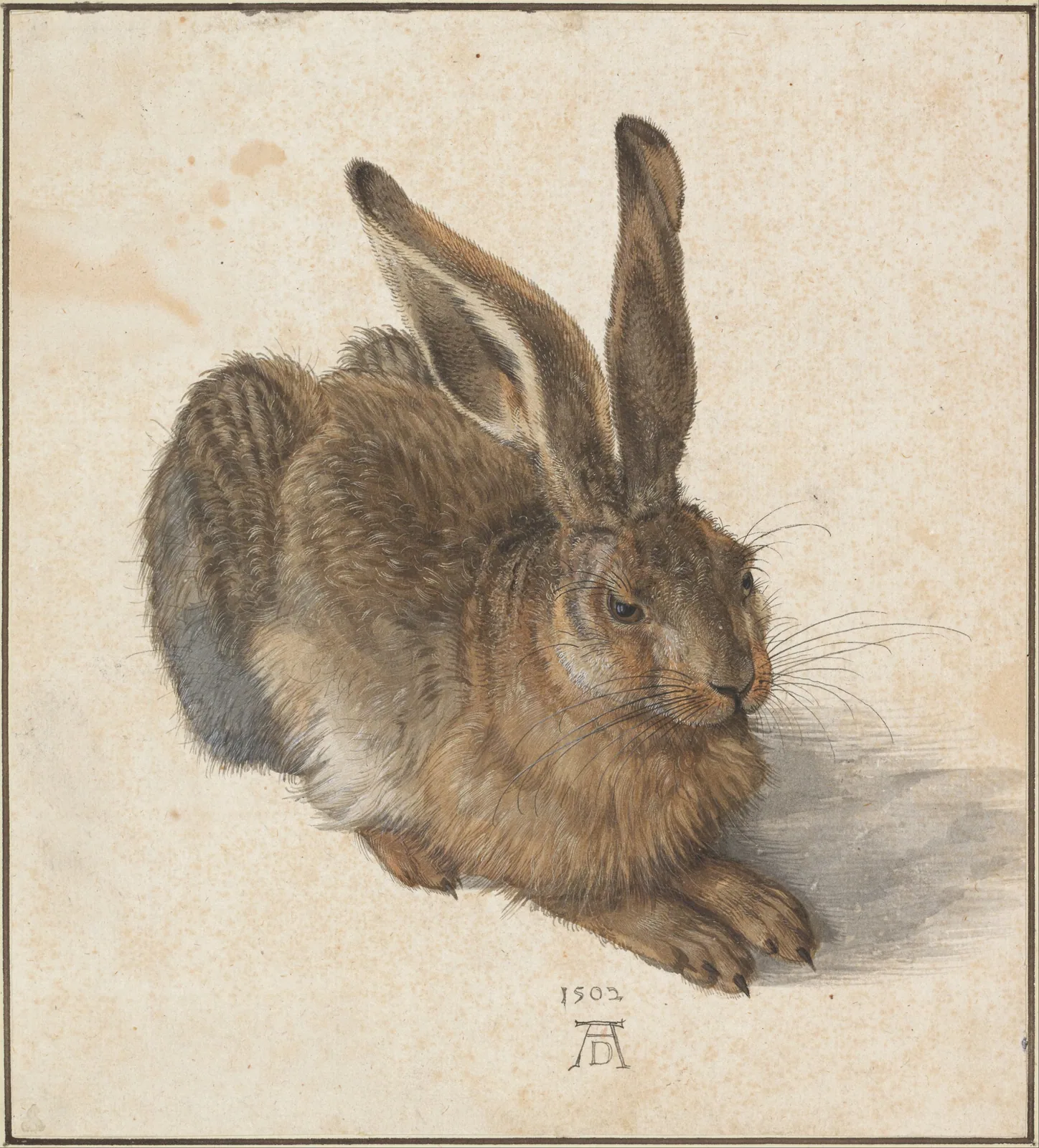
A hare sits on a plain sheet of paper, ears up. There is no field, no sky, no story, only the animal. Albrecht Dürer painted it in his workshop in Nuremberg in 1502, and more than five hundred years later it is still one of the most famous animal pictures ever made. In German it is simply Feldhase, field hare.
A portrait of an animal
The hare is the whole subject, painted with the care a painter of the time might give to a prince, and what makes the picture remarkable is how real it looks. The art historian Erwin Panofsky wrote of Dürer’s record of “the most microscopic of observations,” and the hare is the clearest proof.
The English title calls it young, but the animal’s features suggest a grown hare. Whatever its age, it is drawn with an attention that makes it feel like one particular animal, not hares in general. The Dürer scholar Fritz Koreny said its eyes capture the animal’s personality.
How Dürer painted every hair
The method was slow and layered. Dürer began with brown washes of watercolor, a soft underpainting that sets the shape and the warm color of the fur. Over it he worked light and dark strokes with pointed brushes, in browns, grays and black, combining transparent watercolor with opaque bodycolor, the paint we would call gouache. He laid the strokes in a kind of double cross-hatching, and used what one account calls infinitesimal strokes to suggest single hairs.
The last touches were the whiskers, drawn as fine lines that spring out past the outline of the head, and the eye. Look closely at the eye and you can see a small, cross-barred reflection, like the frame of a window. It makes the hare look alive and alert.
The whole sheet is only about 25 by 23 cm, a little under ten inches tall. The scan we print from is 4,123 pixels on its long side, which is why a print can be made larger than the original without the fur turning soft.
Did Dürer paint it from a live hare?
Nobody knows for sure, and scholars disagree. One idea is that he sketched a wild hare and finished the details from a dead one, which would keep still. Another is that he kept a live hare in his studio. The window reflected in its eye is sometimes taken as proof that the animal sat in front of him in the workshop. But the reflection may not be evidence at all: Dürer often put a cross-barred window in his subjects’ eyes, in portraits of people too, as a painter’s device to make them look lively.
A study, or a finished work?
Dürer painted it during a run of nature studies from about 1500 to 1505, the same years that gave us the Great Piece of Turf, a clump of grasses and wild plants painted in 1503. Studies like these could feed into his engravings and woodcuts, where animals and plants appear in the backgrounds. But the hare carries his monogram and the date 1502 written large below it, and that suggests he thought of it as a finished picture in its own right, not a sketch for later use.
Dürer in 1502
When he painted the hare, Dürer was about thirty, and his fame came from his prints, not his watercolors: engravings and woodcuts that traveled easily, and that made his name in the major art centers of Europe within a few years. The watercolors were more private. On his first journey to Italy, in 1494 and 1495, he made watercolor sketches as he crossed the Alps, and after he came home and opened his own workshop in Nuremberg he painted landscapes like Pond in the Woods and Willow Mill, with much more interest in atmosphere than in exact topography. Alongside them came the studies of meadow plants and animals, the hare and the turf among them.
The same years show how hard he was thinking about nature and how to record it. After the Venetian painter Jacopo de’ Barbari visited in 1500, Dürer began to study the proportions of the human body, work that led to his engraving Adam and Eve in 1504. A decade later he made his famous woodcut of a rhinoceros, in 1515, from a written description and a sketch sent from Lisbon, without ever seeing the animal. The hare is the opposite case: an animal he could look at as long as he liked, and did.
Five hundred years of a single sheet
The hare stayed in Dürer’s workshop until his death in 1528. It then passed to the Nuremberg collector Willibald Imhoff, who, short of money, sold it in 1588 to the Emperor Rudolf II, one of the great collectors of his age. In 1691 it entered the collection that is now the Albertina in Vienna, where it remains.
It was copied almost at once. At least twelve copies made in Dürer’s time or soon after are known. The painter Hans Hoffmann made several, including one from 1528 that even bears Dürer’s monogram; whether that was admiration, replication or forgery is still argued over. The historian Christof Metzger has said that of all Dürer’s drawings, the hare has had the most brilliant career.
Choosing a Young Hare print
Size. The original is small, and the hare looks right at a modest size, where it reads as a close, intimate picture. At 11 × 12 in it is close to the size of the original sheet. The scan holds up to 22 × 24 in framed, larger than the original, and that is as big as we sell it. Framed prints, canvas and unframed art prints all go up to 22 × 24 in.
Paper or canvas. This is a watercolor on paper, and smooth fine-art paper keeps the crisp hairs and the pale, even background. Canvas texture would compete with the fur, so paper in a frame is the natural choice here. See our papers.
Frame and mat. A wide white or ivory mat gives the hare the space of the original sheet. Natural oak or walnut picks up the brown of the fur; a thin black frame makes it crisper and more modern. See our frames and mats.
Where it works. A hallway, a study, a child’s room, a kitchen, or a cottage-style living room: anywhere you will see it up close. It also pairs well with the Great Piece of Turf, painted the following year, as two nature studies side by side.
Questions
When did Dürer paint Young Hare?
In 1502, in his workshop in Nuremberg. The date is written on the sheet, below his monogram.
Is Young Hare a painting or a drawing?
It is a watercolor, with opaque bodycolor (gouache) for the light hairs, on paper. Museums often list it among Dürer’s drawings, because it is a work on paper.
Where is Young Hare?
In the Albertina in Vienna, which has owned it since 1691. It is 25.1 × 22.6 cm, about 9¾ × 8¾ in.
Why is there a window in the hare’s eye?
It is a reflection of a cross-barred window. It may show that the hare sat in Dürer’s workshop, or it may be a device he often used to make eyes look alive.
Can it be printed legally?
Yes. Dürer died in 1528, and the watercolor is in the public domain. What public domain means.
More Dürer
All Dürer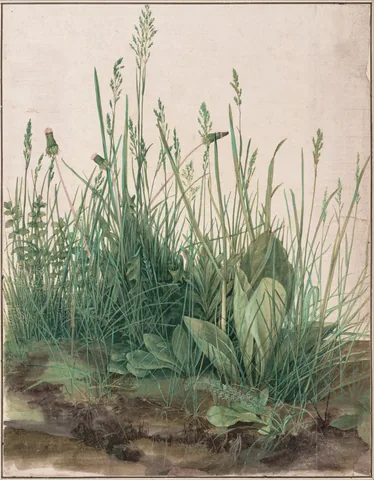
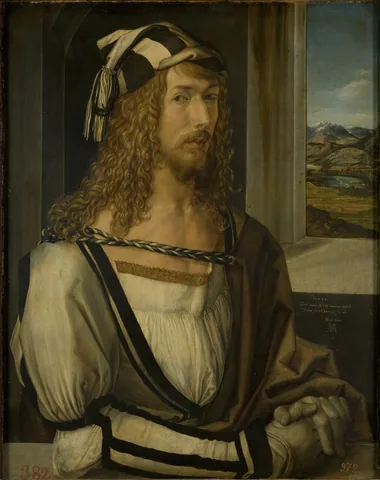
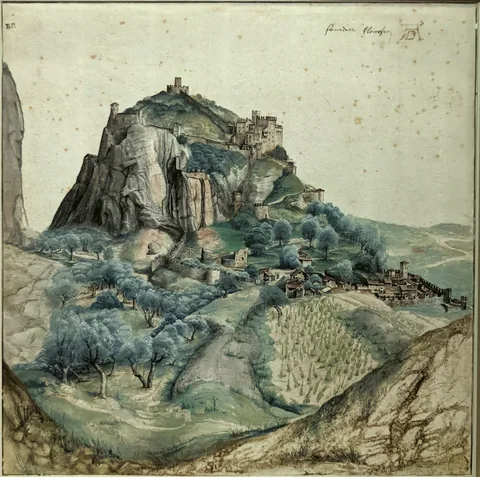
More in Birds and Animals.
Sources
More from the Journal
 Story · 7 min
Van Gogh’s Starry Night: the facts, and choosing a print
Painted in June 1889 at an asylum in Provence: the view from his window, plus a village he made up. What is real, what it means, and which print to choose.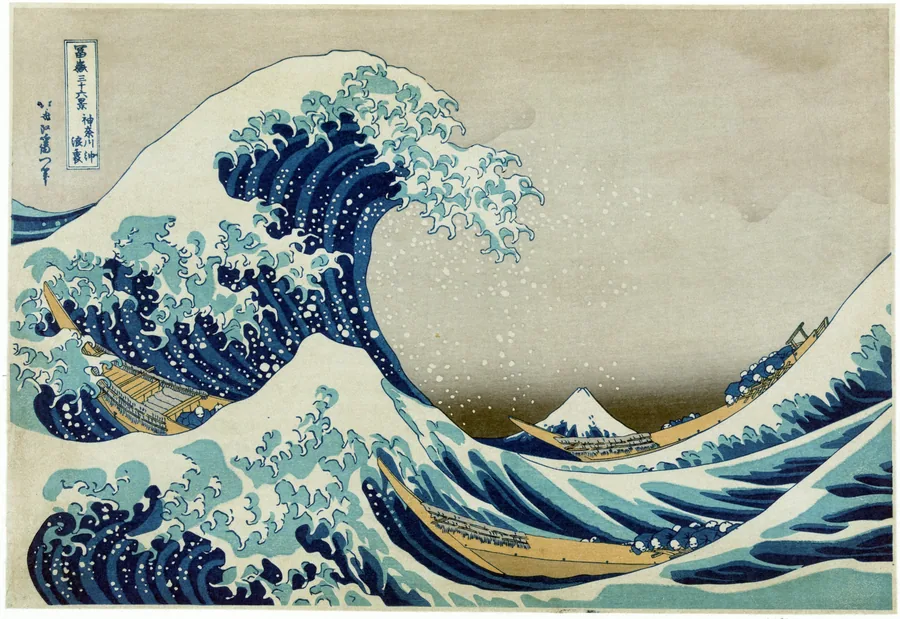 Story · 7 min
The Great Wave off Kanagawa: meaning, history and prints
A woodblock print, not a painting, and a storm wave, not a tsunami. What it shows, why no two impressions match, and how to choose a print.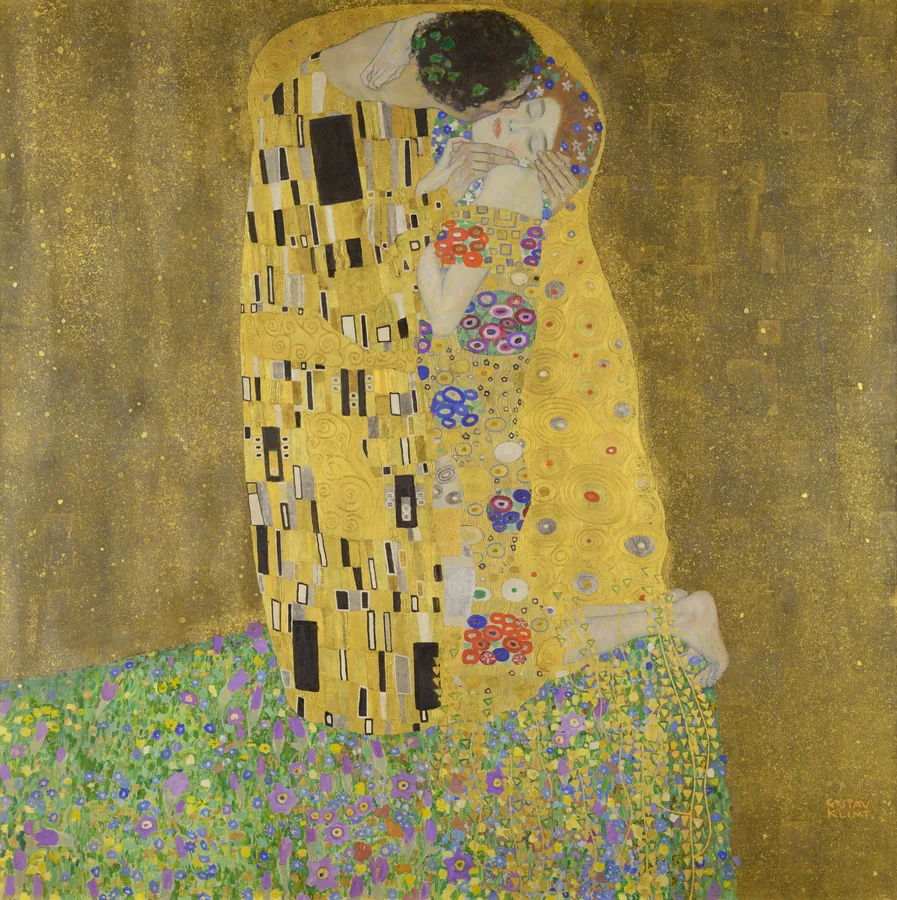 Story · 7 min
Klimt’s The Kiss: gold leaf, meaning and choosing a print
Real gold leaf on canvas, finished in 1909. The story of Klimt’s lovers, what a print can and can’t reproduce, and which size to choose. Story · 7 min