
Story
Van Gogh’s Sunflowers: the story, versions and a print
Painted to welcome Gauguin to Arles, then copied again and again. How many Sunflowers there are, where they are and how to choose a print.
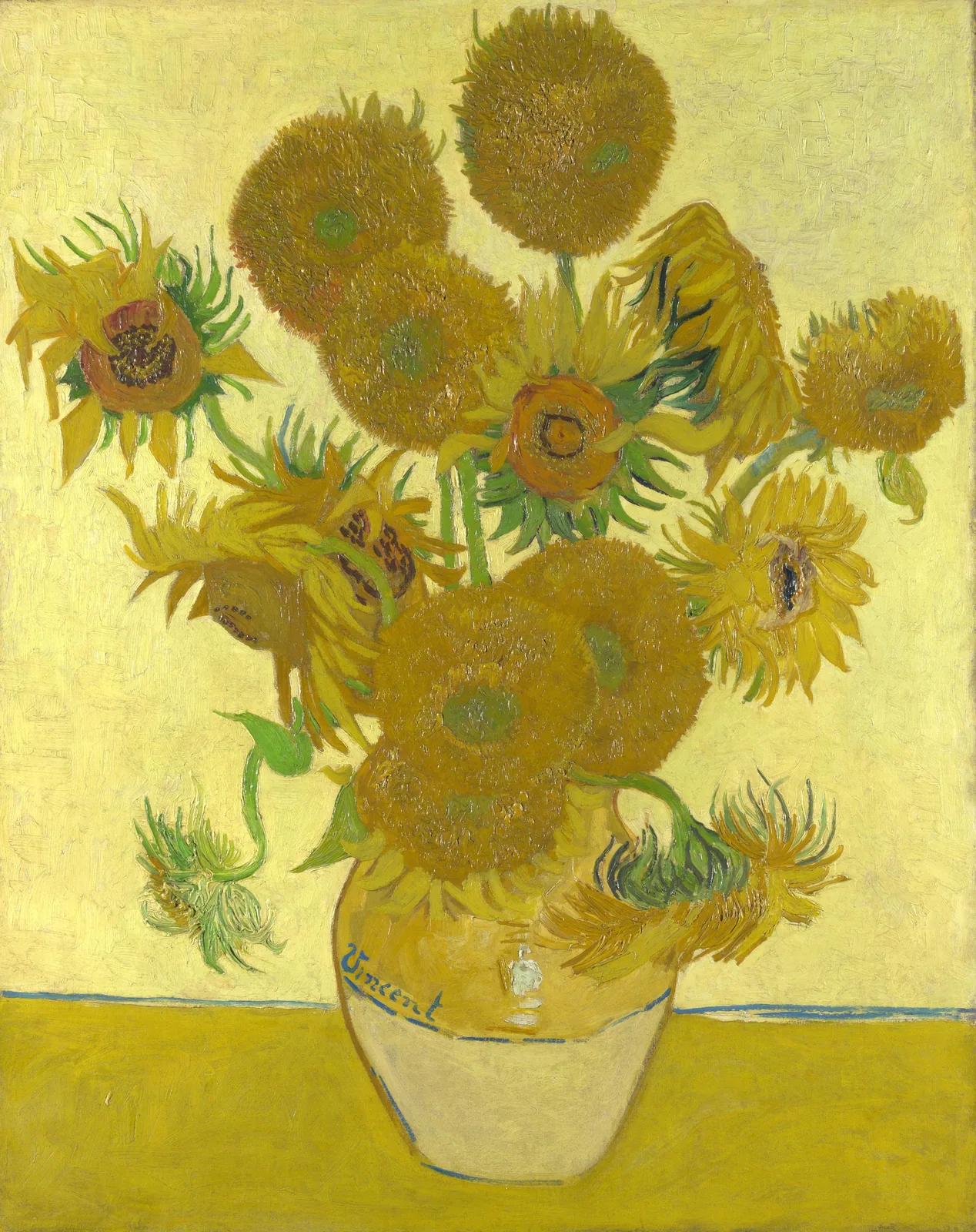
Fifteen sunflowers in a yellow pot, against a yellow wall, on a yellow table. Vincent van Gogh painted them in Arles in August 1888, in a rush of hope, to decorate a house for a friend who was coming to stay. Of all his flower paintings, this is the one people know best, and the version we print is the one in the National Gallery in London.
Why Van Gogh painted sunflowers
In 1888 Van Gogh was living in Arles, in the south of France, in the Yellow House. He hoped to share a studio there with the painter Paul Gauguin, and he set out to fill the house with pictures before Gauguin arrived. “I would like to do a decoration for the studio,” he wrote. “Nothing but large Sunflowers.”
Writing to his brother Theo, he said he was painting “with the gusto of a Marseillaise eating bouillabaisse,” and that the whole scheme would be “a symphony in blue and yellow.” In the end he hung this picture and its sister, now in Munich, in the guest room that Gauguin was going to use.
A picture all in yellow
Van Gogh called it “a picture all in yellow,” and that was the daring part. He put yellow flowers on a yellow wall and a yellow table, and trusted small changes of tone, with a few touches of green, orange and blue, to hold it together. Newly invented pigments, bright yellows that painters had not had before, made it possible.
The picture is also a small life story. Count the flowers and you find fifteen. One, low on the left, is a bud that has not opened. Seven are in full bloom. Seven have lost their petals and turned to heavy heads of seed. Van Gogh painted the seed heads in thick paint that stands up from the canvas, so the picture is as much about texture as color.
How many Sunflowers paintings are there?
Seven, in the series of large sunflowers in a vase. Van Gogh painted four in August 1888. After Gauguin had come and gone, he painted three more in January 1889, repeating his own pictures and calling them “absolutely equal and identical copies.” Of the seven:
- Five are in museums: the National Gallery in London (this one), the Van Gogh Museum in Amsterdam, the Neue Pinakothek in Munich, the Philadelphia Museum of Art and the Sompo Museum of Art in Tokyo. The Tokyo picture made headlines in 1987, when it sold at Christie’s in London for the equivalent of almost $40 million.
- One is in a private collection.
- One, bought by a Japanese collector in 1921, was destroyed during the Second World War.
The National Gallery counts its picture and the Munich one as the most important of the series, and both are signed “Vincent.” He had also painted sunflowers lying on the ground in Paris the year before, but those are a separate group.
What do Van Gogh’s sunflowers mean?
Van Gogh never wrote a single key to them, but he did give a hint. In 1890, writing to the critic Albert Aurier, he suggested the sunflower pictures might express the idea of gratitude. They were made in a hopeful moment, as a welcome for a friend, and that is how most people still read them: warmth, light and friendship, with the wilting heads as a reminder that it does not last.
Where is this Sunflowers now?
In the National Gallery in London, in room 43. The gallery bought it in 1924 with the Courtauld Fund. It is not huge: about 36 by 29 inches.
Look closer
These details come from the scan we print from, 4,226 pixels on the long side. Pick a detail, or zoom in and drag to look around: the seed heads are almost sculpted.
A flower at its peak: a ring of yellow petals round an orange and green heart, painted in thick, separate strokes.
Choosing a print
Size. The scan we have of this painting is sharp enough for prints up to 19 × 24 in, smaller than the 36 by 29 inch original, and we don’t sell it bigger than the file can print well. That size suits a dining room, a kitchen wall or the space over a sideboard. At 16 × 20 in it fits a narrow wall or a pair of shelves. Framed prints, canvas and unframed art prints all go up to 19 × 24 in.
Which material. The picture’s life is in the thick paint. Canvas gives it a painted feel and has no cover to catch reflections, which suits a sunny kitchen. A framed print on smooth cotton paper keeps the sharpest edges on every stroke. See canvas and our papers.
Frames. Yellow on yellow looks fresh in a white frame, and warm in natural oak, which picks up the table. Gold can be too much yellow around a yellow picture. See all our frames and how to choose a frame color.
With the house it was painted for. The same year Van Gogh painted the house itself, in The Yellow House. Open the two as a set. And for his most famous night sky, read the story of The Starry Night.
Questions
How many sunflowers are in the painting?
Fifteen in this version: one bud, seven in full bloom and seven gone to seed.
Why did Van Gogh paint sunflowers?
To decorate his house in Arles before Paul Gauguin came to stay in 1888.
How many versions of Sunflowers are there?
Seven vases of sunflowers: four from August 1888 and three repetitions from January 1889. One was destroyed in the Second World War.
Where is Van Gogh’s Sunflowers?
This version is in the National Gallery in London. Others are in Amsterdam, Munich, Philadelphia and Tokyo, and one is privately owned.
Can it be printed legally?
Yes. Van Gogh died in 1890, and his paintings are in the public domain. What public domain means.
More Van Gogh
All Van Gogh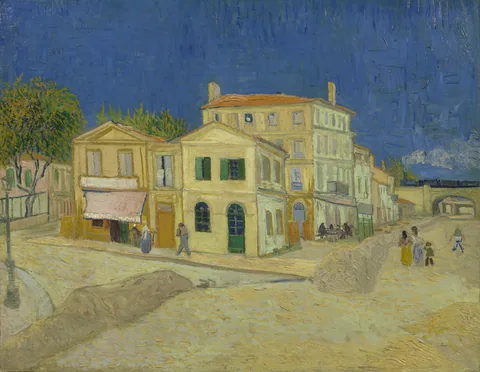
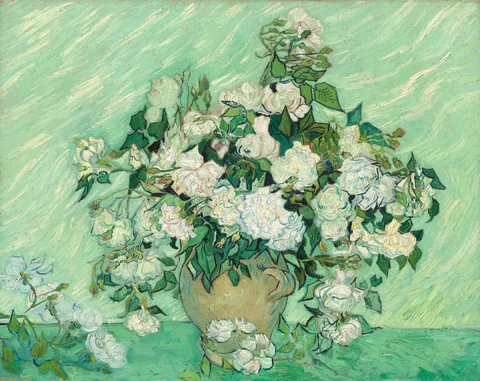
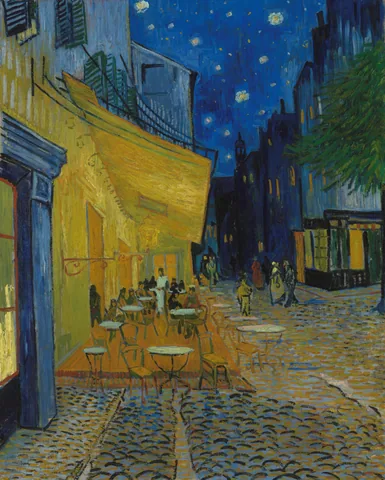
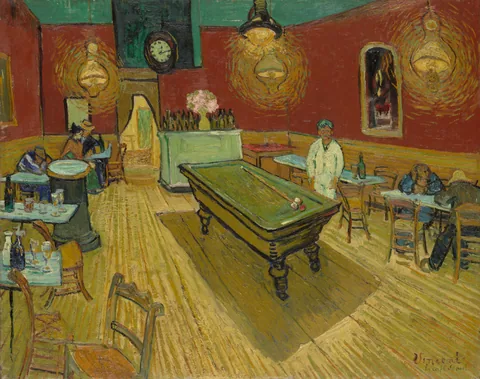
More flowers in Botanical and Flowers, and more in Impressionists.
Sources
More from the Journal
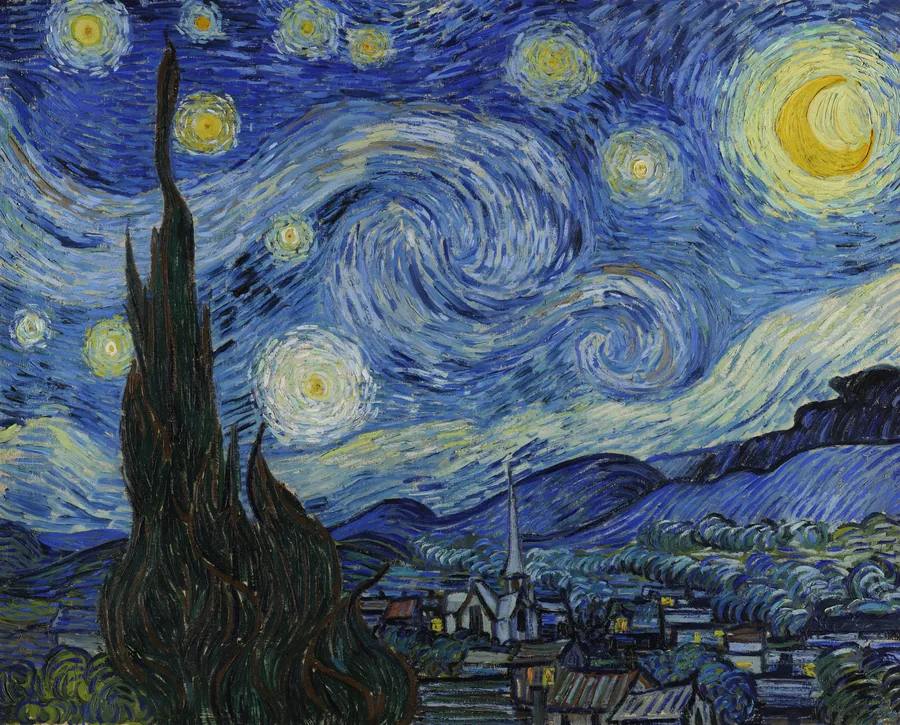 Story · 7 min
Van Gogh’s Starry Night: the facts, and choosing a print
Painted in June 1889 at an asylum in Provence: the view from his window, plus a village he made up. What is real, what it means, and which print to choose.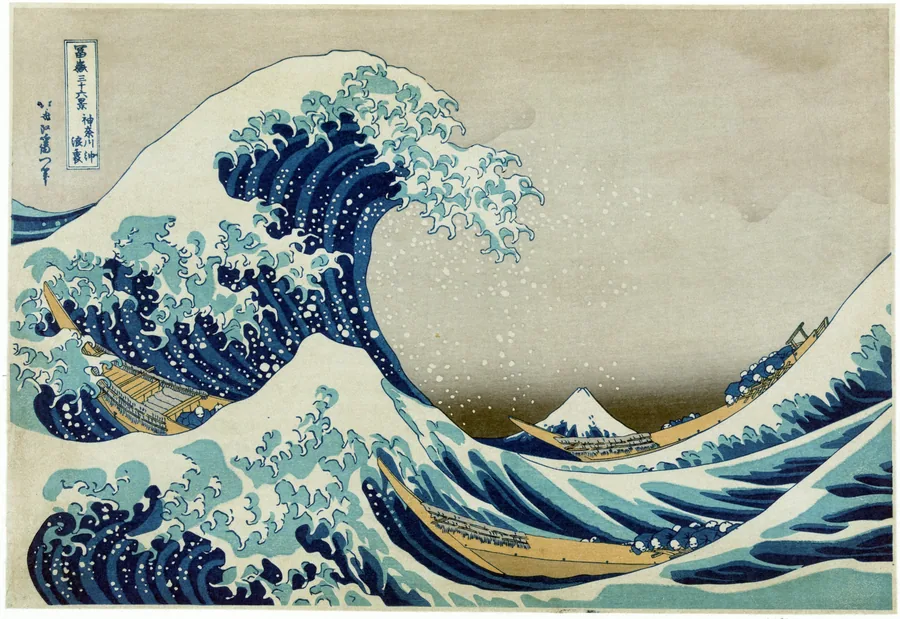 Story · 7 min
The Great Wave off Kanagawa: meaning, history and prints
A woodblock print, not a painting, and a storm wave, not a tsunami. What it shows, why no two impressions match, and how to choose a print.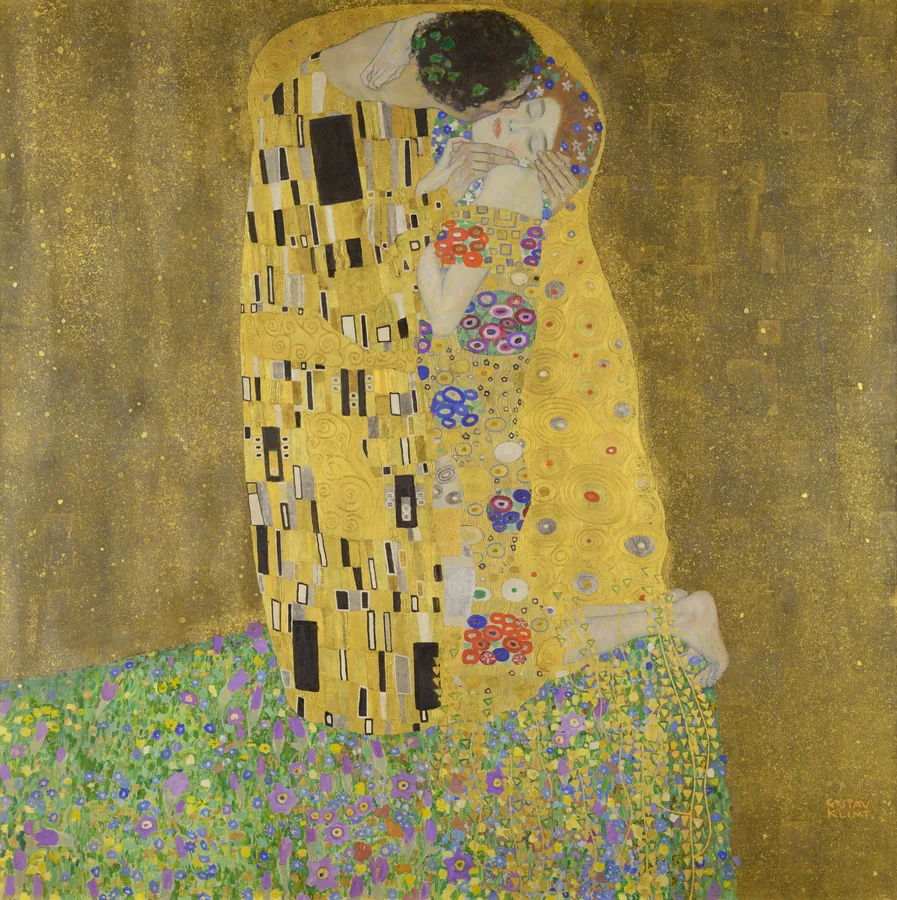 Story · 7 min
Klimt’s The Kiss: gold leaf, meaning and choosing a print
Real gold leaf on canvas, finished in 1909. The story of Klimt’s lovers, what a print can and can’t reproduce, and which size to choose. Story · 7 min