
Story
Van Gogh’s White House at Night: Venus over Auvers
Painted on 16 June 1890, six weeks before Van Gogh died, then hidden for fifty years. The star, the red windows, and how to choose a print.
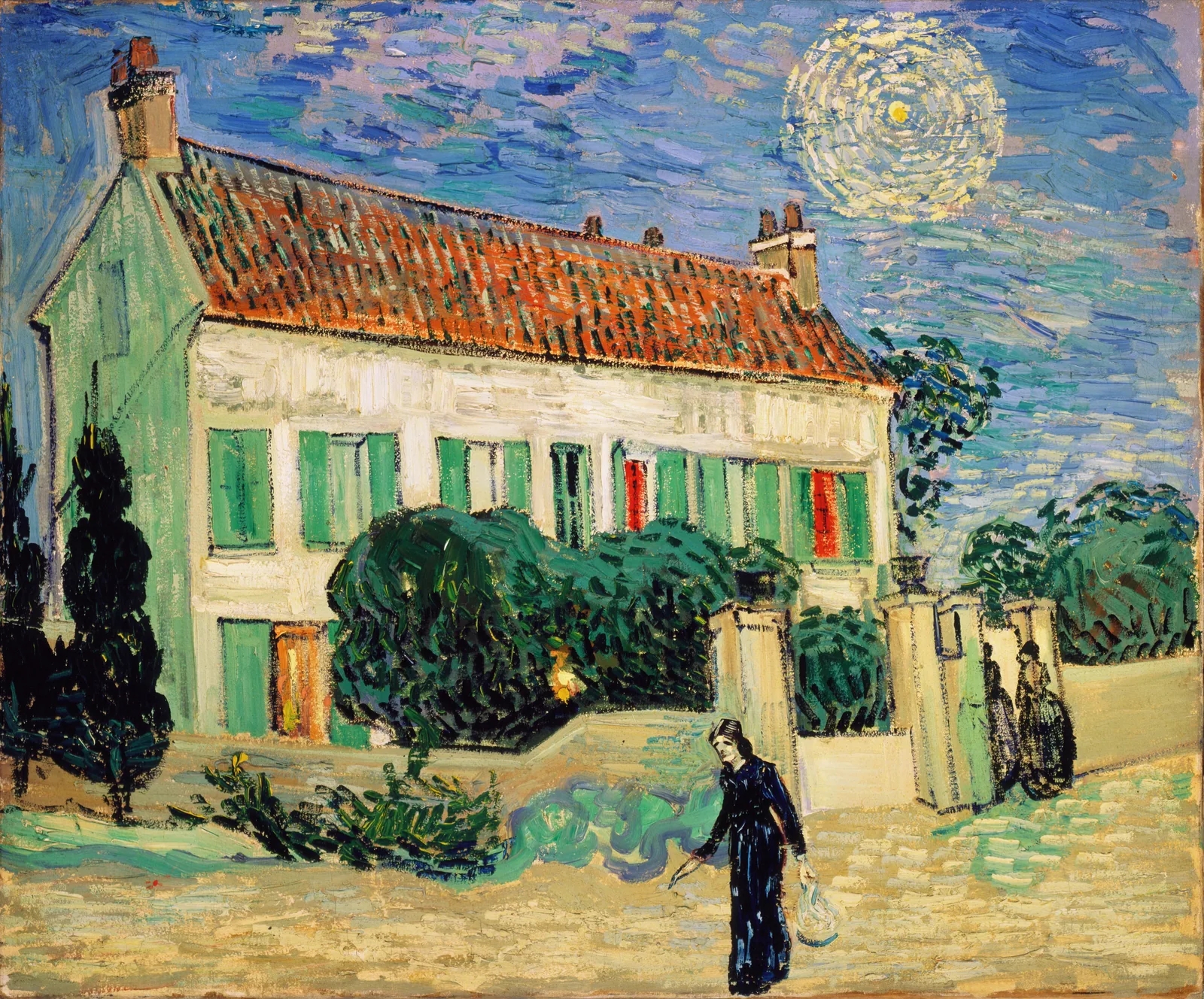
A white house with green shutters glows in the blue of a summer evening. A single bright star hangs over the roof, wrapped in rings of light, and two of the windows are splashed with red. A woman in black walks along the road. Vincent van Gogh painted it in Auvers-sur-Oise on 16 June 1890, six weeks before his death. Then, for most of the 20th century, almost nobody saw it.
The star is Venus
The astronomers Donald Olson and Russell Doescher worked out which star it must be. In June 1890 the planet Venus was shining brightly in the evening sky over Auvers, in just the right place. That puts the scene at about 8 in the evening.
What does it mean?
The Hermitage, which owns the painting, says it expresses the great psychological tension Van Gogh was under. Windows are often called the eyes of a house, and here two of them are rendered in alarming red splashes. The star has been read as a sign of fate, a mirror of his anguish in those last weeks. And yet the picture is also beautiful and calm: a summer evening, a woman going home, a house in the last light.
The same house appears in another of his paintings from Auvers, Blossoming Chestnut Tree.
Lost for fifty years
The painting was shown in Switzerland in the 1920s. Then, in the late 1920s, it disappeared into the collection of the German industrialist Otto Krebs. Krebs kept his collection secret, partly because many of his works were in a style the Nazis would label “degenerate art.”
At the end of the Second World War the collection was taken by the Soviets. For fifty years the painting was thought lost, while it sat in the storerooms of the Hermitage. It finally resurfaced in 1995, in an exhibition of artworks the Soviets had taken at the end of the war.
Where is White House at Night now?
In the State Hermitage Museum in St. Petersburg. It is about 23 by 28½ inches.
Look closer
These details come from the scan we print from, 12,682 pixels on the long side. Pick a detail, or zoom in and drag to look around.
A bright star wrapped in rings of light, low in the evening sky: the planet Venus, by astronomers’ reckoning.
Choosing a print
Life size. The canvas is about 23 by 28½ inches, and our 30 × 25 in framed print is a little larger. Unframed art prints go up to 48 × 40 in. Framed prints go up to 30 × 25 in, canvas up to 40 × 33 in and unframed art prints up to 48 × 40 in.
Where it works. A bedroom, a hallway, a living room: a house at dusk under the evening star is a natural picture for a home. It is a lovely housewarming gift. At 20 × 17 in it fits beside a door or a window. See our gift guide.
Which material. The thick strokes suit canvas, with its matte finish and no cover. A framed print on smooth paper keeps the star and the shutters crisp. See canvas and our papers.
Frames. Black wood deepens the evening blue; a white frame echoes the white house. See all our frames.
Auvers, June 1890. Pair it with The Church at Auvers, painted the same month. Open the two as a set. Read its story too.
Questions
What is the star in White House at Night?
Venus, according to the astronomers Donald Olson and Russell Doescher, who dated the scene to the evening of 16 June 1890.
Where is the painting?
In the State Hermitage Museum in St. Petersburg. It resurfaced there in 1995.
When was it painted?
On 16 June 1890 in Auvers-sur-Oise, six weeks before Van Gogh’s death.
How big is it?
59 × 72.5 cm, about 23 × 28½ in.
Can it be printed legally?
Yes. Van Gogh died in 1890, and his paintings are in the public domain. What public domain means.
More Van Gogh
All Van Gogh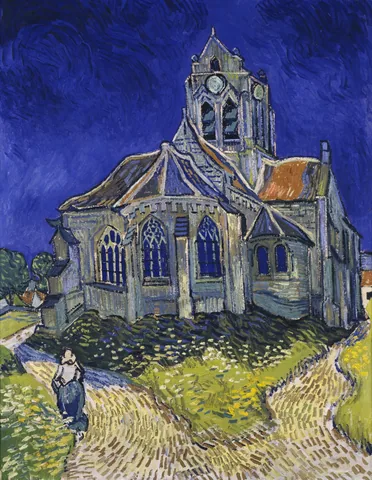
More in Impressionists and Landscapes.
Sources
More from the Journal
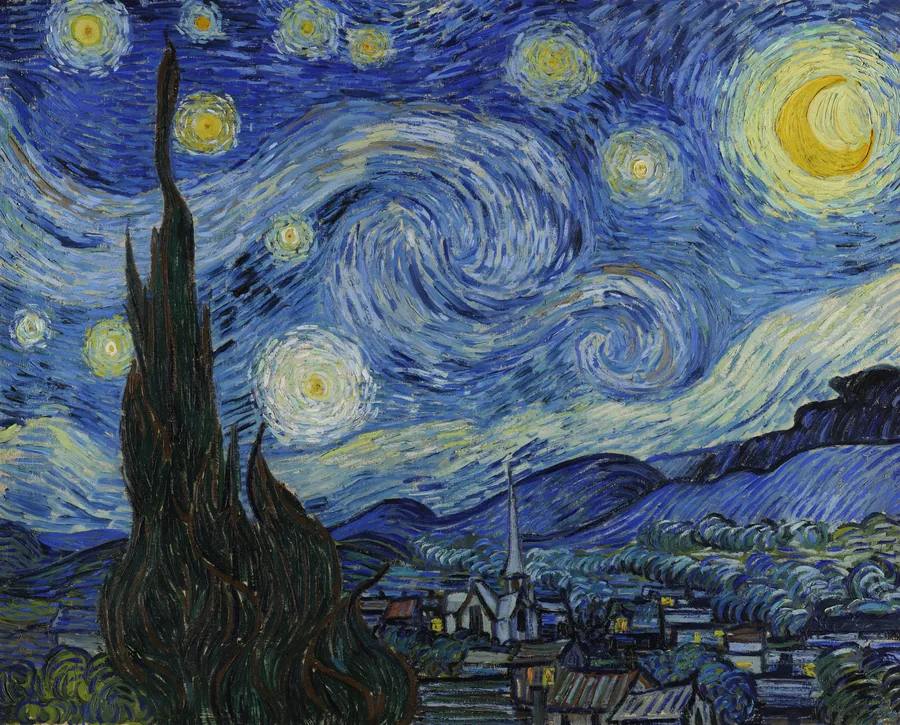 Story · 7 min
Van Gogh’s Starry Night: the facts, and choosing a print
Painted in June 1889 at an asylum in Provence: the view from his window, plus a village he made up. What is real, what it means, and which print to choose.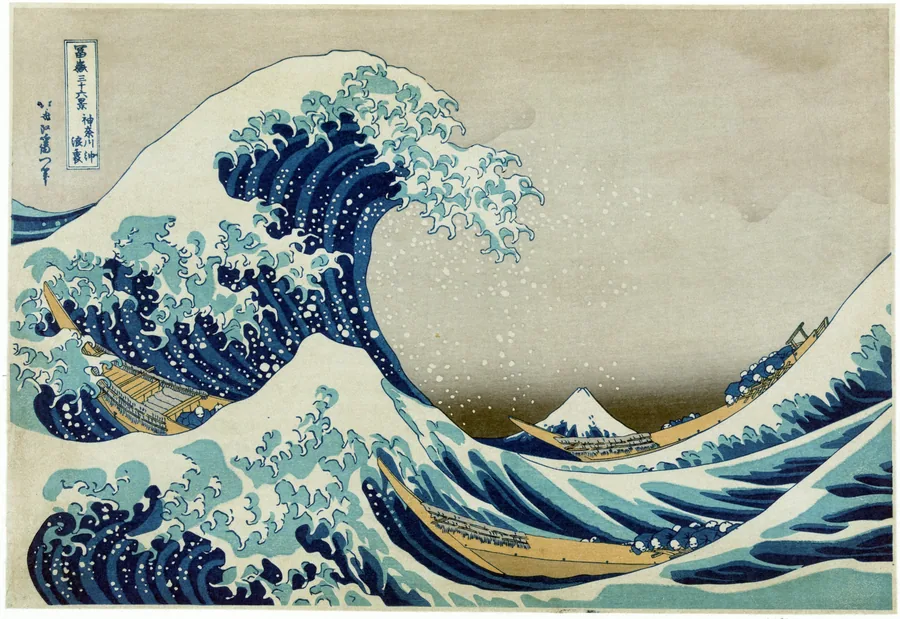 Story · 7 min
The Great Wave off Kanagawa: meaning, history and prints
A woodblock print, not a painting, and a storm wave, not a tsunami. What it shows, why no two impressions match, and how to choose a print.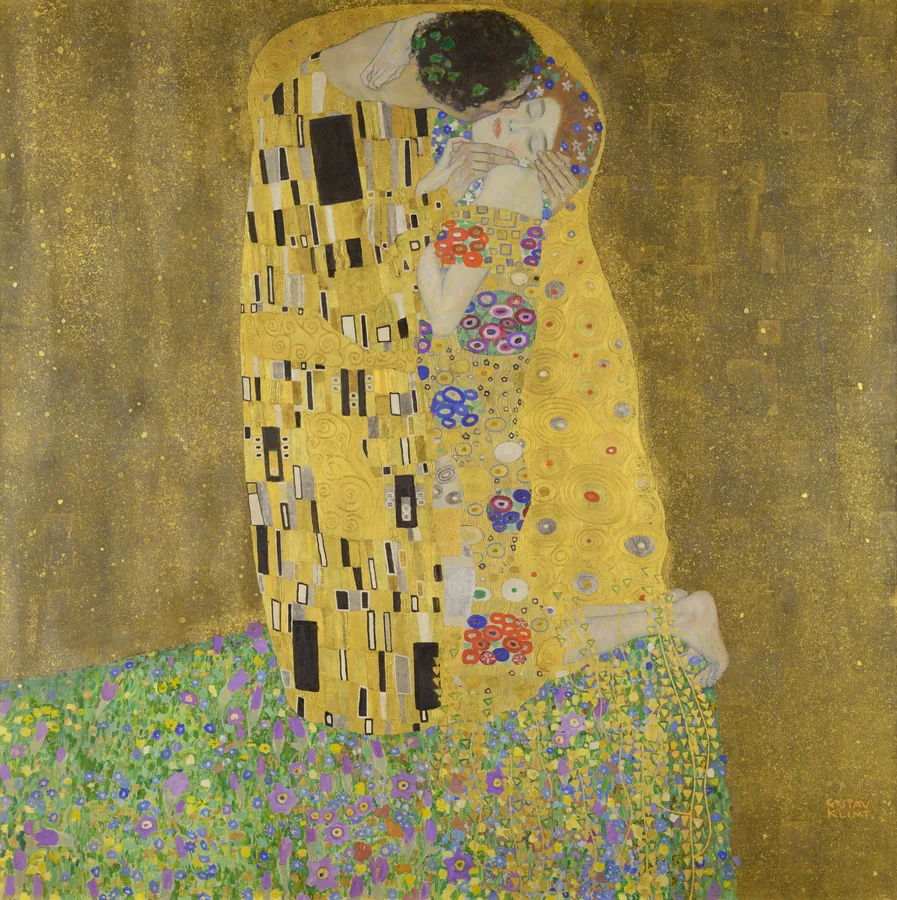 Story · 7 min
Klimt’s The Kiss: gold leaf, meaning and choosing a print
Real gold leaf on canvas, finished in 1909. The story of Klimt’s lovers, what a print can and can’t reproduce, and which size to choose. Story · 7 min