
Story
Velázquez’s The Lunch: three ages at one table
An old man, a boy and a young man at a table in Seville, painted by Velázquez around 1617 and thought Flemish until 1895. The story and a print.
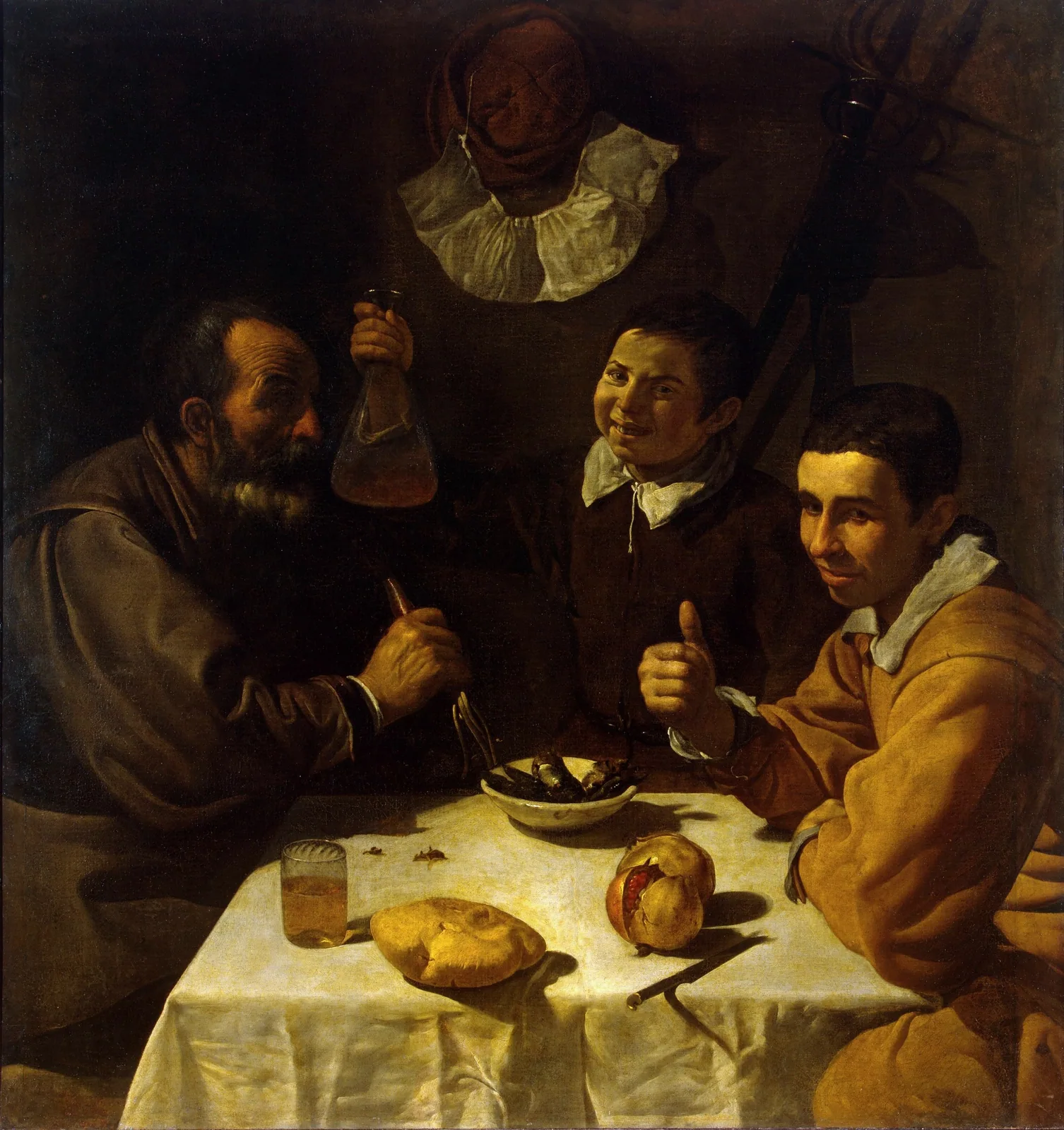
Three people share a simple meal at a table with a creased white cloth: a bearded old man, a grinning boy holding up a flask of wine, and a young man who smiles straight at us with his thumb raised. On the table are bread, a pomegranate and a glass of wine; on the wall behind hang a hat and a white collar. Diego Velázquez painted it in Seville around 1617, at the very start of his career.
The three ages of man
The three figures are often read as the three ages of man: youth, maturity and old age, gathered around one table. Whatever the meaning, the mood is lively. The old man seems to be talking, the boy laughs, and the young man invites us into the joke.
Velázquez seems to have used the same models in other works. The men on the left and the right appear to be the same models he used for his Saint Paul and Saint Thomas. A nearly identical version, The Farmers’ Lunch, is in the Museum of Fine Arts in Budapest.
Mistaken for Flemish
The painting belonged to Empress Catherine the Great and was in the Hermitage by the end of the 1700s. For a century it was thought to be a Flemish painting. Only in 1895 was it recognized as an early Velázquez, an attribution now accepted by everyone.
Where is The Lunch?
In the State Hermitage Museum in St. Petersburg. It is about 43 by 40 inches, nearly square.
Look closer
These details come from the scan we print from, 3,247 pixels on the long side. Pick a detail, or zoom in and drag to look around.
The young man on the right smiles at us and raises his thumb.
Choosing a print
A smaller print. The best scan we have is modest, so we sell this one only up to 19 × 20 in, about half the size of the original. That keeps it sharp. Framed prints, canvas and unframed art prints all go up to 19 × 20 in.
Where it works. A kitchen, a breakfast nook or a dining room: a picture of a shared meal and a good joke. It suits a small wall, beside a doorway or over a sideboard.
Which material. The background is dark. Behind clear acrylic, dark areas reflect a facing window, so hang a framed print with side light, or choose canvas, with its matte finish and no cover. See our papers and canvas.
Frames. Black wood disappears into the dark wall and lets the faces shine. See all our frames.
Seville kitchens. Pair it with Old Woman Cooking Eggs, painted a year later. Open the two as a set. Read its story too.
Questions
What does The Lunch mean?
The three figures are often read as the three ages of man: youth, maturity and old age.
Where is The Lunch?
In the State Hermitage Museum in St. Petersburg.
When was it painted?
Around 1617, in Seville, early in Velázquez’s career.
How big is it?
108.5 × 102 cm, about 43 × 40 in.
Can it be printed legally?
Yes. It is more than 400 years old and in the public domain. What public domain means.
More Velázquez
All Velázquez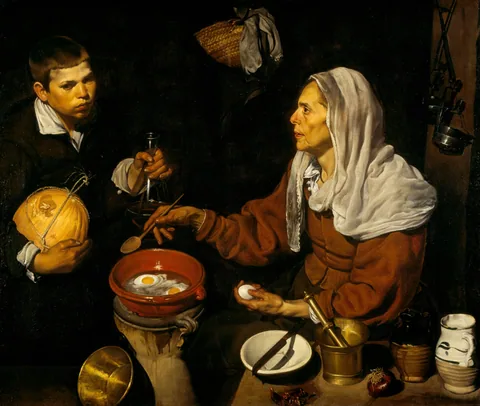
More in Old Masters.
Sources
More from the Journal
 Story · 7 min
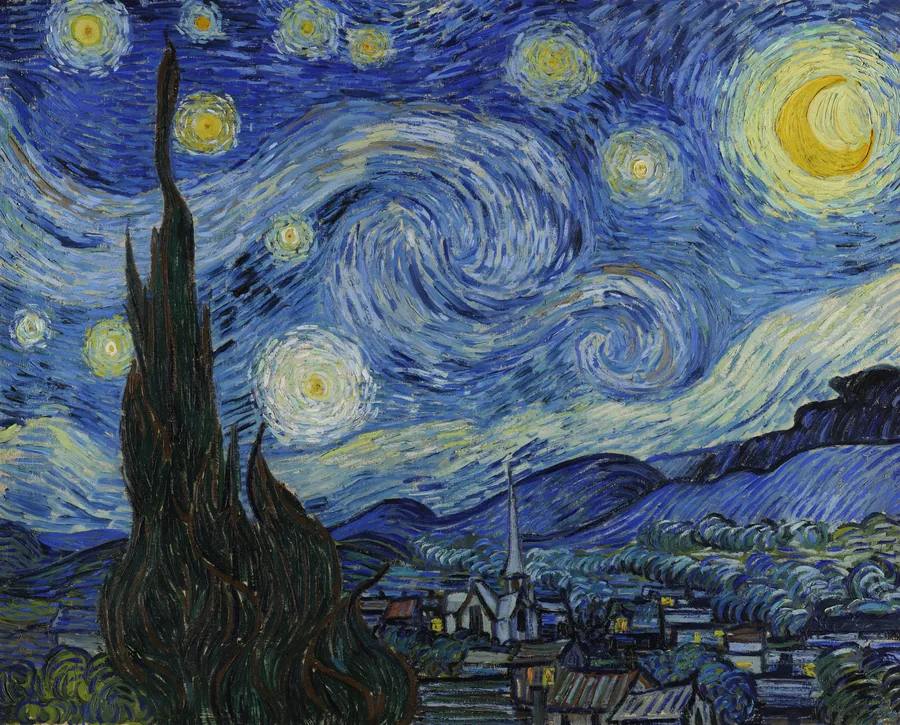
Van Gogh’s Starry Night: the facts, and choosing a print
Painted in June 1889 at an asylum in Provence: the view from his window, plus a village he made up. What is real, what it means, and which print to choose.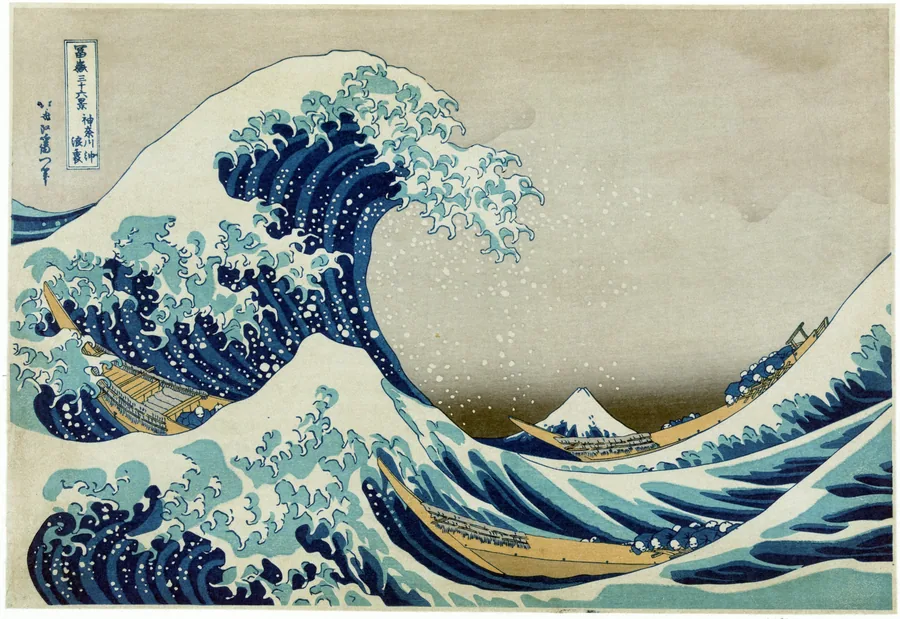 Story · 7 min
The Great Wave off Kanagawa: meaning, history and prints
A woodblock print, not a painting, and a storm wave, not a tsunami. What it shows, why no two impressions match, and how to choose a print.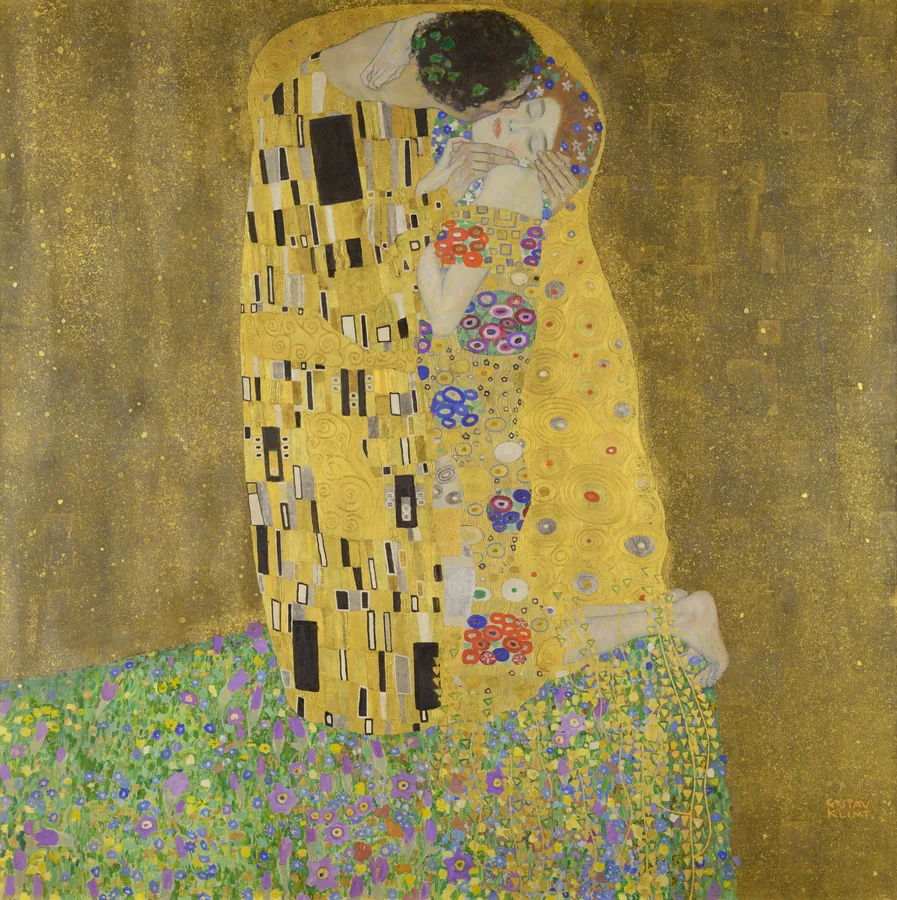 Story · 7 min
Klimt’s The Kiss: gold leaf, meaning and choosing a print
Real gold leaf on canvas, finished in 1909. The story of Klimt’s lovers, what a print can and can’t reproduce, and which size to choose. Story · 7 min