
Story
Vermeer’s The Little Street: where it is and a print
Ordinary houses in Delft, painted around 1658. How the real street was found, the aunt who lived there, what to look for, and choosing a print.
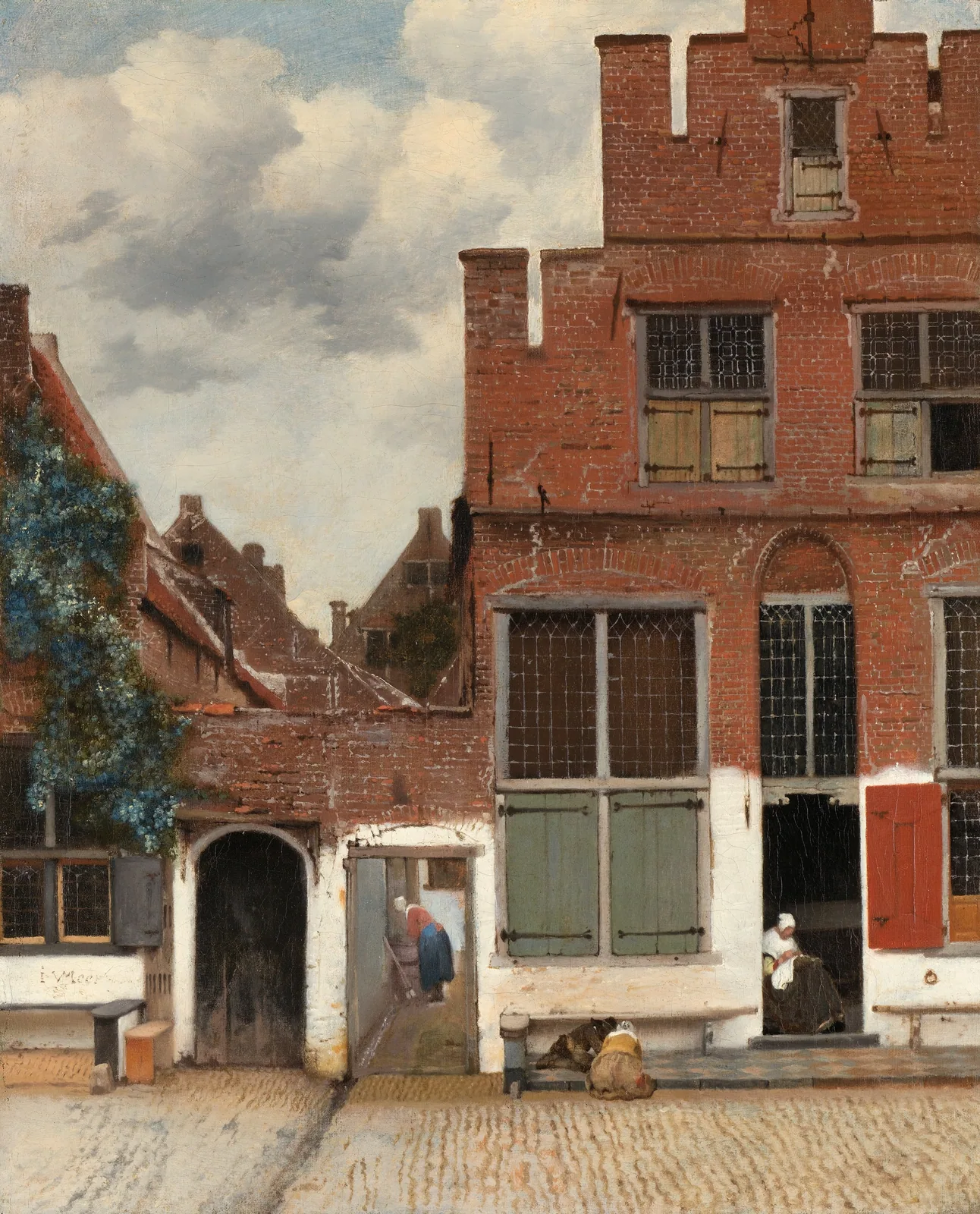
An old brick house on a quiet street. A woman sews in the doorway, two children kneel on the pavement, and down a narrow passage another woman bends over a barrel. Above the roofs, half the picture is gray and white sky. Johannes Vermeer painted it in his hometown of Delft around 1658, and the Rijksmuseum calls it remarkable for its time as a portrait of ordinary houses. Nobody important lives here. That is the point.
Where is The Little Street?
For a long time nobody knew which street it was, and people argued for several places in Delft, among them the Voldersgracht and the Nieuwe Langendijk. In 2015 a study of old city records settled it, and the Rijksmuseum now gives the answer plainly: the location is Vlamingstraat 40 to 42 in Delft.
The key was a register of quay dues, a tax that recorded the width of every house and passage along the city’s canals. The measurements of two houses and the passageways between them on the Vlamingstraat, a street with a narrow canal, matched the painting. Old maps fit the buildings and the tree behind them, and the outlet of a gutter that ran from the left-hand doorway down to the canal is still in the right place.
Vermeer’s aunt lived there
The research turned up a family connection too. The house on the right belonged to Vermeer’s aunt, Ariaentgen Claes van der Minne, who sold tripe for a living, and the passage beside it was known as the Penspoort, the Tripe Gate. According to the Rijksmuseum she lived there from about 1645 until her death in 1670, with her children. Vermeer’s mother and sister lived on the same canal, diagonally opposite. So this may be a street he knew very well indeed.
What to look for
Vermeer paints the house the way it is, not the way a grand house should look. The bricks are patched and cracked, mortar has fallen out in places, and the lower walls are whitewashed. The shutters are a little worn. Every bit of it is observed. The people are small and busy with their own work; nobody poses for us. It is the opposite of his grand View of Delft: one house, seen up close.
Where is The Little Street now?
In the Rijksmuseum in Amsterdam. It was a gift in 1921 from H.W.A. Deterding of London. It is small, about 21½ by 17½ inches.
Look closer
These details come from the scan we print from, 4,954 pixels on the long side. Pick a detail, or zoom in and drag to look around.
In the open doorway of the house on the right, a woman bends over her needlework.
Choosing a print
Life size, or a little more. The canvas is about 21½ by 17½ inches. Our 19 × 24 in framed print is close to life size, and framed prints go up to 24 × 30 in. Framed prints, canvas and unframed art prints all go up to 24 × 30 in.
Where it works. A picture of a front door and a street suits an entryway or a hallway, and its warm brick and gray sky sit easily in a kitchen or a cottage room.
Which material. Smooth cotton paper in a frame keeps the fine detail in the brickwork and the tiny figures. Canvas, with its matte finish and no cover, suits a bright room. See our papers and canvas.
Frames. Black wood suits a Dutch picture and sharpens the red brick; natural oak is warmer and homely. See all our frames.
Vermeer’s Delft, twice. Pair it with the View of Delft, the whole town from across the water. Open the two as a set. Read its story too.
Questions
Where is the street in Vermeer’s The Little Street?
Vlamingstraat 40 to 42 in Delft, identified from the city’s old quay dues register in 2015.
Who lived in the house?
Vermeer’s aunt, Ariaentgen Claes van der Minne, a tripe seller, lived in the house on the right with her children.
Where is the painting?
In the Rijksmuseum in Amsterdam, a gift of H.W.A. Deterding in 1921.
How big is it?
54.3 × 44 cm, about 21½ × 17½ in.
Can it be printed legally?
Yes. It is more than 350 years old and in the public domain. What public domain means.
More Vermeer and Delft
All Vermeer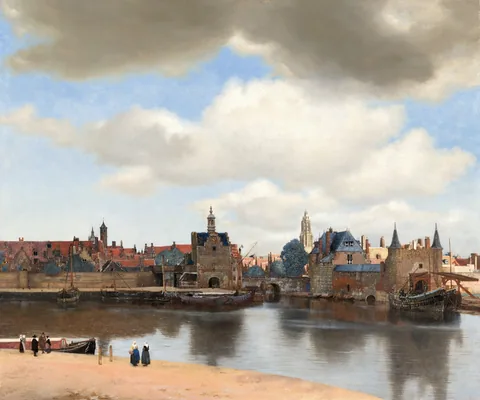
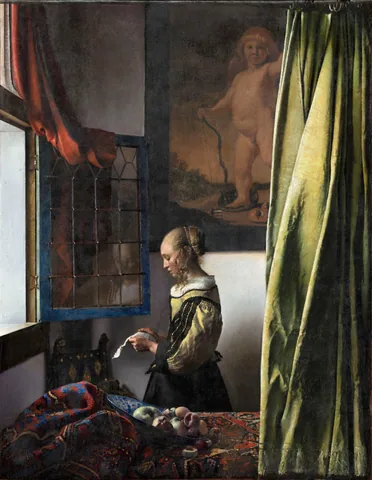
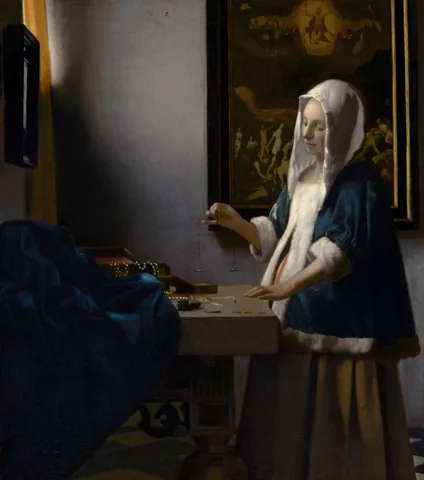
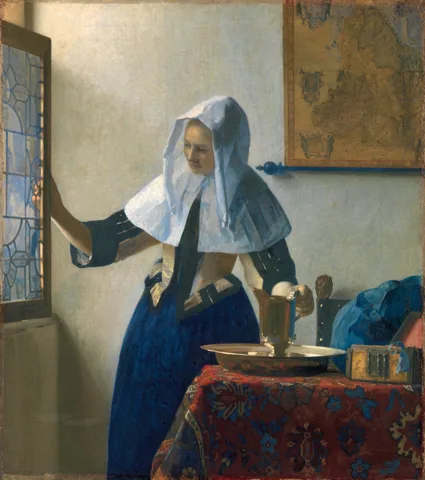
More in Cityscapes and Dutch and Flemish Masters.
Sources
More from the Journal
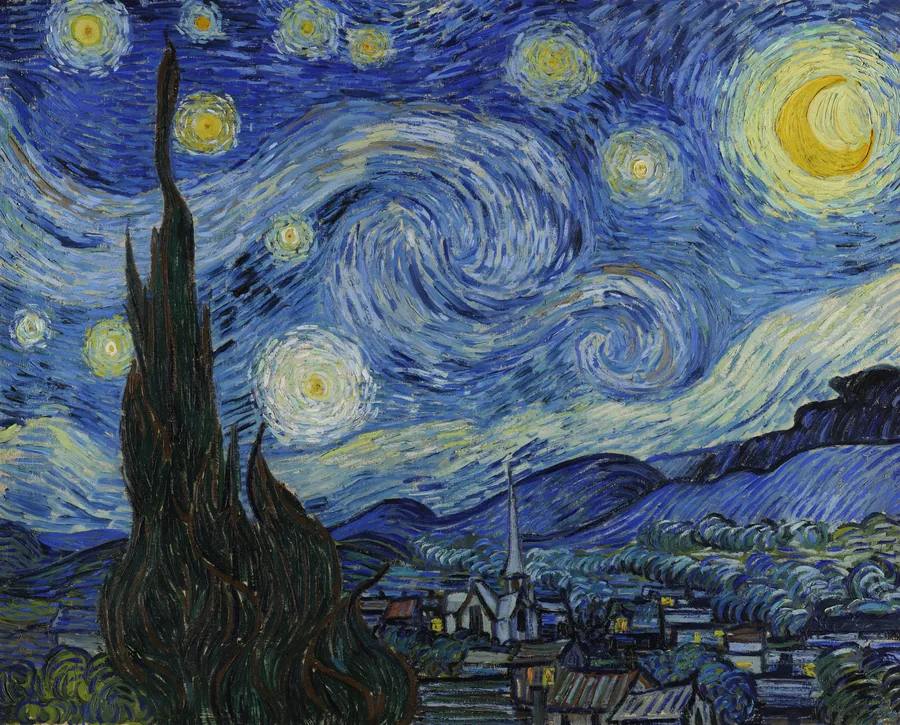 Story · 7 min
Van Gogh’s Starry Night: the facts, and choosing a print
Painted in June 1889 at an asylum in Provence: the view from his window, plus a village he made up. What is real, what it means, and which print to choose. Story · 7 min
The Great Wave off Kanagawa: meaning, history and prints
A woodblock print, not a painting, and a storm wave, not a tsunami. What it shows, why no two impressions match, and how to choose a print. Story · 7 min
Klimt’s The Kiss: gold leaf, meaning and choosing a print
Real gold leaf on canvas, finished in 1909. The story of Klimt’s lovers, what a print can and can’t reproduce, and which size to choose. Story · 7 min