
Story
Ginevra de’ Benci: Leonardo’s only painting in America
Leonardo’s early portrait of a Florentine poet, the juniper that spells her name, the motto on the back, and how to choose a print.
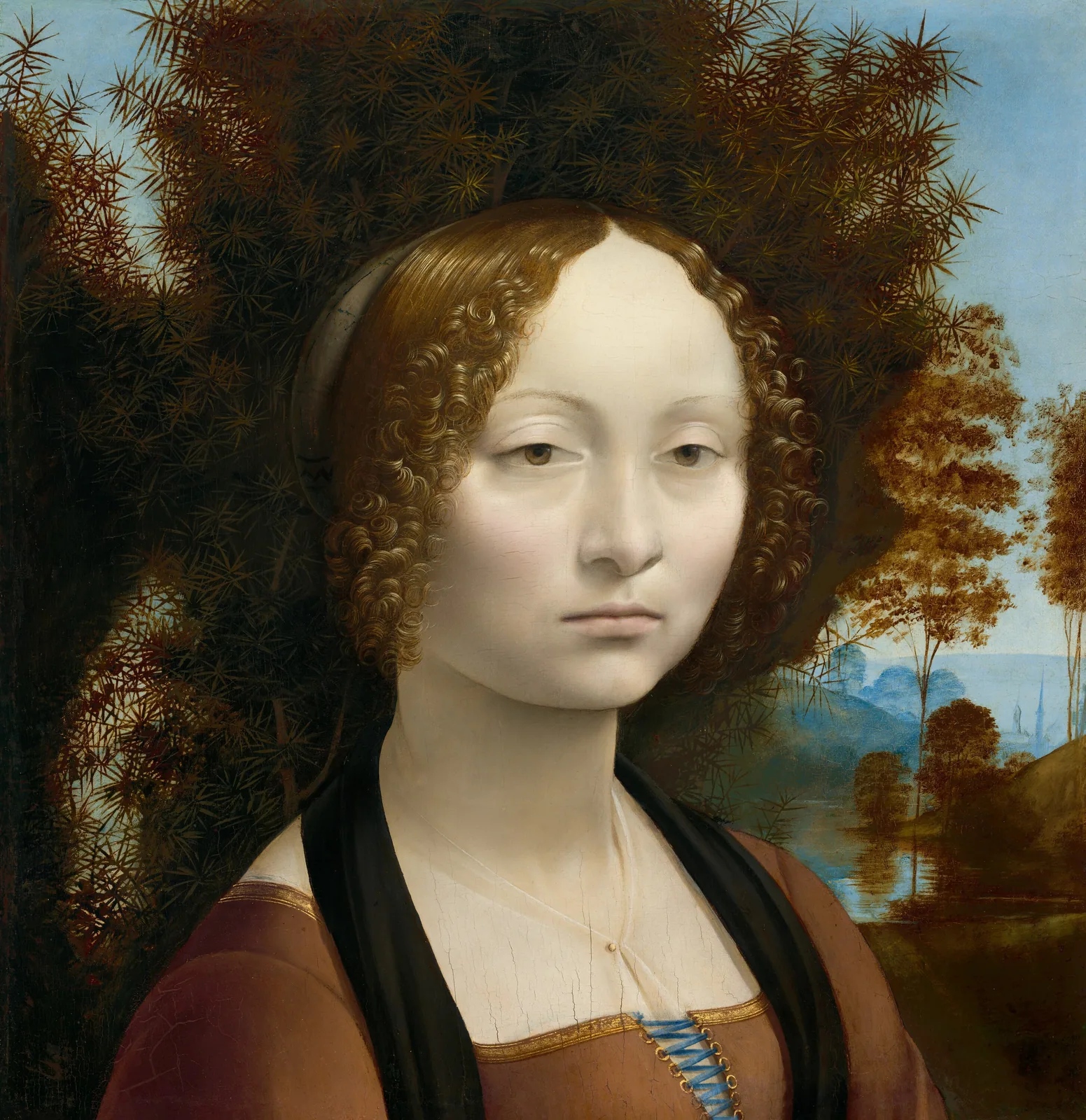
A young woman with copper curls looks out past us, pale and unsmiling, in front of a dark, spiky bush. Behind her a river landscape fades into mist. Leonardo da Vinci painted her in Florence in the 1470s, when he was in his early twenties, and it is the only painting by Leonardo on public view anywhere in the Americas. It hangs in the National Gallery of Art in Washington.
Who was Ginevra de’ Benci?
Ginevra was born around 1458 into an aristocratic Florentine family. At sixteen she married Luigi di Bernardo Niccolini, and the portrait may have been painted for the marriage, or more likely for the engagement before it. She was admired for more than her looks. Writers in the circle of the Medici, including Cristoforo Landino and Alessandro Braccesi, wrote ten poems in her honor, and Lorenzo de’ Medici himself wrote two sonnets about her.
Her face is not the warm, smiling face of the Mona Lisa. She is cool and still, her eyes heavy-lidded, her mouth set. Her skin is so pale it almost glows against the dark bush. People have read sadness, pride or simple reserve into it; the painting doesn’t say.
What does the juniper mean?
The spiky bush behind her is a juniper. In Italian, juniper is ginepro, a play on her name, Ginevra. In Renaissance Italy the juniper was also a symbol of female virtue. So the bush does two jobs at once: it names her, and it praises her.
The back of the panel
Turn the panel over and there is a second painting. A sprig of juniper sits inside a wreath of laurel and palm, wrapped with a scroll that reads VIRTVTEM FORMA DECORAT, “Beauty adorns virtue.” The laurel and palm come from the emblem of Bernardo Bembo, the Venetian ambassador in Florence, whose devoted, platonic friendship with Ginevra was celebrated in poems. Infrared photographs found Bembo’s own motto, “Virtue and Honor,” painted under the present one, which suggests that Bembo may have had a hand in ordering the portrait. We sell the back as a print too: Wreath of Laurel, Palm, and Juniper with a Scroll.
Where are her hands?
The panel is almost square because it has been cut down. At some point the bottom was removed, probably because it was damaged, and with it went her arms and hands. You can see the cut in the picture itself: her bodice and its blue lacing stop at the bottom edge. Scholars have tried to reconstruct how her hands were posed, but the lower part is gone for good.
How it came to Washington
In February 1967 the National Gallery of Art bought it from Prince Franz Joseph II of Liechtenstein, for a price reported at $5 to $6 million, a record for a painting at the time. It is still the only Leonardo you can see in a museum in North or South America.
Look closer
These details come from the scan we print from, made by the National Gallery of Art, 23,968 pixels on the long side. Pick a detail, or zoom in and drag to look around.
Pale, still and unsmiling, with heavy-lidded eyes that look past us. Nothing like the Mona Lisa’s warmth.
Choosing a print
Life size, or a little more. The panel is only about 15 by 14½ inches. Our 16 × 16 in framed print is about life size, and at 19 × 20 in she is a little larger, easier to see across a room. Framed prints go up to 29 × 30 in. Framed prints go up to 29 × 30 in, canvas up to 39 × 40 in and unframed art prints up to 47 × 48 in.
A square picture. Nearly square pictures sit well in a symmetrical spot: centered over a dresser, a mantel or a small console, or between two windows. Hang the center at eye level, 57 to 60 inches from the floor; see how high to hang art.
Which material. The background is dark green and brown, and her skin is very pale, so contrast is everything. Smooth cotton paper in a frame gives the richest darks and keeps every curl sharp. Canvas has no cover and a matte finish, which suits a bright room. See our papers and canvas.
Frames. Gold suits an early Renaissance panel and warms her copper hair; a wide one like our Gold Plein Air makes a small picture look important. See all our frames and mats.
Front and back. Hang the portrait and its painted back side by side, the way you can’t see them in a museum. Open the two as a set. Or collect Leonardo’s other women: Lady with an Ermine, La Belle Ferronnière and the Mona Lisa.
Questions
Who was Ginevra de’ Benci?
A Florentine aristocrat, born around 1458, praised by poets of the Medici circle. She married Luigi Niccolini at sixteen.
Why is there a juniper behind her?
Juniper is ginepro in Italian, a pun on Ginevra, and it was a symbol of female virtue.
Is there a Leonardo painting in the United States?
Yes, this one. It is the only Leonardo painting on public view in the Americas, at the National Gallery of Art in Washington.
What is on the back?
A wreath of laurel and palm around a juniper sprig, with the motto “Beauty adorns virtue.”
Can it be printed legally?
Yes. It is more than 500 years old and in the public domain, and the National Gallery of Art shares its image freely. What public domain means.
More Leonardo
All Leonardo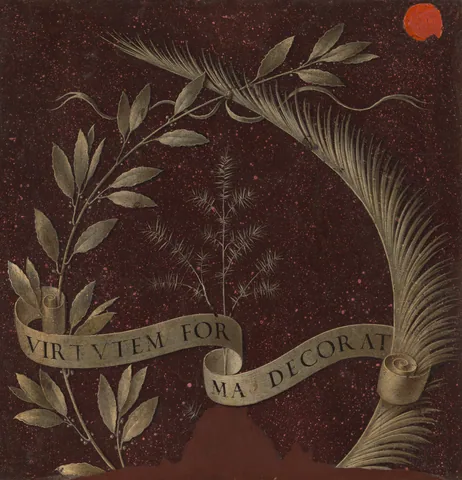
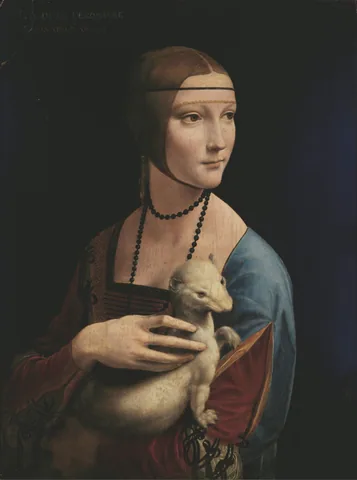
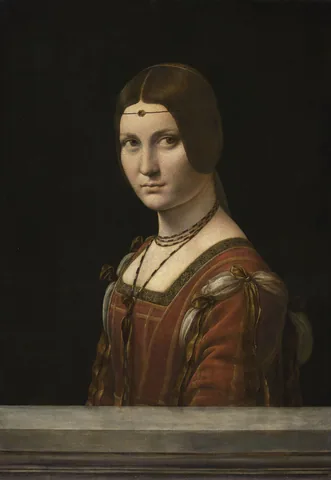
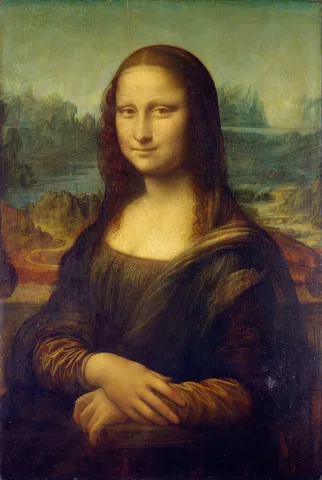
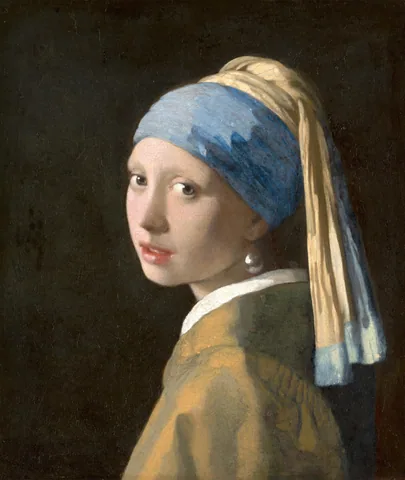
More in Old Masters and Interiors and Portraits.
Sources
More from the Journal
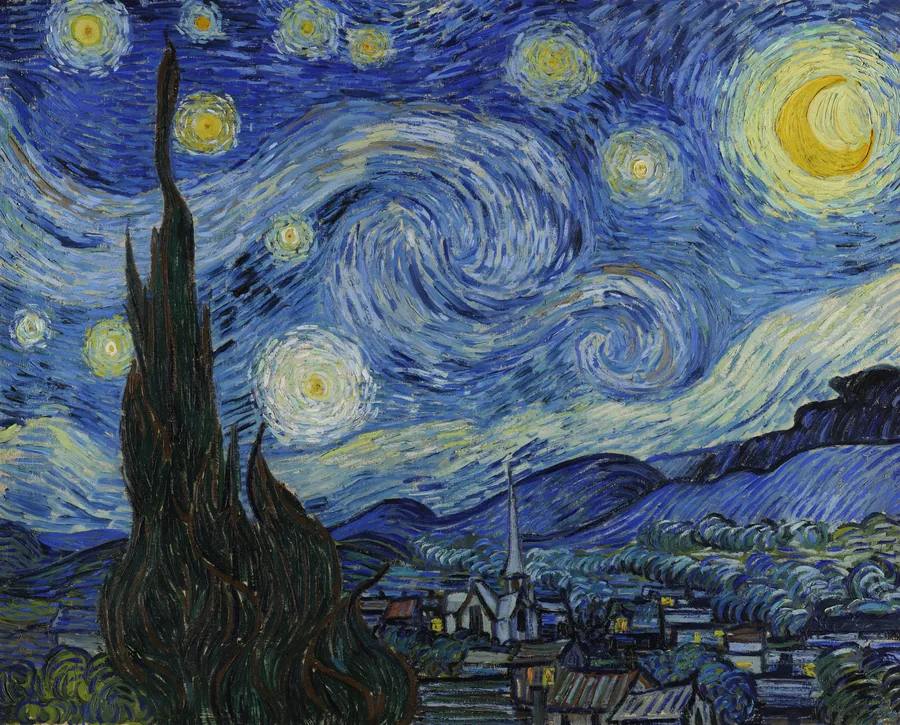 Story · 7 min
Van Gogh’s Starry Night: the facts, and choosing a print
Painted in June 1889 at an asylum in Provence: the view from his window, plus a village he made up. What is real, what it means, and which print to choose.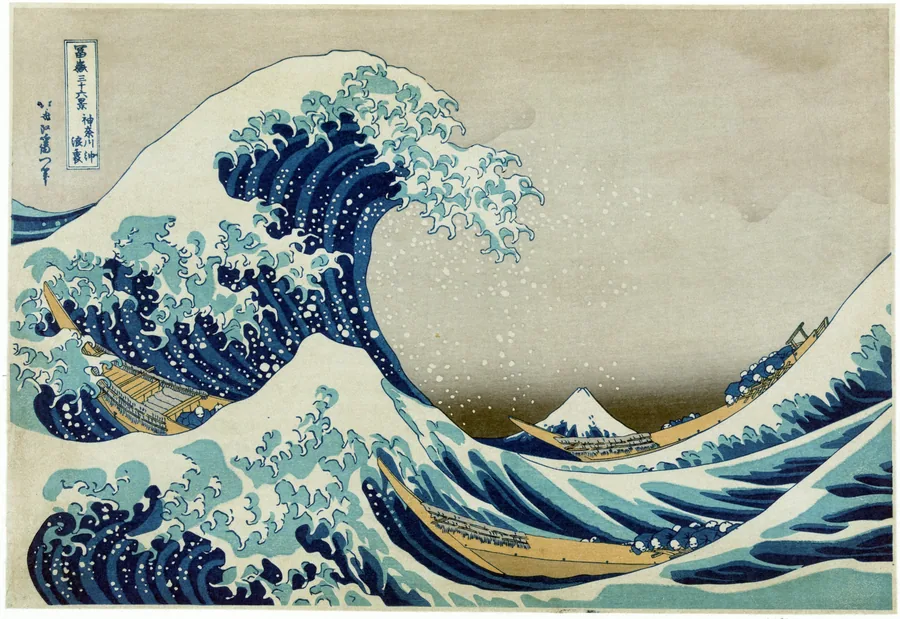 Story · 7 min
The Great Wave off Kanagawa: meaning, history and prints
A woodblock print, not a painting, and a storm wave, not a tsunami. What it shows, why no two impressions match, and how to choose a print. Story · 7 min
Klimt’s The Kiss: gold leaf, meaning and choosing a print
Real gold leaf on canvas, finished in 1909. The story of Klimt’s lovers, what a print can and can’t reproduce, and which size to choose. Story · 7 min