
Story
Lady with an Ermine: Leonardo’s Cecilia and a print
Who Cecilia Gallerani was, what the ermine means, how the painting survived the war, where it hangs in Kraków, and how to choose a print.
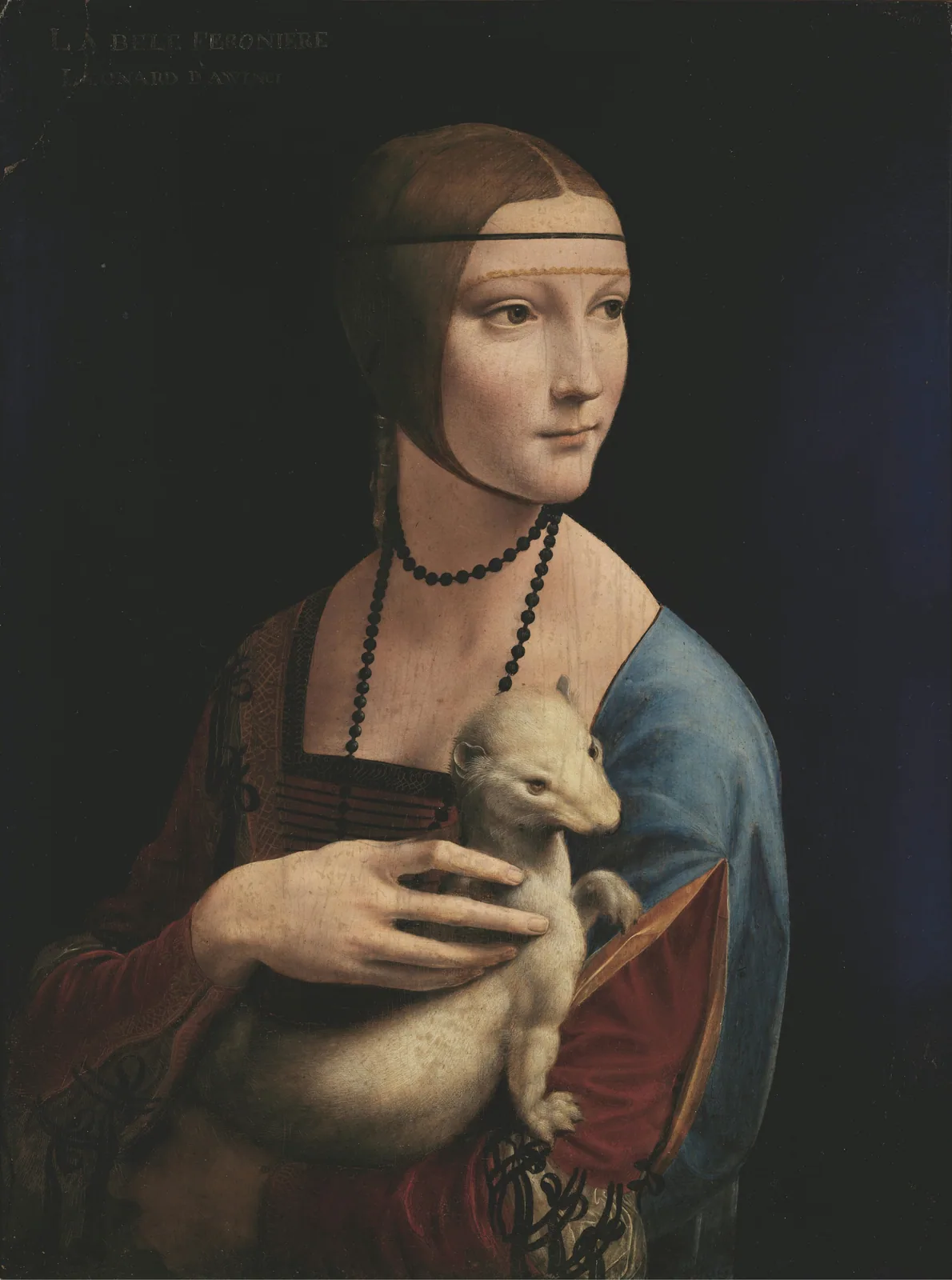
A young woman turns, as if someone has just come into the room, and the white animal in her arms turns with her. Leonardo da Vinci painted her in Milan around 1490, more than a decade before he started the Mona Lisa. It is one of only four portraits of women by Leonardo that survive.
Who is the Lady with an Ermine?
Her name was Cecilia Gallerani. She was about sixteen when Leonardo painted her, and she was the mistress of Ludovico Sforza, the ruler of Milan, whose court Leonardo then worked for as a painter.
She is not shown in a flat profile. Her body faces one way and her head another, toward a light, or a voice, outside the picture. The ermine twists in the same direction, so woman and animal move together. In the order Leonardo painted them, it comes second of his four women, after Ginevra de’ Benci and before La Belle Ferronnière and the Mona Lisa.
What does the ermine mean?
More than one thing, which was the point. An ermine is a stoat in its white winter coat, and it was a traditional symbol of purity and moderation. It was also a badge of Ludovico himself, who was made a member of the Order of the Ermine in 1488, so the animal in her arms can be read as the duke. And it may be a pun: the Greek word for an ermine or weasel is galê, close to the start of her surname, Gallerani.
It is not a careful portrait of a real stoat. It is too big and too muscular, with a proud head held high, more a heraldic beast than a pet.
The black background and the wrong name
The background was not always black. When conservators led by David Bull studied the panel in 1992, they found that it had probably been a bluish gray, painted over in black in the middle of the 1700s. In the top left corner, over that black, someone painted the words LA BELE FERONIERE. LEONARD DAWINCI, probably a restorer after the painting reached Poland. The name belongs to a different Leonardo portrait in the Louvre. The Leonardo scholar Martin Kemp has said the picture is in much better condition than the usual accounts suggest; the damage is mostly in that background.
From Milan to Kraków, and back from the war
A Polish prince, Adam Jerzy Czartoryski, bought the painting in Italy in 1798, and by 1800 it was in his family’s collection at Puławy. It stayed with the family and their foundation for more than two centuries.
In 1939 the Nazis seized it. It ended up hanging in the offices of Hans Frank, the governor of occupied Poland, at Wawel Castle in Kraków. At the end of the war Allied troops found it at Frank’s country house in Schliersee, Bavaria, and it came home to Poland in 1946.
On 29 December 2016 the Princes Czartoryski Foundation sold the painting to the Polish state, along with the foundation’s other works, for €100 million, a small fraction of what the collection was thought to be worth.
Where is the Lady with an Ermine now?
In the Czartoryski Museum in Kraków. The museum reopened on 19 December 2019, and the painting is on permanent display there. It is small, about 21½ by 16 inches.
Look closer
These details come from the scan we print from, 41,545 pixels on the long side, enough to see the fine cracks in the old paint. Pick a detail, or zoom in and drag to look around.
She turns to her left, toward someone we can’t see, with light falling across her face from the same side.
Choosing a print
Life size. The panel is about 21½ by 16 inches. Our 15 × 20 in framed print is just about life size, and 18 × 24 in is a little larger, which reads better across a room. Framed prints go up to 27 × 36 in if you want her to hold a large wall. Framed prints go up to 27 × 36 in, canvas up to 36 × 48 in and unframed art prints up to 36 × 48 in.
Where to hang her. A portrait that looks just past you works well beside a doorway or at the end of a hall, where she seems to turn toward someone coming in. Hang the center at about eye level, 57 to 60 inches from the floor; see how high to hang art.
Mind the black. The background is near black. Behind clear acrylic it reflects a facing window, so put a framed print on a wall with side light, or choose canvas, which has no cover and a matte finish. Smooth cotton paper gives the richest blacks. See our papers and canvas.
Frames. A gold frame suits a Renaissance panel and warms the skin tones; a wide one like our Gold Plein Air makes a small picture look important. Black wood with a white mat looks crisp and modern against the dark ground. See all our frames and mats.
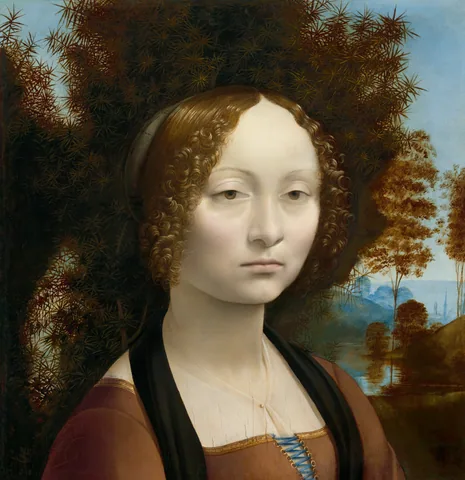
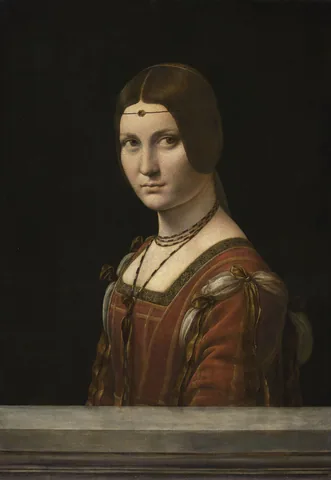
Leonardo’s four women. We sell all four surviving portraits: Ginevra de’ Benci, this one, La Belle Ferronnière and the Mona Lisa. Open the four as a set, in the order he painted them. Read the story of the Mona Lisa too.
Questions
Who is the woman in Lady with an Ermine?
Cecilia Gallerani, about sixteen, the mistress of Ludovico Sforza, Duke of Milan.
What does the ermine symbolize?
Purity and moderation; Ludovico Sforza, who belonged to the Order of the Ermine; and probably her name, since the Greek for ermine, galê, echoes Gallerani.
Where is Lady with an Ermine?
In the Czartoryski Museum in Kraków, Poland.
How big is it?
54.8 × 40.3 cm, about 21½ × 16 in, oil on a walnut panel.
Can it be printed legally?
Yes. It was painted more than 500 years ago and is in the public domain. What public domain means.
More portraits
All Leonardo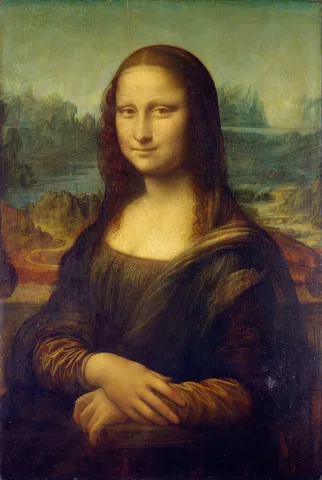
More in Old Masters and Interiors and Portraits.
Sources
More from the Journal
 Story · 7 min
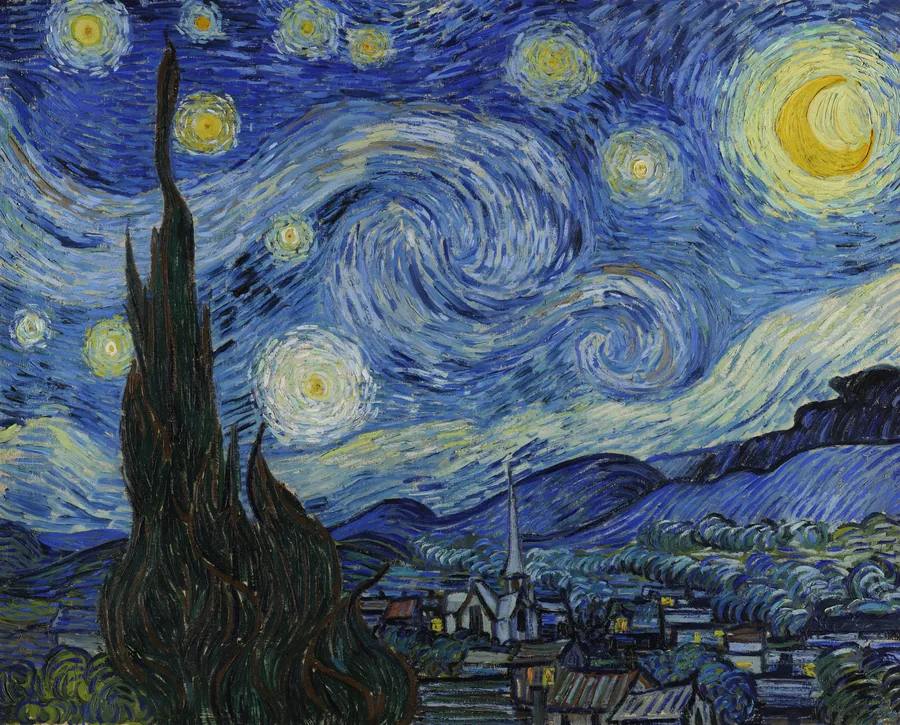
Van Gogh’s Starry Night: the facts, and choosing a print
Painted in June 1889 at an asylum in Provence: the view from his window, plus a village he made up. What is real, what it means, and which print to choose.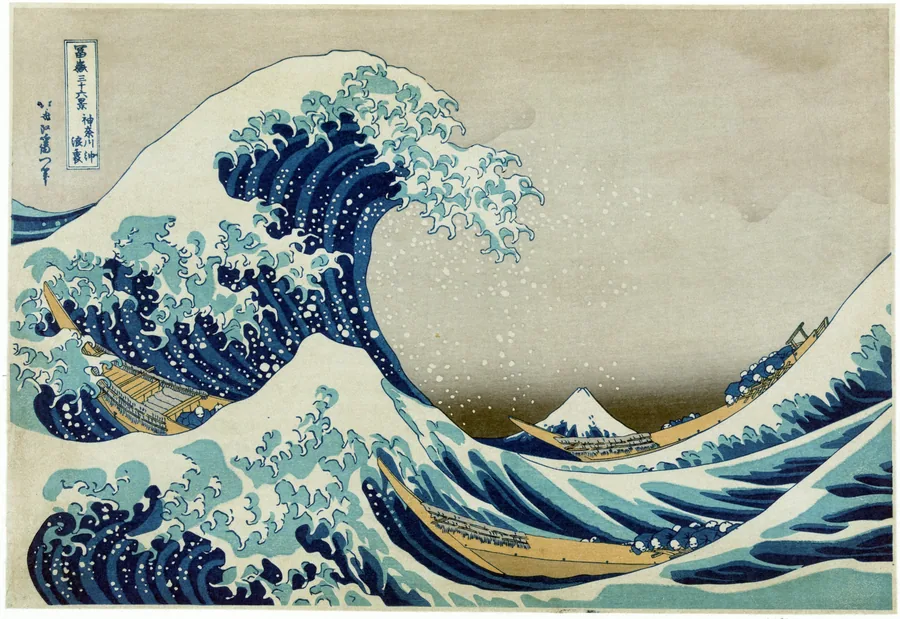 Story · 7 min
The Great Wave off Kanagawa: meaning, history and prints
A woodblock print, not a painting, and a storm wave, not a tsunami. What it shows, why no two impressions match, and how to choose a print.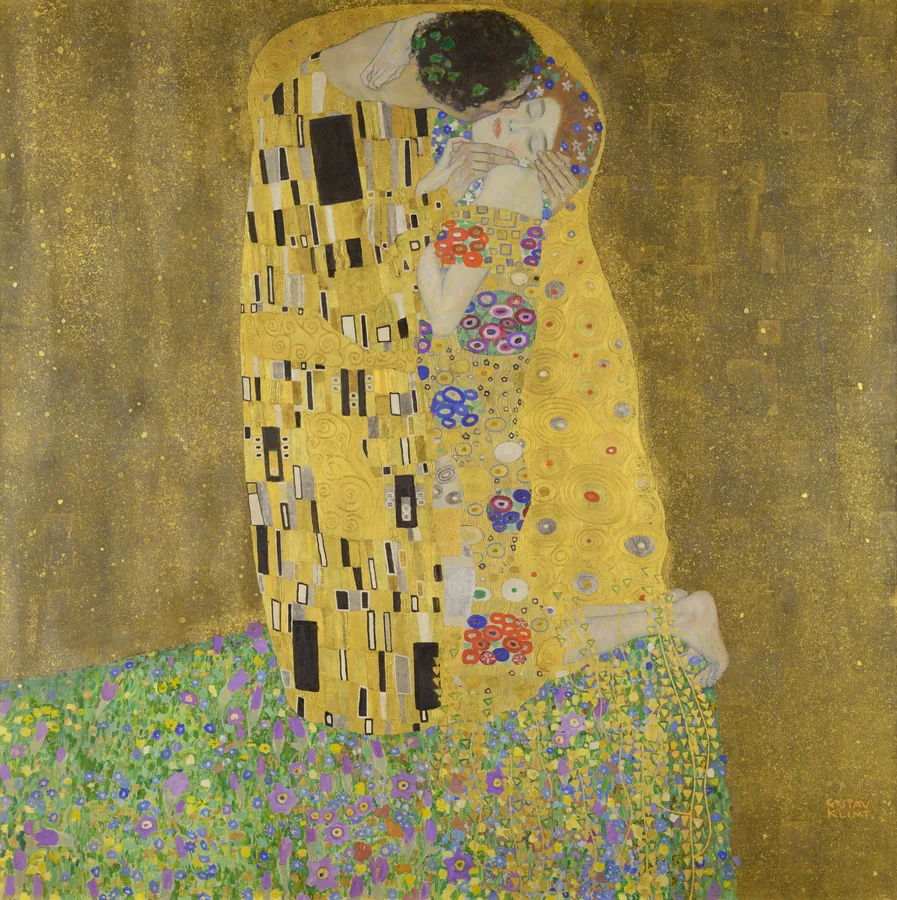 Story · 7 min
Klimt’s The Kiss: gold leaf, meaning and choosing a print
Real gold leaf on canvas, finished in 1909. The story of Klimt’s lovers, what a print can and can’t reproduce, and which size to choose. Story · 7 min