
Guide
Living room wall art: a plan for every wall
Plan art for a whole living room: the main wall, the TV wall and the quiet walls, how many pieces, one thread to tie them together, and a priced example.
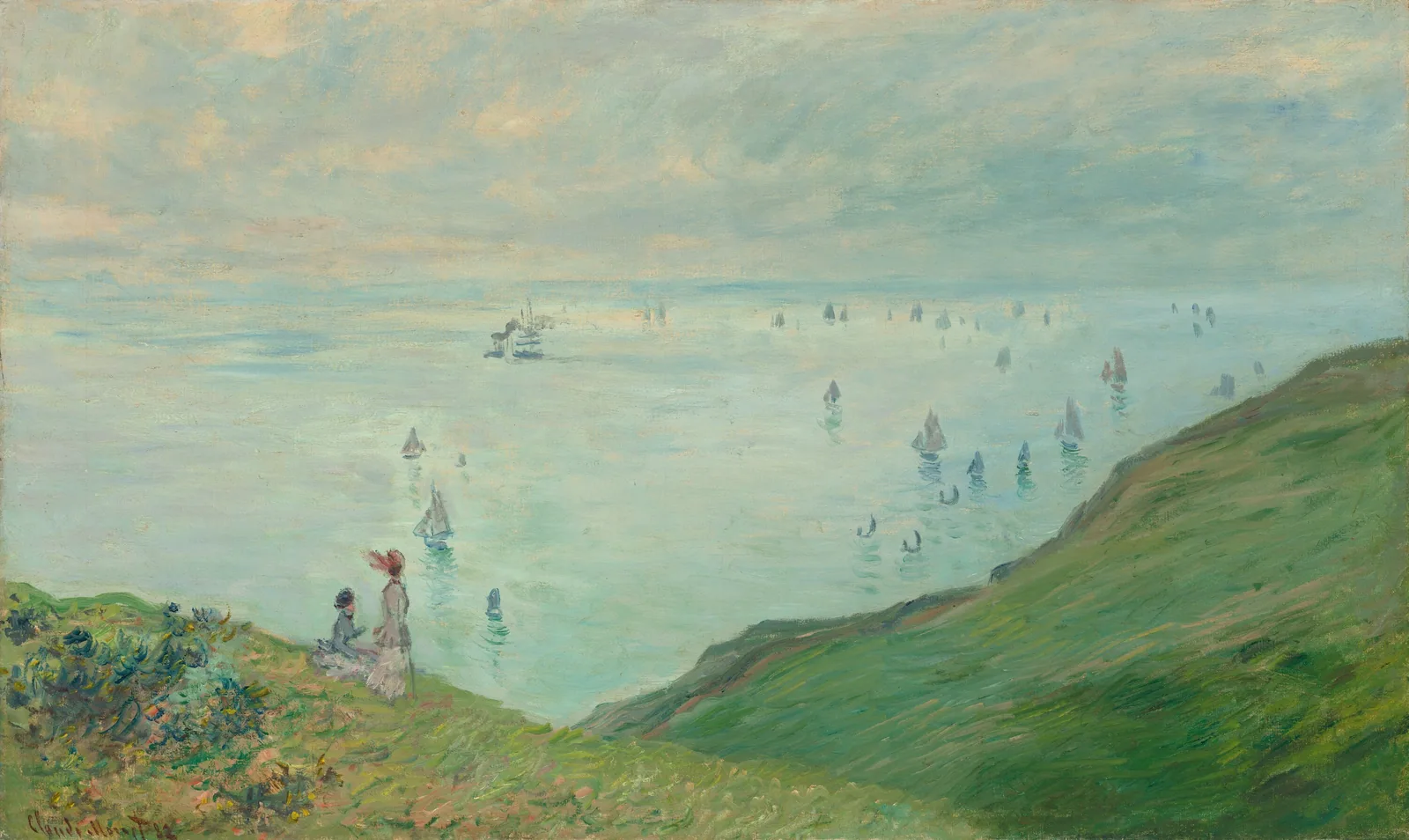
Most living rooms get their art one picture at a time: something over the sofa, then something else wherever there is a nail. The rooms that look finished were planned the other way round, as a whole, before the first picture went up. It doesn’t take long. Walk the room, decide which walls get art and which stay quiet, choose a thread that ties the pieces together, and size each piece to its wall.
1. Find the main wall
Every living room has one wall that the eye goes to first: usually the wall behind the sofa, or the fireplace, or the wall facing the door. That wall gets the biggest, strongest picture in the room. Over a sofa, make it about two-thirds of the sofa’s width, frame included, with the bottom 6 to 10 inches above the back. Over a fireplace, about two-thirds of the mantel, about 6 inches above the shelf.
- What size art over a sofa, with a calculator
- Art over a fireplace
- Oversized wall art for big or tall walls
2. Decide which walls stay quiet
Not every wall needs a picture. A room with art on every surface feels busy, and the main piece loses its force. A typical living room wants one main piece, one or two supporting pieces, and at least one wall left plain, often the one with the most windows or the bookshelves. Supporting pieces go over a console or a side table, beside a window, or on the narrow wall by a doorway, and they should be clearly smaller than the main piece.
3. The TV wall
A TV is a big black rectangle, and art beside it either fights it or frames it. A pair of matching pictures, one each side, makes the TV part of a symmetrical arrangement; a single picture on one side looks like an afterthought. Keep pictures off the wall directly above a TV unless there is real space, and choose quiet ones: the TV is already the loudest thing on that wall.
4. Choose one thread
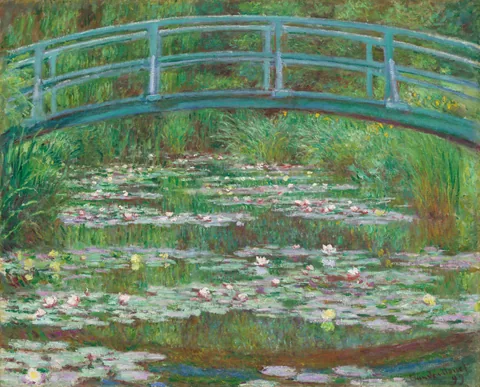
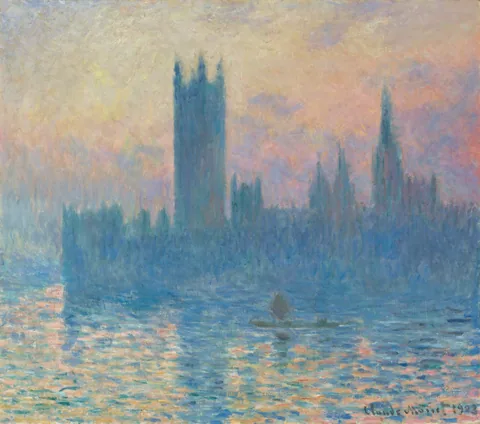
Pictures in one room look like a collection when they share something. The easiest threads are one painter, one color or one frame. One painter is the most foolproof: a living room of Monet, say, wide sea and sky over the sofa, London in pink fog over the console, a tall garden by the window, feels designed, though every picture is different. One color running through the pictures, picked up from a rug or a sofa, works for any mix of painters. And one frame color across every piece ties together almost anything. How to tie a room together with art shows how to pick it.
A worked example: one room, three walls, Monet
| Wall | Painting | Size | Price |
|---|---|---|---|
| Over the 84-inch sofa | Cliffs at Pourville | 48 × 29 in canvas, 48 in across | $239 |
| Over the 48-inch console | The Houses of Parliament, Sunset | 24 × 21 in framed, 31 in across | $194 |
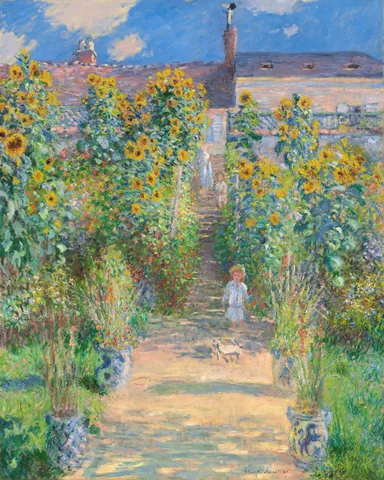
| Beside the window | The Artist's Garden at Vétheuil | 16 × 20 in framed, 23 in across | $119 |
Three pictures for the whole room come to $552, shipping included. The canvas over the sofa keeps the biggest piece light and glare-free; the framed pieces, seen up close by the console and the window, get the finish of acrylic and a mat.
Corners, doorways and the open-plan edge
The small walls are where a living room gets its character. The narrow strip beside a doorway takes one tall picture; a corner between two windows takes a small one at eye level, or a pair stacked; the wall at the end of a sofa, by a reading chair, takes a picture you will look at up close, which is the place for a detailed painting or a small Japanese print. In an open-plan room, art can mark where the living room ends and the dining or kitchen area begins: one picture on each side of the line, sharing the room’s thread. Dining room art covers the table end.
Spending wisely
Put the money into the main piece, because it does most of the work; the supporting pieces can be smaller and simpler. At the size a main wall needs, a canvas usually costs less than a framed print and is lighter to hang, while small pieces seen up close look best framed. Large wall art on a budget compares the formats side by side.
5. Pick a style
If the room already has a clear style, let the art follow it. We have guides for the common ones, each with real paintings: mid-century modern, coastal, Japandi, cottage and dark academia. For a traditional room, the old masters and the Impressionists in gold or black-and-gold frames; for a modern one, a single bold piece such as The Great Wave or The Starry Night in a slim black frame.
6. Hang the main piece first
Hang the main piece, live with it for a few days, then add the supporting pieces at the same center height, so the room has one horizon line. On open walls that line is 57 inches from the floor to the center of each picture; over furniture, the furniture sets the height. How high to hang art has a nail calculator.
Questions people ask
How many pictures should a living room have?
Usually one main piece and one or two smaller supporting pieces, with at least one wall left plain.
Should all the art in a living room match?
It should share one thing: a painter, a color or a frame. It doesn’t need to match in every way.
What goes on the wall next to a TV?
A matching pair, one on each side, frames the TV best. Choose quiet pictures.
Where should the biggest picture go?
On the main wall, the one the eye goes to first: usually over the sofa or the fireplace.
Paintings for a living room
Blue Ribbon classics




Sources
More from the Journal
 Guide · 8 min
Winter and Christmas art prints worth hanging
Snow scenes that can stay up until March, Nativity paintings for December, the sizes and frames that suit them, and when to order for Christmas. Guide · 7 min
Art as a gift: how to choose a print they’ll keep
Choose for their walls, not yours: safe sizes and frames, ideas by occasion, the gift note in the box, and how early to order for the holidays. Guide · 7 min
Art gifts for mom and dad: ideas by what they love
Art gift ideas for parents, by what they love: gardens, the sea, books, travel, home. Safe sizes, a personal line of words, and when to order for Christmas. Guide · 6 min