
Story
La Belle Ferronnière: Leonardo’s unknown woman
A woman in red with a jewel on her forehead, in the Louvre. Who she might be, how she got a wrong name, the lawsuit over a copy, and choosing a print.
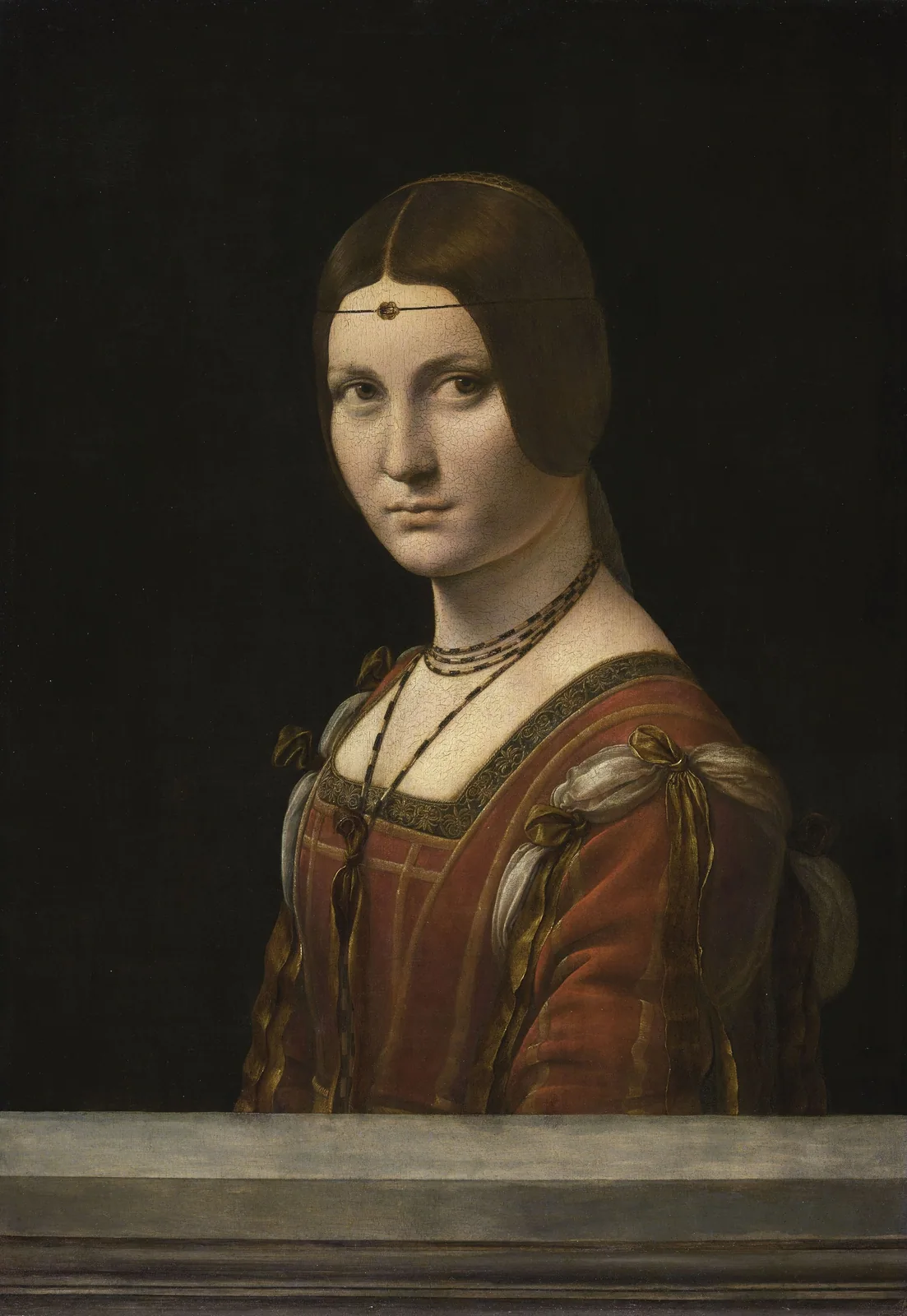
A young woman in red velvet looks out from behind a stone ledge, her hair smooth, a thin band with a single jewel across her forehead. Her gaze slides just past us. It is also called Portrait of an Unknown Woman, but for centuries it has been known by a nickname, La Belle Ferronnière, and the nickname is almost certainly wrong.
What does La Belle Ferronnière mean?
A ferronnière is the ornament she wears: a band across the forehead, often with a jewel at the center. But the title was given for a different reason. As early as the 1600s the painting was said to show the beautiful wife, or daughter, of an ironmonger, a ferronnier, and the name was linked to a story about a mistress of the French king Francis I, married to a man called Le Ferron. There is no evidence that she is that woman, or any ironmonger’s wife.
To add to the muddle, the name and its story also got attached for a time to Leonardo’s Lady with an Ermine, because that sitter wears a forehead band too. The words LA BELE FERONIERE are still painted in the corner of that picture in Kraków.
Who is she, really?
Nobody knows for sure. She was painted in Milan in the 1490s, when Leonardo worked for Ludovico Sforza, the ruler of the city. One suggestion is Lucrezia Crivelli, a lady-in-waiting to Ludovico’s wife, Beatrice d’Este. The National Gallery in London, when it showed the painting in its 2011 to 2012 Leonardo exhibition, raised the possibility that the sitter is Beatrice herself.
Is it really by Leonardo?
It has been argued over, and it is attributed to Leonardo or his Milanese circle. In the early 1900s the critic Bernard Berenson gave it to one of Leonardo’s followers, Bernardino de’ Conti, and the scholar Herbert Cook first suggested another, Giovanni Antonio Boltraffio, before changing his mind in 1904 and seeing Leonardo’s own hand.
The lawsuit over a copy
Around 1920 Andrée Lardoux Hahn offered a version of the painting on canvas to the Kansas City Art Institute as the original. The famous dealer Joseph Duveen told the New York World that it was a copy, and Hahn sued him for damaging the value of her property. The case was settled for $60,000 plus costs. Duveen was right: in 2010 the Hahn picture sold at Sotheby’s as the work of a follower of Leonardo, probably painted before 1750, for $1.5 million.
Where is La Belle Ferronnière now?
In the Louvre in Paris. It is listed in the inventories of the French royal collection from before the Revolution. It is small, about 24 by 17 inches, painted on wood, and it hangs in the same museum as the Mona Lisa.
Look closer
These details come from the scan we print from, 4,000 pixels on the long side. Pick a detail, or zoom in and drag to look around.
A thin band across her forehead with a single jewel: the ornament the painting’s nickname comes from.
Choosing a print
Life size. The panel is about 24 by 17 inches. Our largest framed print, 17 × 24 in, is the same size, so she can hang at exactly the scale Leonardo painted her. That is also as large as our scan of this painting prints well. Framed prints, canvas and unframed art prints all go up to 17 × 24 in.
Smaller. At 11 × 16 in she suits a dressing table wall, a bookshelf or a hallway. A portrait that looks just past you works well beside a doorway. Hang the center at about eye level, 57 to 60 inches from the floor; see how high to hang art.
Mind the black. The background is near black. Behind clear acrylic, dark areas reflect a facing window, so hang a framed print with side light, or choose canvas, which has a matte finish and no cover. Smooth cotton paper gives the deepest blacks. See our papers and canvas.
Frames. A wide gold frame like our Gold Plein Air warms the red velvet and suits a Renaissance panel. See all our frames.
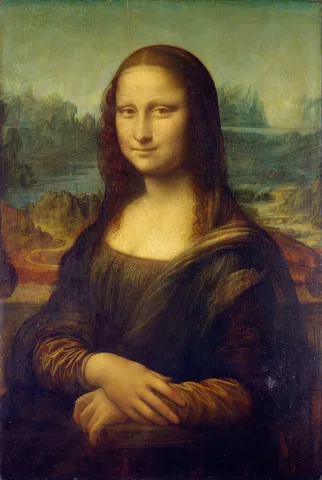
Leonardo’s women. Open her with Lady with an Ermine and the Mona Lisa as a set, three of his portraits of women side by side. Read the story of Lady with an Ermine too.
Questions
Who is La Belle Ferronnière?
An unknown woman of the Milanese court. Lucrezia Crivelli and Beatrice d’Este have both been suggested.
What is a ferronnière?
A band worn across the forehead, often with a jewel, like the one she wears.
Where is La Belle Ferronnière?
In the Louvre in Paris. It is 62 × 44 cm, about 24 × 17 in.
Is it by Leonardo?
It is attributed to Leonardo or his Milanese circle. Some early scholars gave it to his followers.
Can it be printed legally?
Yes. It is more than 500 years old and in the public domain. What public domain means.
More portraits
All Leonardo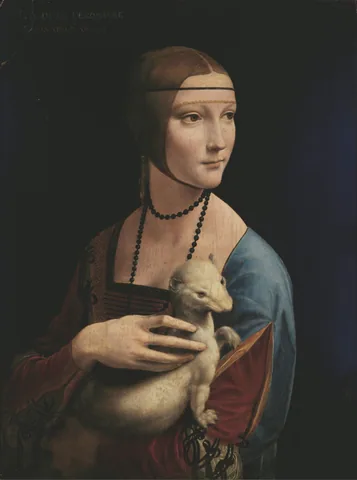
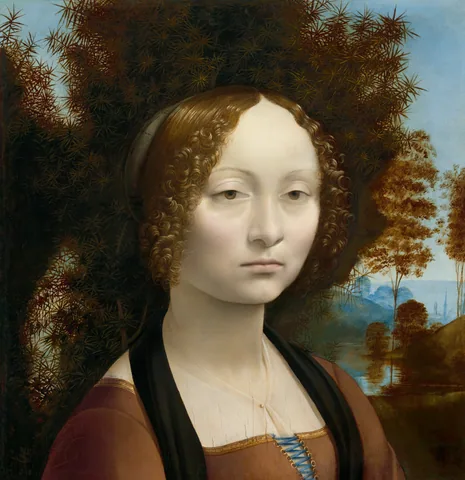
More in Old Masters and Interiors and Portraits.
Sources
More from the Journal
 Story · 7 min
Van Gogh’s Starry Night: the facts, and choosing a print
Painted in June 1889 at an asylum in Provence: the view from his window, plus a village he made up. What is real, what it means, and which print to choose.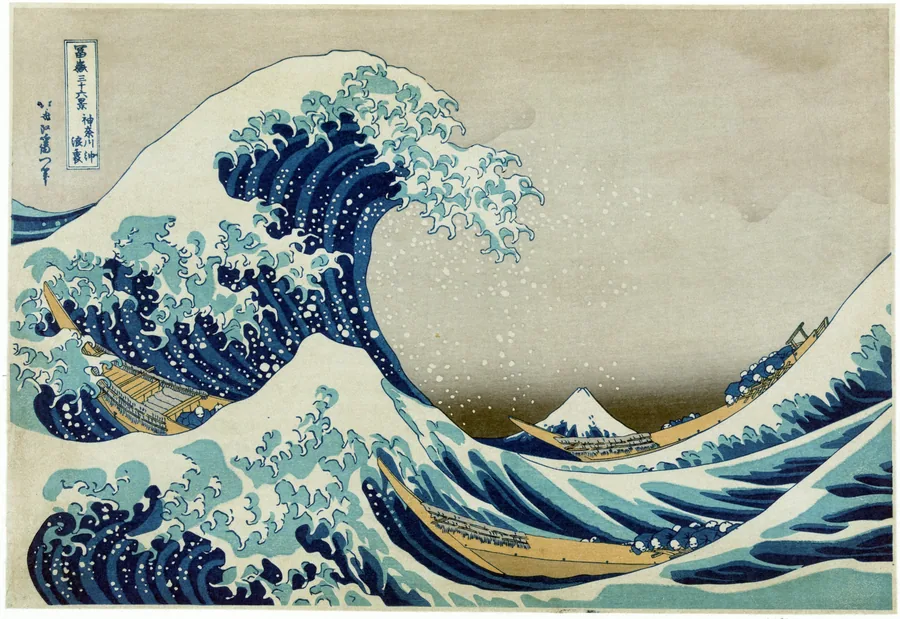 Story · 7 min
The Great Wave off Kanagawa: meaning, history and prints
A woodblock print, not a painting, and a storm wave, not a tsunami. What it shows, why no two impressions match, and how to choose a print.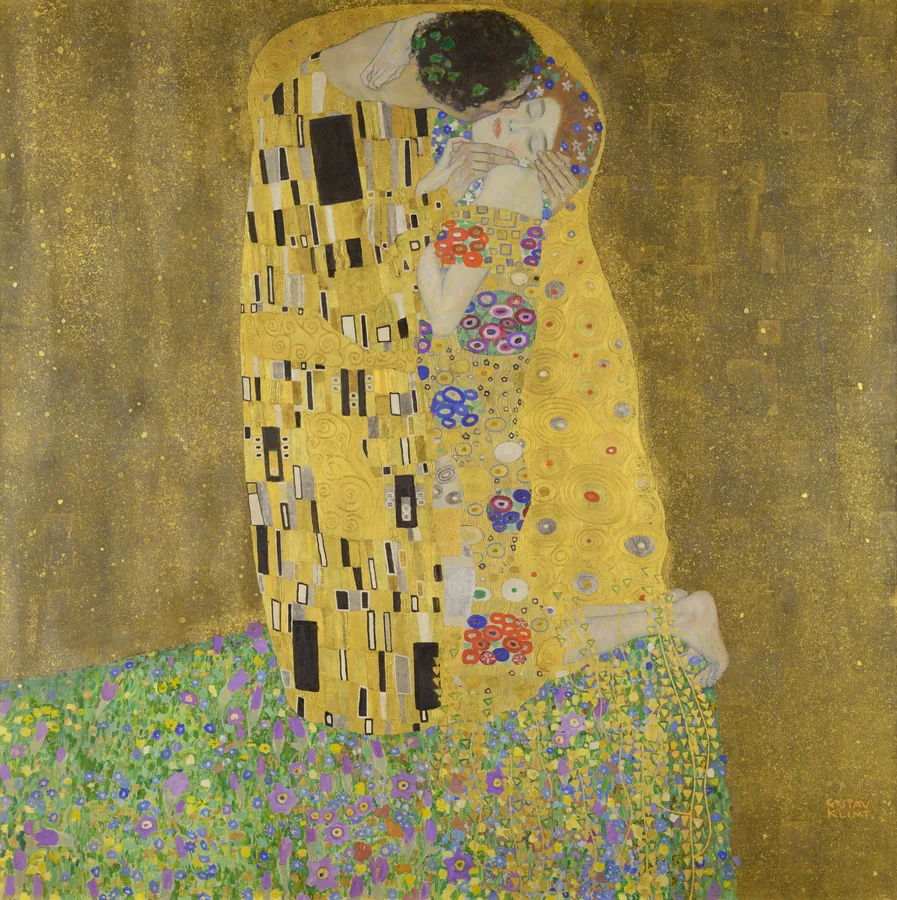 Story · 7 min
Klimt’s The Kiss: gold leaf, meaning and choosing a print
Real gold leaf on canvas, finished in 1909. The story of Klimt’s lovers, what a print can and can’t reproduce, and which size to choose. Story · 7 min